
Under California law, property owners (hotels, bars, and apartments) are liable for criminal assaults if the crime was “Foreseeable.” We prove foreseeability by subpoenaing the property’s “Calls for Service” (911 logs) for the past 5 years. If the owner knew about prior assaults, robberies, or gang activity on their premises and failed to hire security guards, fix broken gates, or improve lighting, they are financially liable for your injuries under the doctrine of Negligent Security.

Negligent Security Lawyer: what you must do immediately in San Diego under California Law
Under California Law, the single rule is this: do not let a security failure get rewritten as “random crime.” Negligent security cases live or die on proof of foreseeability, the property’s knowledge of prior problems, and what reasonable security steps were skipped under Civ. Code section 1714.
How negligent security cases actually develop in San Diego
I’ve worked enough of these files to recognize the defense posture within days: the property claims sympathy, then quickly pivots to “we can’t guarantee safety.” That’s not the legal standard. The standard is reasonable care in the face of foreseeable risk—especially where management controls lighting, access, staffing, cameras, and policy.
Here’s a realistic, anonymized San Diego scenario: an assault occurs at a bar-adjacent hotel entrance in the Gaslamp area after repeated disturbances on weekends. The property typically claims compliance with the legal framework, yet coverage is partial and staff are trained to “observe” rather than intervene. We expose this failure using the Morse Injury Law advantage. When litigation becomes real in San Diego Superior Court, that gap between risk and response stops being narrative—and starts being evidence. For immediate steps on securing that evidence, consult our client resources guide.
- Problem: the property minimizes the pattern and blames the attacker as an “independent criminal act.”
- Escalation: video retention, incident logs, and staffing schedules become time-sensitive.
- Legal strategy: prove prior notice and unreasonable security decisions, then tie those decisions to the mechanism of the attack.
- Resolution: once the defense is forced to explain what they knew and what they didn’t do, valuation shifts from “deny” to risk management.

Negligent security is not a moral argument. It’s a systems argument. If the risk was known—or should have been known—and the property chose cheaper, thinner safeguards, that decision can be negligence.
Insurance adjusters understand this. They don’t fear the headline; they fear the file: prior incidents, internal emails, staffing cuts, broken locks, bad lighting, camera blind spots, and training that tells employees to do nothing.
Why California Law and San Diego Superior Court venue change leverage
California Law sets the duty framework through Civ. Code section 1714 and measures damages through Civ. Code section 3333. The venue matters because San Diego Superior Court litigation forces structure: discovery, sworn testimony, and production of the records that properties prefer never leave the building.
- Claims handling: pre-suit, the property can hide behind vagueness; post-filing, they must answer specifics.
- Leverage: foreseeability is proven through history—calls for service, incident reports, prior fights, prior assaults, and prior complaints.
- Litigation outcomes: when the pattern and the security choices are documented, “random crime” stops being a usable defense posture.
The “Immediate 5” questions real San Diego victims ask after a security failure
How do you prove a negligent security case in San Diego under California Law?
You prove duty, breach, causation, and damages like any negligence case, but the battleground is foreseeability and reasonable security. Civ. Code section 1714 supplies the duty framework, and the evidence usually comes from prior incidents, complaints, security policies, lighting and access control records, and what the property did after similar events.
What evidence disappears fastest in hotel, bar, or apartment assault cases?
Surveillance footage, incident logs, key-card access data, door lock maintenance records, and security staffing schedules are all vulnerable to routine overwrites and “lost” records. The practical approach is to treat preservation like a deadline: once those items are gone, the defense will say you can’t prove what happened or what they knew.
Does it matter that the attacker was a third party and not an employee?
Yes—and that’s exactly why the defense leans on it. The claim is not “the property committed the assault,” it’s that the property’s security failures made a foreseeable assault easier to carry out, and that failure can be negligence under Civ. Code section 1714 when reasonable safeguards were skipped.
How are damages valued in negligent security cases?
Damages are measured under Civ. Code section 3333, which means the value follows proof: medical treatment, work impact, functional limitations, and how the injuries changed day-to-day life. The defense tries to label these as “soft” cases unless you can document both the injury mechanism and the treatment timeline with consistency.
How long do I have to file a negligent security lawsuit in California?
In many cases the basic limitations period is two years under C.C.P. section 335.1. Waiting is how evidence dies, witnesses vanish, and security records get overwritten, which is why timing is a practical leverage issue, not just a legal one.
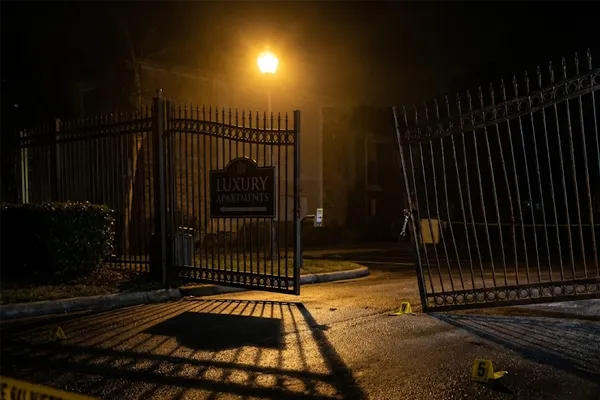
These cases are usually defended aggressively because they expose a pattern: cuts to security, ignored warnings, and predictable violence around specific properties. Once a case is filed, the defense has to explain the choices they made—not just the story they prefer.
Magnitude factors that actually move negligent security claims in San Diego
Evidence Evaluation in San Diego Cases
- Police reports vs medical records: the report captures response and early statements; the medical record anchors injury mechanism and ongoing impact.
- Scene photos vs property documentation: photos show lighting, sightlines, and access points; maintenance and security records show what the property knew and fixed—or didn’t.
- Treatment timeline consistency: delays create credibility attacks; consistent treatment supports causation and damages.
- Tie to real San Diego claims handling: carriers discount these cases until you show foreseeability and unreasonable security decisions with documents.
Settlement vs Litigation Reality
Before filing, the defense can posture, deny patterns, and provide selective information. Once the case is filed in San Diego Superior Court, discovery becomes the equalizer: incident history, vendor contracts, staffing levels, training materials, and prior complaints can be compelled when relevant.
- Discovery obligations: you can demand production of security policies, staffing schedules, maintenance logs, and certain incident history.
- Leverage: sworn testimony forces consistency; “we didn’t know” is a risky answer when the records say otherwise.
- Risk: if causation and medical documentation are weak, the defense will try to turn the case into pure sympathy with no provable damages.
San Diego-Specific Claim Wrinkles
- Hotels near nightlife corridors: weekend disturbance patterns can make foreseeability easier to prove when the property is adjacent to high-incident areas and still under-staffs security.
- Bar and nightclub violence: overservice, crowd control, and inadequate ejection procedures often create predictable flashpoints that management tries to call “spontaneous.”
- Apartment complex security failures: broken gates, poor lighting, non-functional cameras, and loose access control turn “tenant safety” into a cost-cutting decision with legal consequences.
Lived Experiences
Allison
The hotel told me it was just “bad luck” and acted like there was nothing to investigate. Once my attorney focused on prior incidents and the security logs, the conversation changed from excuses to accountability.
Adam
I assumed the bar would do the right thing, but they tried to bury the footage and blame the crowd. My attorney treated it like a San Diego Superior Court case from day one and the evidence finally got taken seriously.
California Statutory Framework & Legal Authority
These are the exact statutes cited on this page, linked to the official LegInfo source, with a plain-English explanation of what each governs and why it matters in a San Diego personal injury claim.
|
Attorney Advertising, Legal Disclosure & Authorship
ATTORNEY ADVERTISING.
This content is provided for general informational and educational purposes only and does not constitute legal advice.
Under the California Rules of Professional Conduct and applicable State Bar of California advertising regulations,
this material may be considered attorney advertising.
Viewing or reading this content does not create an attorney-client relationship.
Laws and procedures governing personal injury claims vary by jurisdiction and may change over time.
You should consult a qualified California personal injury attorney regarding your specific situation before taking any legal action.
Responsible Attorney:
Richard Morse, California Attorney (Bar No. 289241).
Morse Injury Law is a practice name and location used by Richard Peter Morse III, a California-licensed attorney.
About the Author & Legal Review Process
This article was prepared by the legal editorial team supporting Richard Peter Morse III,
with the goal of explaining California personal injury law and claims procedures in clear, accurate, and practical terms for injured individuals in San Diego and surrounding communities.
Legal Review:
This content was reviewed and approved by Richard Morse, a California-licensed attorney (Bar No. 289241),
who concentrates his practice on personal injury litigation and insurance claim disputes.
With more than 13 years of experience representing injury victims throughout California,
Mr. Morse focuses on serious personal injury matters including motor vehicle collisions, uninsured and underinsured motorist claims,
premises liability, catastrophic injury, and wrongful death.
His practice emphasizes claims evaluation, insurance carrier accountability, and litigation in California courts when fair resolution cannot be achieved.
|