
Rideshare liability is defined by “Periods” under Public Utilities Code § 5433. If the driver was merely “logged on” (Period 1), coverage is low. But the moment they accept a ride (Period 2) or have a passenger (Period 3), the $1,000,000 Commercial Policy kicks in. Uber and Lyft insurers frequently deny claims by arguing the ride had “ended” or “canceled” seconds before impact. We use timestamped GPS logs and app metadata to prove the commercial status was active.

Uber liability claims Lawyer: what you must do first under California Law
Under California Law, the single most important rule is this: lock the Uber “app status” and the chain of insurance coverage before anyone can deny responsibility. Screenshot the trip details, preserve the driver/vehicle identifiers, and document injuries immediately—rideshare cases collapse when coverage tiers get blurred.
What Uber liability claims really look like in San Diego
Uber cases are not just crashes; they are coverage puzzles wrapped in a standard accident file. While the legal framework of California insurance law defines liability, multiple insurers often point at each other, forcing the injured person to prove what should be obvious: who was working and which policy applies. We cut through this delay using the Morse Injury Law advantage. If the carriers refuse to agree, we resolve the dispute in specific San Diego legal venues where contracts are enforced, not ignored. For a breakdown of how these policies impact your claim, reviewing our client resources is a critical first step.
- Problem: the carrier tries to push you to the “wrong” insurer or a lower coverage tier.
- Escalation: injuries evolve, treatment becomes consistent, and liability gets reframed as “shared fault.”
- Legal strategy: prove app status, identify every responsible actor, and build a trial-ready damages record.
- Resolution: once coverage and fault are pinned down, the claim values on risk—not delay.

I’ve watched insurers defend rideshare cases from the inside: they don’t deny injury first—they deny the pathway to coverage. They ask for “more information” while the digital proof gets harder to obtain and the file loses momentum.
The antidote is immediate preservation: trip screenshots, driver identity, pickup/dropoff context, and any video or witness proof before it disappears. When the file is built correctly, Uber cases stop being a maze and become a liability analysis.
Why California Law and San Diego Superior Court venue materially change outcomes
California Law frames duty and damages, but venue creates accountability. In San Diego Superior Court, once suit is filed, the defense must answer discovery about app status, insurance positions, and what each party did. That pressure matters because rideshare carriers price cases based on exposure under a provable record.
- Claims handling: pre-suit, insurers can stall behind “coverage review”; post-filing, deadlines force positions.
- Leverage: clear proof of app status and trip context raises the cost of denial.
- Litigation outcomes: when the defense can’t hide the ball, valuation becomes reality-based.
The “Immediate 5” questions San Diego victims ask in Uber liability claims
Which insurance policy applies if an Uber is involved in a crash in San Diego?
Coverage often depends on whether the driver was logged into the app, matched, en route, or transporting, and those facts are evidence-driven. California Insurance Code section 11580.1 is part of the broader framework that governs auto liability coverage, and in practice the fight is forcing clarity on which insurer owes defense and indemnity for your injuries.
What if Uber says the driver was “offline” or not on an active trip?
If the defense claims “offline,” you need objective proof, not memory: screenshots, receipts, communications, and any trip metadata you can preserve. Under California Law, liability still runs through negligence principles, and California Civil Code section 1714 anchors the duty analysis while the case forces the defense to commit to the app-status position it wants to live with.
What if I was a passenger and the Uber driver was at fault?
Passengers are rarely the liability problem; the problem is who pays and how quickly. Damages are measured under California Civil Code section 3333, and the practical leverage comes from a clean medical record and a clear story that the driver’s choices caused the crash—because insurers will otherwise argue “unavoidable” or shift blame to a phantom third party.
What if I was hit by an Uber driver while walking, biking, or riding a scooter?
These cases often turn on visibility, right-of-way, and pickup/dropoff behavior, especially in dense areas like Downtown and Little Italy. California Vehicle Code section 22517 can become relevant when the crash involves unsafe door opening into moving traffic, and it helps lock the mechanism when the defense tries to reframe the event as “unpredictable pedestrian behavior.”
How long do I have to file a San Diego rideshare injury lawsuit?
Many California personal injury claims are governed by California Code of Civil Procedure section 335.1, which sets a two-year limitations period in many cases. In rideshare claims, waiting is also tactical damage: digital evidence ages out and “coverage ambiguity” becomes an excuse for delay.
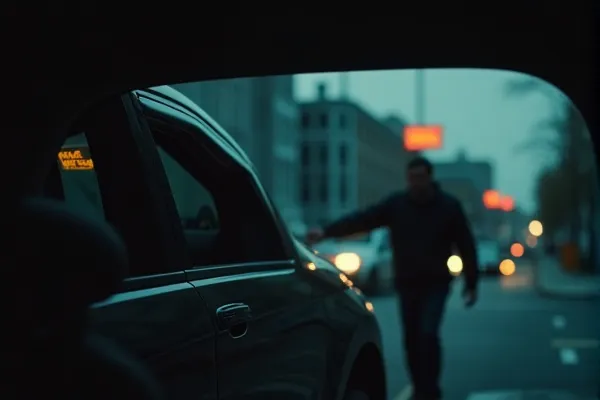
Uber liability cases are won by controlling the timeline: app status, pickup context, collision mechanics, and medical progression. When those are pinned down, the defense can’t keep hiding behind “we’re still investigating.”
How magnitude is evaluated in San Diego Uber liability claims
Evidence Evaluation in San Diego Cases
- Police reports vs medical records: police reports help with scene framing and participants; medical records control causation, progression, and functional impairment.
- Scene photos vs repair documentation: scene photos matter for pickup/dropoff position, lane markings, curb conditions, and sight lines; repair documentation helps counter “minor impact” arguments.
- Treatment timeline consistency: gaps are where insurers argue the injury resolved or is unrelated; consistent care tightens causation.
- Tie to real San Diego claims handling: rideshare carriers push coverage questions early; your ability to preserve trip proof determines whether the file gets stalled.
Settlement vs Litigation Reality
Pre-suit, rideshare insurers can keep the file in “coverage review” while pushing you to accept a reduced valuation. After filing in San Diego Superior Court, discovery forces clarity—who says what coverage applies, and on what evidence.
- Discovery obligations: parties must answer targeted questions about app status, communications, and trip context.
- Leverage: preserved digital proof plus consistent medical documentation increases exposure.
- Risk: once the defense position is locked, unsupported denial becomes costly.
San Diego-Specific Claim Wrinkles
- Traffic density and rear-end patterns: stop-and-go corridors amplify sudden stops near curbside pickups, and insurers often argue the rear driver “always” caused it without analyzing the pickup behavior.
- Multi-vehicle freeway collisions: rideshare crashes can cascade on I-5, I-805, and I-15, and the defense will try to scatter responsibility across multiple vehicles and policies. The leverage move is building one coherent timeline that ties injuries to a provable mechanism and a provable coverage tier.
- Common Southern California insurer resistance patterns: “offline,” “wrong carrier,” “minor impact,” and “pre-existing” are predictable defenses unless the file is built with digital proof and clean treatment documentation.
Lived Experiences
Kelsey
I kept getting bounced between insurers and nobody would confirm which policy applied. Once my attorney preserved the trip proof and forced clear positions, the case stopped stalling and resolved based on the real impact on my work and health.
Samuel
The adjuster acted like my injuries didn’t matter until I could “prove” the Uber was active. After my attorney built the timeline and treated it like a San Diego Superior Court file, the excuses ended and the outcome followed the evidence.
California Statutory Framework & Legal Authority
These are the exact statutes cited on this page, linked to the official LegInfo source, with a plain-English explanation of what each governs and why it matters in a San Diego personal injury claim.
|
Attorney Advertising, Legal Disclosure & Authorship
ATTORNEY ADVERTISING.
This content is provided for general informational and educational purposes only and does not constitute legal advice.
Under the California Rules of Professional Conduct and applicable State Bar of California advertising regulations,
this material may be considered attorney advertising.
Viewing or reading this content does not create an attorney-client relationship.
Laws and procedures governing personal injury claims vary by jurisdiction and may change over time.
You should consult a qualified California personal injury attorney regarding your specific situation before taking any legal action.
Responsible Attorney:
Richard Morse, California Attorney (Bar No. 289241).
Morse Injury Law is a practice name and location used by Richard Peter Morse III, a California-licensed attorney.
About the Author & Legal Review Process
This article was prepared by the legal editorial team supporting Richard Peter Morse III,
with the goal of explaining California personal injury law and claims procedures in clear, accurate, and practical terms for injured individuals in San Diego and surrounding communities.
Legal Review:
This content was reviewed and approved by Richard Morse, a California-licensed attorney (Bar No. 289241),
who concentrates his practice on personal injury litigation and insurance claim disputes.
With more than 13 years of experience representing injury victims throughout California,
Mr. Morse focuses on serious personal injury matters including motor vehicle collisions, uninsured and underinsured motorist claims,
premises liability, catastrophic injury, and wrongful death.
His practice emphasizes claims evaluation, insurance carrier accountability, and litigation in California courts when fair resolution cannot be achieved.
|