
Lyft claims are strictly regulated by California Insurance Code § 11580.24, which mandates that TNCs (Transportation Network Companies) provide primary coverage from the moment a ride is accepted. Personal auto policies explicitly exclude “commercial use,” meaning if Lyft denies liability, the driver likely has zero coverage elsewhere. We enforce the TNC statute to ensure the corporate policy covers your medical bills, rather than leaving you in an insurance gap.

Lyft liability claims Lawyer: what you must do first in San Diego under California Law
Under the legal framework of California Law, the first rule is simple: preserve Lyft “app status” proof before anyone argues you’re chasing the wrong insurance. Save trip receipts, screenshots, driver details, and timestamps immediately—our client resources guide outlines exactly what to capture. Lyft liability cases are won early using the Morse Injury Law advantage, ensuring that if the claim reaches specific San Diego legal venues, the coverage tier is already a proven fact, not a debate.
How Lyft liability claims actually get valued in San Diego
Lyft claims don’t fail because the crash wasn’t real. They fail because the defense turns a normal injury case into a coverage fog—then blames time, missing data, or “offline” status. If litigation becomes necessary, this is exactly why I talk about San Diego Superior Court early: it’s where the defense stops “reviewing” and starts producing evidence.
California Law still controls duty and damages, but rideshare claims add a second battlefield: identifying which policy applies and when. I build these files like trial work from day one, because the insurer-side playbook is to stall until the proof gets thin—then discount the claim as “uncertain coverage.”
- Problem: Lyft points to the driver’s personal policy; the personal carrier points back at Lyft.
- Escalation: you’re healing while adjusters argue “timeline,” and the liability story gets diluted.
- Legal strategy: lock app status, lock mechanism, and lock damages with consistent medical support.
- Resolution: once coverage and fault are pinned, the case values on risk—not confusion.
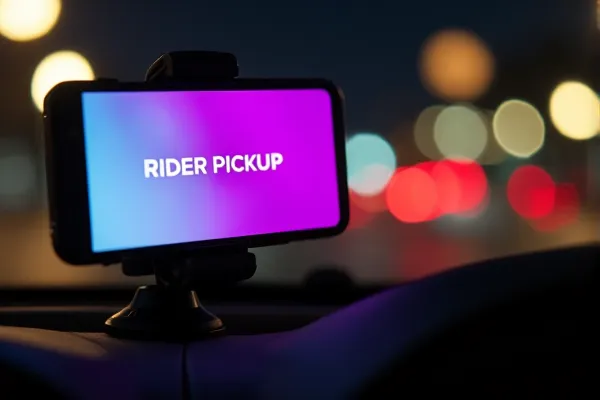
Here’s what insurers do in Lyft files: they don’t start with medical causation. They start with “who’s the right carrier,” because that buys them time and forces you to do their sorting job for free.
My approach is insurer-proof: preserve trip proof, preserve scene proof, preserve injury progression, and assume every contradiction will end up in a deposition. That’s how you keep a rideshare case from becoming an administrative maze.
Why California Law and San Diego Superior Court venue change the leverage
California Law frames negligence and damages, but venue is what forces transparency. In San Diego Superior Court, discovery deadlines and sworn testimony push the defense to pick a position on app status, responsibility, and the facts they’re willing to stand behind.
- Claims handling: pre-suit, “coverage review” can drag; after filing, deadlines shorten the runway.
- Leverage: preserved trip proof makes it harder to hide behind “unknown status.”
- Litigation outcomes: when the story is pinned under oath, valuation becomes reality-based.
The “Immediate 5” questions San Diego victims ask after a Lyft-related injury
Which insurance applies when Lyft is involved in a crash in San Diego?
It depends on Lyft’s operational status and the timeline of the trip, which is why documentation matters more than opinions. California Insurance Code section 11580.1 is part of the statutory framework governing auto liability coverage, and in real litigation the key is forcing clear positions on who owes coverage and defense.
What if Lyft or the driver claims the app was off, or the ride ended already?
If the defense claims “offline,” you need objective proof: trip receipt, screenshots, messages, and timestamps. Liability still runs through California negligence principles, and California Civil Code section 1714 anchors duty while the fight shifts to whether the defense can support its app-status claim with evidence.
If I was a passenger, do I still have to prove fault or just damages?
You still have to prove fault against at least one responsible party, but passengers usually aren’t the fault target—the defense target is coverage and causation. Damages are measured under California Civil Code section 3333, so consistent treatment, clear symptom progression, and work impact documentation are what prevent the insurer from minimizing value.
What if the injury happened during pickup or dropoff, not during a “moving” crash?
Pickup and dropoff injuries are common in dense San Diego areas because curb position, door opening, and lane conflicts create predictable mechanisms. California Vehicle Code section 22517 can become central when a door is opened into moving traffic, because it ties the mechanism to a concrete duty instead of a vague “accident happened” narrative.
How long do I have to file a Lyft injury lawsuit in California?
Many California personal injury claims are governed by California Code of Civil Procedure section 335.1, which sets a two-year limitations period in many cases. Waiting also weakens rideshare proof: digital records get harder to obtain, witnesses disappear, and the defense gets room to rewrite the timeline.
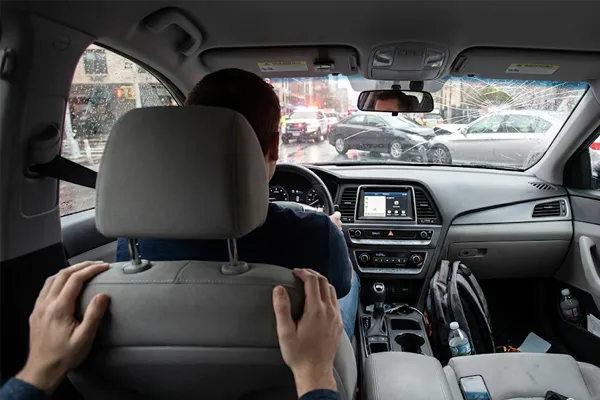
Lyft liability claims are built on discipline: app status, mechanism, and medical progression. If those three are clean, the defense can’t stall behind “coverage questions” forever—because the facts don’t move.
How magnitude is evaluated in San Diego Lyft liability claims
Evidence Evaluation in San Diego Cases
- Police reports vs medical records: the report can frame parties and scene context, but medical records establish causation, progression, and functional impairment.
- Scene photos vs repair documentation: scene photos are crucial for pickup/dropoff positioning, lane markings, and sight lines; repair documentation helps counter “minor impact” narratives.
- Treatment timeline consistency: gaps are where insurers argue “resolved” or “unrelated”; consistent care tightens causation.
- Tie to real San Diego claims handling: rideshare insurers look for documentation gaps to dispute coverage tiers; your preserved trip proof closes that door.
Settlement vs Litigation Reality
Before a lawsuit, rideshare cases can get stuck in “review” while you’re pressured to accept a discount that assumes uncertainty. Once filed in San Diego Superior Court, the defense has to answer discovery and commit to the coverage story it plans to defend.
- Discovery obligations: parties must produce records supporting app status and the insurer’s position.
- Leverage: clean proof of status and mechanism increases the cost of denial.
- Risk: once the defense story is locked, unsupported blame-shifting loses power.
San Diego-Specific Claim Wrinkles
- Traffic density and rear-end patterns: stop-and-go corridors amplify sudden braking and unsafe curb maneuvers near pickups, and insurers often default to “rear driver is always at fault” without analyzing the rideshare behavior that triggered the chain.
- Multi-vehicle freeway collisions: Lyft trips routinely run on I-5, I-805, and I-15, and multi-car collisions invite finger-pointing across multiple carriers. The move is building one coherent timeline that ties your injuries to a provable mechanism and the correct coverage tier.
- Common Southern California insurer resistance patterns: “offline,” “wrong carrier,” “minor impact,” and “pre-existing” are predictable defenses unless the file is built with digital proof and consistent medical documentation.
Lived Experiences
Dylan
I felt like I was getting bounced between insurance companies while my bills piled up. Once my attorney pinned down the trip proof and forced clear positions, the case finally moved forward and resolved based on the real impact on my life.
Chelsea
The adjuster kept acting like the crash didn’t “count” unless we proved Lyft was active at the exact second. My attorney built the timeline like a San Diego Superior Court case, and the excuses stopped once the evidence was organized.
California Statutory Framework & Legal Authority
These are the exact statutes cited on this page, linked to the official LegInfo source, with a plain-English explanation of what each governs and why it matters in a San Diego personal injury claim.
|
Attorney Advertising, Legal Disclosure & Authorship
ATTORNEY ADVERTISING.
This content is provided for general informational and educational purposes only and does not constitute legal advice.
Under the California Rules of Professional Conduct and applicable State Bar of California advertising regulations,
this material may be considered attorney advertising.
Viewing or reading this content does not create an attorney-client relationship.
Laws and procedures governing personal injury claims vary by jurisdiction and may change over time.
You should consult a qualified California personal injury attorney regarding your specific situation before taking any legal action.
Responsible Attorney:
Richard Morse, California Attorney (Bar No. 289241).
Morse Injury Law is a practice name and location used by Richard Peter Morse III, a California-licensed attorney.
About the Author & Legal Review Process
This article was prepared by the legal editorial team supporting Richard Peter Morse III,
with the goal of explaining California personal injury law and claims procedures in clear, accurate, and practical terms for injured individuals in San Diego and surrounding communities.
Legal Review:
This content was reviewed and approved by Richard Morse, a California-licensed attorney (Bar No. 289241),
who concentrates his practice on personal injury litigation and insurance claim disputes.
With more than 13 years of experience representing injury victims throughout California,
Mr. Morse focuses on serious personal injury matters including motor vehicle collisions, uninsured and underinsured motorist claims,
premises liability, catastrophic injury, and wrongful death.
His practice emphasizes claims evaluation, insurance carrier accountability, and litigation in California courts when fair resolution cannot be achieved.
|