
Mediation is the most powerful tool in litigation because it is completely secret. Under California Evidence Code § 1119, nothing said during mediation can be used against you in court. This “confidentiality shield” allows us to speak freely. We can look the insurance adjuster in the eye and say, “Here is the evidence that will destroy your defense at trial.” Because the jury will never hear the settlement numbers discussed, the insurance company feels safe to pay a higher amount to make the risk go away, without admitting public liability.

Litigation Phase: Mediation & Settlement — What You Must Control in San Diego Under California Law
The single most important rule for mediation is this: do not negotiate from emotion or fatigue. Under California Law, mediation is a strategy event inside a San Diego Superior Court case, and the defense uses timing, risk, and record gaps to pull your number down if you aren’t prepared.
- Mediation is not a hearing; it is a controlled negotiation built around trial risk.
- Your leverage is the file: liability clarity, medical consistency, and readiness to try the case.
How Mediation Actually Works When the Defense Thinks Like an Insurer
I’ve dealt with enough carriers in San Diego to recognize the playbook before anyone speaks. The defense comes in with an internal valuation range, a “story” they want the mediator to adopt, and a plan to test whether you’ll fold under uncertainty. My insurer-side training taught me the quiet truth: they’re not trying to “win mediation.” They’re trying to buy risk at a discount.
A realistic San Diego scenario: a client is hit near the 163/805 merge, liability is strong, treatment is consistent, and the defense still opens with a low number and a stack of “issues” — prior ache, a short therapy gap, an argument about imaging. The strategy is to make you feel the case is weaker than it is. In San Diego Superior Court litigation, mediation becomes the checkpoint where both sides decide whether trial is real. Under California Law, if the defense understands you can prove the case and survive cross, settlement talks become serious.

A good mediation day is quiet, structured, and evidence-driven. The best outcomes happen when the defense realizes the trial story is organized, the medical narrative is consistent, and the plaintiff is credible. That’s when the mediator becomes useful: not as a decision-maker, but as a risk translator.
- Leverage tool: Code of Civil Procedure section 998 drives settlement math by attaching cost risk to unreasonable positions.
- Confidentiality backbone: Evidence Code section 1119 makes mediation communications generally confidential, which changes how negotiations can be used later.
Why California Law and San Diego Superior Court Venue Matter at Mediation
Mediation isn’t separate from the case; it’s wired into the San Diego Superior Court schedule and trial posture. California Law affects what can be used later, how offers create consequences, and how credibility themes are developed. Venue matters because local trial expectations, motion calendars, and jury realities shape how insurers evaluate risk for San Diego cases.
- California Law controls the confidentiality and the cost-shifting tools that make settlement offers meaningful.
- San Diego Superior Court is the arena where stalling stops working once trial approaches.
The “Immediate 5” Mediation Questions San Diego Clients Ask
1) Is mediation required in San Diego Superior Court cases, and what is it supposed to accomplish?
Mediation is often used because it is the most efficient way to test trial risk without spending the full cost of trial preparation, but it is not a judge-run hearing. Under Evidence Code section 1119, mediation communications are generally confidential, which allows negotiation without creating admissions for trial. In San Diego cases, mediation’s practical purpose is to convert the evidence into a number that reflects liability risk, damages proof, and the credibility of witnesses if the case is tried.
- Mediation works best after key discovery: depositions, record collection, and expert direction are clear.
- If the case isn’t organized, mediation turns into a discount marketplace.
2) Why does the defense start so low, even when liability is clear?
Low openings are not about “what the case is worth.” They are about anchoring and testing whether you will negotiate against yourself. The defense also wants to see whether your file has holes they can exploit: treatment gaps, inconsistent complaints, unclear wage loss, or ambiguous imaging. Code of Civil Procedure section 998 matters here because the defense may be setting up an offer strategy that creates cost consequences later if the case goes to trial and the result doesn’t beat their number.
- Expect a “medical necessity” attack and a “pre-existing” theme even in clean crashes.
- Do not let the first number rewrite the value discussion; let the evidence do it.
3) What should I bring or have ready before mediation in a San Diego injury case?
You prepare mediation the way you prepare trial: timeline, documentation, and credibility. Medical records, billing summaries, wage loss proof, and a clean chronology are not optional because they are what the mediator uses to pressure the defense off a discount. Under Civil Code section 3333, the measure of damages in negligence cases is grounded in compensation principles, and your proof has to match the categories you’re claiming.
- Have a clear treatment timeline and explanation for any gaps that will be attacked.
- Have wage loss documentation that matches employer records and tax reality.
- Have photos and repair documentation aligned with mechanism and injury complaints.
4) What happens if the insurer claims “policy limits” or refuses to move at mediation?
Sometimes “policy limits” is a real ceiling, and sometimes it is a negotiation posture used to stall until the plaintiff feels pressure. The question is whether coverage has been verified and whether the defense is prepared to litigate. Code of Civil Procedure section 998 can still matter because it forces the defense to account for cost exposure if they hold an unreasonable number and the trial outcome beats it. In San Diego Superior Court, when the defense believes you will actually take the case to verdict, refusal to move becomes harder to justify internally.
- Coverage clarity changes everything; guessing about limits is how plaintiffs get underpaid.
- A stubborn insurer posture often shifts after the right depositions and expert disclosures.
5) If we settle at mediation, what documents control the outcome and what should I watch for?
The settlement is controlled by what is written, not what was said in the hallway. Releases, lien language, and timing terms determine what you actually receive and how long it takes. Evidence Code section 1119 keeps mediation discussions generally confidential, so the enforceable terms are the agreement documents themselves, and Code of Civil Procedure section 664.6 can be relevant when parties seek court enforcement of a settlement agreement in litigation.
- Focus on release scope, lien handling, payment timing, and who is included in the release.
- Do not assume “we agreed” means anything until the terms are captured correctly in writing.
What Drives Mediation Movement in San Diego: Proof, Posture, and Procedure
A) Evidence Evaluation in San Diego Cases
Mediation moves when the defense realizes the proof is clean and the plaintiff is credible. Police reports help, but the medical record is the real engine: consistent complaints, objective findings, and treatment that matches the injury mechanism. Photos and repair documentation matter when they support causation and refute “minor impact” narratives that insurers lean on in Southern California.
- Police reports vs medical records: one frames fault; the other proves injury and causation.
- Scene photos vs repair documentation: photos show context; repairs support impact force arguments.
- Treatment timeline consistency: gaps become bargaining chips unless explained and supported.
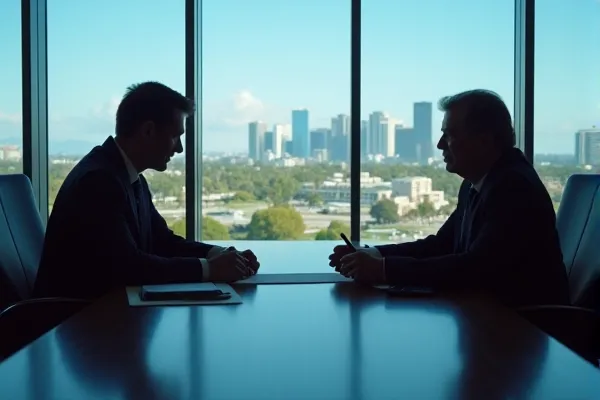
B) Settlement vs Litigation Reality
Once filed in San Diego Superior Court, discovery and trial deadlines change the defense’s risk calculus. Depositions expose credibility, experts define future care disputes, and motions test whether the defense story can survive. Code of Civil Procedure section 998 is the settlement weapon inside that structure because it can shift costs and make a “reasonable” offer strategically dangerous to ignore.
- Mediation before key discovery often produces discounts because risk is still foggy.
- Mediation after depositions and medical development forces the insurer to price real exposure.
C) San Diego-Specific Claim Wrinkles
San Diego crashes have predictable defense angles: dense freeway merges, chain reactions, and comparative fault narratives tied to lane changes and “sudden stops.” Insurers also lean on regional medical pricing arguments and “over-treatment” themes. If your case file is organized and trial-ready, those wrinkles become background noise instead of valuation drivers.
- Traffic density: defense will frame collisions as unavoidable or shared fault at merges.
- Multi-vehicle collisions: complexity is used to dilute liability and pressure lower settlements.
- Resistance patterns: “minor impact,” “degeneration,” and “excess treatment” are common SoCal scripts.
Lived Experiences
Dakota
I thought mediation was going to be a quick decision, but the insurance company came in blaming me and attacking my treatment. My attorney kept it calm, walked the mediator through the record, and the offers finally started moving like they were tied to reality.
Sierra
The defense kept saying “final offer” and tried to rush me into accepting less than what my case needed. My attorney explained what the numbers meant after costs and liens, and when the insurer realized we were ready for trial, the settlement became fair enough to end it.
California Statutory Framework & Legal Authority
Every statute cited on this page is linked below to the official California Legislature site exactly as required.
|
Attorney Advertising, Legal Disclosure & Authorship
ATTORNEY ADVERTISING.
This content is provided for general informational and educational purposes only and does not constitute legal advice.
Under the California Rules of Professional Conduct and applicable State Bar of California advertising regulations,
this material may be considered attorney advertising.
Viewing or reading this content does not create an attorney-client relationship.
Laws and procedures governing personal injury claims vary by jurisdiction and may change over time.
You should consult a qualified California personal injury attorney regarding your specific situation before taking any legal action.
Responsible Attorney:
Richard Morse, California Attorney (Bar No. 289241).
Morse Injury Law is a practice name and location used by Richard Peter Morse III, a California-licensed attorney.
About the Author & Legal Review Process
This article was prepared by the legal editorial team supporting Richard Peter Morse III,
with the goal of explaining California personal injury law and claims procedures in clear, accurate, and practical terms for injured individuals in San Diego and surrounding communities.
Legal Review:
This content was reviewed and approved by Richard Morse, a California-licensed attorney (Bar No. 289241),
who concentrates his practice on personal injury litigation and insurance claim disputes.
With more than 13 years of experience representing injury victims throughout California,
Mr. Morse focuses on serious personal injury matters including motor vehicle collisions, uninsured and underinsured motorist claims,
premises liability, catastrophic injury, and wrongful death.
His practice emphasizes claims evaluation, insurance carrier accountability, and litigation in California courts when fair resolution cannot be achieved.
|