
The courtroom is the great equalizer. Under Article I, Section 16 of the California Constitution, you have an inviolate right to have your case decided by a jury, not an insurance adjuster. In a trial, the insurance company’s billions of dollars do not matter. The only thing that matters is the evidence we present to the 12 jurors in the box. We use this constitutional right as leverage; often, the mere threat of facing a San Diego jury is enough to force the defense to offer a fair settlement before the trial even begins.

Litigation Phase: Civil Trial — What Actually Happens in San Diego When the Case Doesn’t Settle
The single most important rule for trial is this: the verdict follows the story the evidence supports, not the story you wish were true. Under California Law, a San Diego civil trial is a rules-driven sequence of proof burdens, objections, and credibility testing, and the defense will exploit any gap between the record and the narrative.
- Trial is not therapy; it is structured persuasion under rules of evidence.
- Your leverage is preparation: consistent records, clean timelines, and witnesses who can withstand cross.
What a San Diego Civil Trial Feels Like When It’s Your Body on the Line
I’ve tried enough cases to know the moment a defense team realizes the plaintiff is ready. It shows up in their objections, their tone, and how quickly their “this is a small case” posture disappears. A civil trial is where insurers finally pay for risk — or get rewarded for delay — depending on how disciplined the plaintiff side is.
Here’s a realistic San Diego scenario: a client is hit in a multi-vehicle collision on the 5 near Clairemont, treats consistently, and the defense still builds a theme that the injuries are “degenerative” and the treatment is “lawyer-driven.” In San Diego Superior Court, that theme is fought witness by witness: treating provider testimony, medical records, and the plaintiff’s credibility under cross-examination. California Law sets the damages framework, the admissibility rules, and even how the jury is instructed on comparative fault. When preparation is tight, the defense is forced to argue the evidence instead of inventing a different reality.
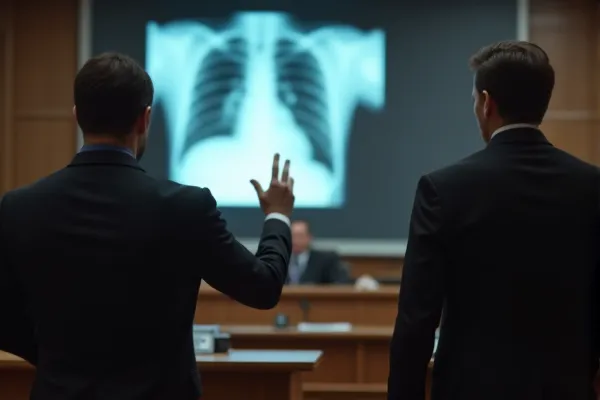
The defense doesn’t need to “disprove” your injury to reduce the verdict. They need to create doubt about causation, reasonableness, and credibility. Trial preparation is about removing the easy doubt and forcing them into honest disputes where the record favors you.
- Jury decision frame: Evidence Code section 780 tells you what credibility factors jurors may weigh.
- Comparative fault: Civil Code section 1714 anchors negligence duties while comparative fault is handled through jury instruction and proof.
Why California Law and San Diego Superior Court Venue Shape Trial Risk
San Diego Superior Court isn’t just a building — it’s the system that controls timing, rulings, and what the jury actually hears. California Law governs how damages are measured, what evidence comes in, and what instructions guide the verdict. Venue matters because local jury expectations, judicial calendars, and courtroom procedure affect the defense’s real risk, which is why trial posture is the most powerful settlement pressure there is.
- California Law defines the categories of recoverable harm and the rules that control proof.
- San Diego Superior Court is where the defense learns whether your case is theory or reality.
The “Immediate 5” Trial Questions San Diego Clients Ask
1) What are the main phases of a civil trial in San Diego Superior Court?
A typical civil jury trial moves through jury selection (voir dire), opening statements, presentation of evidence (witnesses and exhibits), closing arguments, and then jury instructions and deliberation. Evidence Code section 350 and section 352 frame admissibility by requiring relevant evidence while allowing the court to exclude evidence that creates undue prejudice or confusion. In practice, every phase is about credibility and narrative control.
- Expect the defense to front-load themes in voir dire and openings that will be repeated in cross.
- Evidence fights happen in small moments; a single excluded exhibit can change the tone of a day.
2) What does “burden of proof” mean in a California personal injury trial?
In a civil injury trial, the plaintiff carries the burden to prove liability and damages by a preponderance of the evidence. That means your proof must be more convincing than not, and it has to connect conduct to harm with a clean causal chain. Civil Code section 3333 provides the general measure of damages in negligence cases, and it matters because your trial presentation has to match what the law actually compensates.
- Trial is not about “how bad you feel”; it’s about what you can prove and tie to the collision.
- The defense will attack causation first because it shrinks every damage category downstream.
3) What is the defense trying to do to my testimony on the witness stand?
They’re trying to create a credibility problem the jury can hold onto. Evidence Code section 780 lists credibility factors, and defense cross is built around them: inconsistent statements, selective memory, and bias arguments. The practical risk is not that you “say something wrong” — it’s that you answer like you’re trying to win instead of answer like you’re telling the truth in a disciplined way.
- Short, accurate answers reduce room for distortion.
- If you don’t know, say so; guessing creates the kind of inconsistency jurors remember.
- Stay anchored to your records and timeline; the defense will try to pull you off them.
4) How does comparative fault affect a San Diego trial verdict?
If the defense proves the plaintiff shared fault, the verdict can be reduced by the plaintiff’s percentage of responsibility. Civil Code section 1714 is a foundational negligence statute that supports the duty analysis, while comparative fault is applied through proof and jury instruction at trial. In San Diego cases, comparative fault arguments show up in lane-change scenarios and multi-vehicle freeway collisions.
- Comparative fault is not an all-or-nothing defense; even small percentages can cut real money.
- The defense will try to turn ordinary driving choices into “avoidable” conduct after the fact.
5) What changes once a case is at trial that can affect settlement during trial?
Once the trial starts, the case valuation changes daily based on rulings, witness performance, and juror reactions. That’s why Code of Civil Procedure section 998 becomes sharper near trial: it forces each side to price the risk of being unreasonable in the face of a real verdict threat. If the plaintiff evidence is landing, mid-trial settlement can become more realistic.
- Trial risk is dynamic; a single strong treating doctor can move numbers fast.
- Bad cross-examination moments can cut value even in a legitimate injury case.
What Really Wins Trials: Proof Discipline, Not Volume
A) Evidence Evaluation in San Diego Cases
Trials are won by disciplined evidence: clear liability, consistent treatment, and credible witnesses. Police reports can frame fault, but medical records prove injury and causation. Scene photos and repair documentation help the jury believe mechanism, which is often where the defense tries to minimize harm in Southern California cases.
- Police reports vs medical records: one supports fault; the other proves injury and timeline.
- Scene photos vs repair documentation: visuals build belief; repairs support impact arguments.
- Treatment timeline consistency: gaps must be explained or the defense will weaponize them.
B) Settlement vs Litigation Reality
Before trial, insurers bargain. At trial, the courthouse sets the rhythm: rulings happen, testimony gets locked, and jurors form opinions. In San Diego Superior Court, once the defense sees the plaintiff can survive cross and the medical story is coherent, settlement leverage increases. Code of Civil Procedure section 998 is the pressure tool in the background because it turns “reasonable” into a number with consequences.
- Discovery posture matters less once the jury is seated; credibility becomes everything.
- Trial-ready cases settle better because the defense can’t rely on delay to create discounts.
C) San Diego-Specific Claim Wrinkles
San Diego juries see a lot of traffic cases and a lot of “everybody says they’re hurt” arguments. The defense will lean on region-specific themes: minor-impact claims, pre-existing degeneration, and “treatment inflation.” Freeway merges and chain reactions give them comparative fault angles. Your job is to make your case look organized, honest, and provable — because that’s what a jury rewards.
- Traffic density: defense tries to normalize collisions and downplay injury risk.
- Multi-vehicle freeway collisions: they use complexity to dilute fault and confuse causation.
- Insurer patterns: “degeneration” and “over-treatment” themes are common Southern California scripts.
Lived Experiences
Marcus
I was terrified about testifying because I thought one mistake would ruin everything. My attorney prepared me like it mattered, and once I understood the timeline and how to answer cleanly, the defense couldn’t twist my words.
Briana
The insurance company acted like my case was worth almost nothing until trial started and they saw the medical evidence presented clearly. My attorney kept the story focused, and the settlement discussions finally reflected what it would cost them if the jury decided the case.
California Statutory Framework & Legal Authority
Every statute cited on this page is linked below to the official California Legislature site exactly as required.
|
Attorney Advertising, Legal Disclosure & Authorship
ATTORNEY ADVERTISING.
This content is provided for general informational and educational purposes only and does not constitute legal advice.
Under the California Rules of Professional Conduct and applicable State Bar of California advertising regulations,
this material may be considered attorney advertising.
Viewing or reading this content does not create an attorney-client relationship.
Laws and procedures governing personal injury claims vary by jurisdiction and may change over time.
You should consult a qualified California personal injury attorney regarding your specific situation before taking any legal action.
Responsible Attorney:
Richard Morse, California Attorney (Bar No. 289241).
Morse Injury Law is a practice name and location used by Richard Peter Morse III, a California-licensed attorney.
About the Author & Legal Review Process
This article was prepared by the legal editorial team supporting Richard Peter Morse III,
with the goal of explaining California personal injury law and claims procedures in clear, accurate, and practical terms for injured individuals in San Diego and surrounding communities.
Legal Review:
This content was reviewed and approved by Richard Morse, a California-licensed attorney (Bar No. 289241),
who concentrates his practice on personal injury litigation and insurance claim disputes.
With more than 13 years of experience representing injury victims throughout California,
Mr. Morse focuses on serious personal injury matters including motor vehicle collisions, uninsured and underinsured motorist claims,
premises liability, catastrophic injury, and wrongful death.
His practice emphasizes claims evaluation, insurance carrier accountability, and litigation in California courts when fair resolution cannot be achieved.
|