
Our approach hinges on deep-dive forensics to ensure intoxication proof does not evaporate before the defense story hardens. We leverage Toxicology Chain-of-Custody and Body-Cam Forensic Review to pinpoint the true cause of the incident and dismantle the defense’s attempt to shift blame.

DUI & impaired driving crashes in San Diego: what’s the first move under California Law that keeps the truth from getting “managed”?
I’ve handled personal injury cases in California long enough to recognize the same pattern: the criminal DUI case gets treated like “someone else’s file,” and the civil insurer tries to settle your injury claim as if intoxication is a footnote. We reject that approach and build the civil case so the defense cannot hide behind “missing details.”
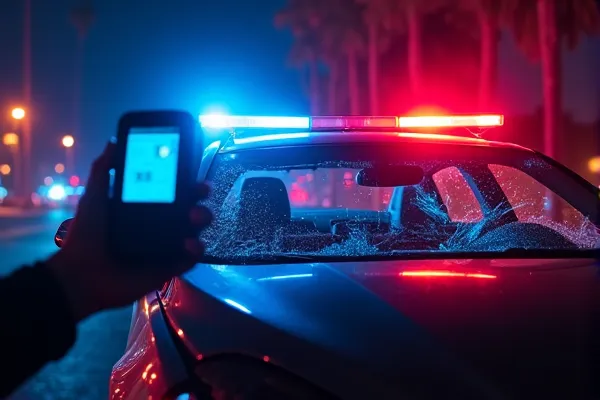
A realistic anonymized San Diego scenario: an impaired driver clips a vehicle on Harbor Drive, triggers a secondary impact, and the victim is left with a shoulder tear and post-concussion symptoms. The insurer pushes “comparative fault” and “minor property damage,” while quietly waiting for surveillance and lab timing to go stale. The strategy is to lock the negligence frame under Civ. Code § 1714, preserve intoxication proof tied to the DUI statutes, and calendar the civil deadline under CCP § 335.1.
- Proof priority: dispatch notes, body-cam, field sobriety observations, warrant timing, and lab chain-of-custody references.
- Damage priority: clear treatment chronology and functional loss documentation before the “it resolved” narrative takes hold.
- Valuation reality: punitive exposure is evaluated early, but proven carefully, with the civil standard in mind.
Why California Law and San Diego Superior Court venue change leverage in DUI injury cases
DUI collisions carry a moral weight that insurers love to acknowledge in conversation and minimize on paper. Under California Law, negligence still has to be proven cleanly, which is why the duty framework in Civ. Code § 1714 stays at the center of the civil claim even when intoxication is obvious.
Venue matters because litigation forces commitment. In San Diego Superior Court, the defense can’t keep floating “maybe” theories forever; positions harden under discovery, experts get retained, and contradictions become exhibits. And no matter how serious the crash is, the statute of limitations under CCP § 335.1 is a hard wall.
Magnitude expansion: how DUI injury cases get proven (or quietly discounted) in San Diego
A) Evidence Evaluation in San Diego Cases
Police reports can be helpful, but they are not the whole case. For civil purposes, I compare the collision narrative with medical records, symptom onset, and objective findings, then tie the intoxication proof to the statutory DUI framework.
- Police reports vs medical records: the report frames the event, the records prove injury progression.
- Scene photos vs repair documentation: impact mechanics matter; “low damage” arguments still show up in DUI claims.
- Treatment timeline consistency: gaps are where insurers claim you “got better.”
Amy
“They acted like the DUI arrest meant the insurance claim would be simple, but the adjuster still tried to pin my injuries on ‘pre-existing issues.’ Once the records were organized, the discounting stopped.”
California Statutory Framework & Legal Authority
|
Attorney Advertising, Legal Disclosure & Authorship
ATTORNEY ADVERTISING.
This content is provided for general informational and educational purposes only and does not constitute legal advice.
Under the California Rules of Professional Conduct and applicable State Bar of California advertising regulations,
this material may be considered attorney advertising.
Viewing or reading this content does not create an attorney-client relationship.
Laws and procedures governing personal injury claims vary by jurisdiction and may change over time.
You should consult a qualified California personal injury attorney regarding your specific situation before taking any legal action.
Responsible Attorney:
Richard Morse, California Attorney (Bar No. 289241).
Morse Injury Law is a practice name and location used by Richard Peter Morse III, a California-licensed attorney.
About the Author & Legal Review Process
This article was prepared by the legal editorial team supporting Richard Peter Morse III,
with the goal of explaining California personal injury law and claims procedures in clear, accurate, and practical terms for injured individuals in San Diego and surrounding communities.
Legal Review:
This content was reviewed and approved by Richard Morse, a California-licensed attorney (Bar No. 289241),
who concentrates his practice on personal injury litigation and insurance claim disputes.
With more than 13 years of experience representing injury victims throughout California,
Mr. Morse focuses on serious personal injury matters including motor vehicle collisions, uninsured and underinsured motorist claims,
premises liability, catastrophic injury, and wrongful death.
His practice emphasizes claims evaluation, insurance carrier accountability, and litigation in California courts when fair resolution cannot be achieved.
|