
To overcome the “minor impact” narrative, our team deploys Event Data Recorder (EDR) extraction to prove the exact delta-v force of the collision. By correlating Biomechanical Analysis with diagnostic imaging, we establish that the mechanism of injury is consistent with the crash forces, neutralizing insurer attempts to minimize your medical necessity.

Rear-end collisions in San Diego: what’s the one rule you must follow right now under California Law?
Preserve the proof that the crash was a rear impact before the insurer rewrites it into “sudden stop” or “minimal damage.” Under California Law, rear-end cases are won or lost on objective facts: distance, speed, impact sequence, and consistent medical documentation. If you let those drift, the valuation drops fast.
How rear-end cases actually get priced in San Diego, and how the defense engineers “shared fault”
I have spent years watching adjusters do the same three moves on rear-end collisions: downplay force, attack treatment, and hunt for any angle to argue comparative fault. I know it because I’ve been trained by insurance-defense professionals and I’ve taken these cases to places the defense would rather avoid. The goal is simple: turn “clear liability” into “discounted liability.”
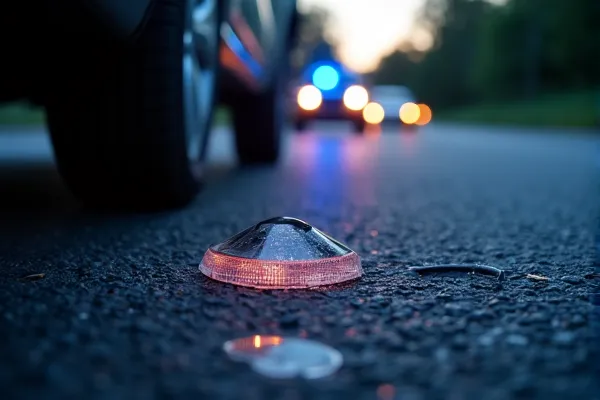
Here’s a realistic San Diego scenario: a driver is stopped on Friars Road in Mission Valley, traffic compresses, and a vehicle rear-ends them hard enough to trigger a second impact. The at-fault insurer calls it “low speed,” points to modest bumper damage, and suggests the symptoms are “soft tissue and unrelated.”
If the facts justify it, we build the file like it’s headed to San Diego Superior Court, because rear-end cases only settle at fair value when the defense expects their talking points to be tested against records, timelines, and physical evidence.
- Following distance and control: insurers lean on Veh. Code § 21703 to frame rear impacts as the trailing driver’s failure to maintain a safe distance.
- Basic negligence duty: liability still runs through Civ. Code § 1714 when we connect breach to injury with medical proof.
- Time pressure is real: the filing deadline is procedure, not negotiation, under CCP § 335.1.
Why California Law and San Diego Superior Court venue change leverage in rear-end collisions
Rear-end claims look “simple” until the defense decides they are not. Under California Law, negligence is anchored by Civ. Code § 1714, and the safety rule for following distance is captured in Veh. Code § 21703. But insurers don’t pay on “rules,” they pay on proof.
Venue matters because litigation forces the defense to stop implying and start proving. In San Diego Superior Court, the case becomes a record: impact sequence, treating provider notes, imaging, wage loss support, and credibility. And if you let time run while you “wait to see how you feel,” you weaken evidence and run straight into CCP § 335.1.
The “Immediate 5”: questions San Diego victims ask after a rear-end crash
1) If I was rear-ended in San Diego, is the other driver automatically at fault under California Law?
Rear-end liability is often supported by the following-distance duty in Veh. Code § 21703 and the general negligence framework in Civ. Code § 1714. “Automatic” is not how insurers think: they look for facts to argue comparative fault, so the job is to lock down impact sequence, stopping conditions, and consistency of injury documentation.
2) What if the insurer says I “stopped suddenly” in San Diego traffic?
The defense uses “sudden stop” to argue you created an unavoidable hazard and to push comparative fault under the broader duty principles of Civ. Code § 1714. In real rear-end cases, safe following distance and attention are still the trailing driver’s problem under Veh. Code § 21703, and we test “sudden” against traffic patterns, skid evidence, and witness statements.
3) If there was a chain-reaction rear-end crash, how does that affect fault and value?
Multi-vehicle rear-end crashes turn into sequence disputes: who hit first, who was pushed, and whether each impact caused distinct injury. The legal framework still runs through negligence under Civ. Code § 1714, but valuation depends on proving impact order through photos, vehicle positions, and consistent medical reporting tied to timing.
4) The other side says the car damage is “minor,” so the injury can’t be serious—how is that handled?
“Minor damage” is an insurer valuation tactic, not a medical conclusion, and it’s aimed at undermining causation under the negligence framework of Civ. Code § 1714. In practice, we match symptoms and exam findings to a clean treatment timeline and objective diagnostics where appropriate, because a rear-end claim is only as strong as the causation story your records support.
5) How long do I have to file a rear-end collision lawsuit in San Diego, and what happens if I wait?
In many California personal injury cases, the limitations period is set by CCP § 335.1. Waiting helps the defense: gaps in care, fading witness memory, lost photos, and incomplete wage-loss proof become “uncertainty,” and uncertainty is how insurers justify paying less.
Magnitude expansion: what moves a rear-end case in San Diego
A) Evidence Evaluation in San Diego Cases
Police reports are useful for parties and admissions, but they are not the whole case. I weigh the report against scene photos, vehicle damage and repair documentation, and the treatment timeline—because that’s what the insurer will attack first.
- Police reports vs medical records: the report frames the event; records prove injury progression and consistency.
- Scene photos vs repair documentation: photos show position and impact direction; repair docs show force indicators and sequence.
- Treatment timeline consistency: gaps are used as “you got better” or “something else happened” arguments.
Christina
“The adjuster kept repeating that the crash was minor and my neck pain didn’t make sense. Once Richard Morse laid out the repair documentation, the timeline, and the medical notes in a way that didn’t leave gaps, the stalling stopped and the claim finally moved at a fair pace.”
California Statutory Framework & Legal Authority
|
Attorney Advertising, Legal Disclosure & Authorship
ATTORNEY ADVERTISING.
This content is provided for general informational and educational purposes only and does not constitute legal advice.
Under the California Rules of Professional Conduct and applicable State Bar of California advertising regulations,
this material may be considered attorney advertising.
Viewing or reading this content does not create an attorney-client relationship.
Laws and procedures governing personal injury claims vary by jurisdiction and may change over time.
You should consult a qualified California personal injury attorney regarding your specific situation before taking any legal action.
Responsible Attorney:
Richard Morse, California Attorney (Bar No. 289241).
Morse Injury Law is a practice name and location used by Richard Peter Morse III, a California-licensed attorney.
About the Author & Legal Review Process
This article was prepared by the legal editorial team supporting Richard Peter Morse III,
with the goal of explaining California personal injury law and claims procedures in clear, accurate, and practical terms for injured individuals in San Diego and surrounding communities.
Legal Review:
This content was reviewed and approved by Richard Morse, a California-licensed attorney (Bar No. 289241),
who concentrates his practice on personal injury litigation and insurance claim disputes.
With more than 13 years of experience representing injury victims throughout California,
Mr. Morse focuses on serious personal injury matters including motor vehicle collisions, uninsured and underinsured motorist claims,
premises liability, catastrophic injury, and wrongful death.
His practice emphasizes claims evaluation, insurance carrier accountability, and litigation in California courts when fair resolution cannot be achieved.
|