
Autonomous vehicle testing accidents in San Diego are governed by the rigorous new standards of AB 1777 and California Vehicle Code § 38750. In 2026, the legal burden has shifted: manufacturers are now explicitly cited for violations committed by automated driving systems (ADS), and a mandatory $5 million insurance instrument must be in place before any public road testing. At Morse Injury Law, we specialize in “Sensor Data Litigation”—using the legally mandated 30-second pre-collision data capture to prove algorithmic negligence or system failure.

Autonomous & self-driving vehicle testing injury in San Diego: what is the one rule you cannot break under California Law?
Do not give a recorded statement or sign anything to the testing company or its insurer until liability is pinned to a person or entity under California Law. In self-driving testing cases, the first battle is “who was driving” and who controls the risk. If litigation is necessary, San Diego Superior Court runs on evidence, not press releases.
What these cases look like when the tech company is already in defense mode
Autonomous testing claims are not handled like ordinary crashes, even when the injuries look ordinary. The company and its carrier move fast to control the narrative: “operator in control,” “unexpected cut-in,” “system performing as designed.” Under California Law, responsibility starts with negligence principles in Civ. Code § 1714 and owner accountability rules like Veh. Code § 17150 when the facts support it.
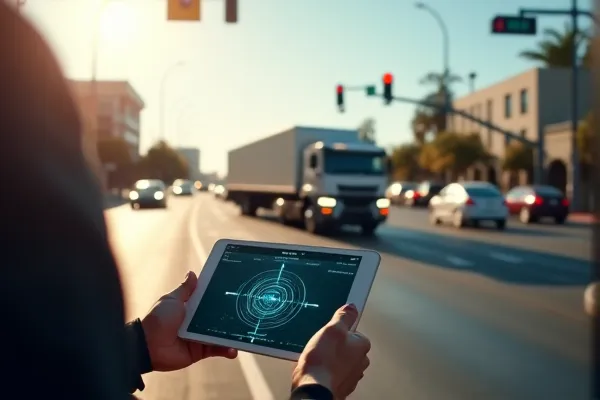
A realistic San Diego scenario: a test vehicle makes an unsafe turn near Mira Mesa Blvd, the safety driver hesitates, and the impact spins a commuter into a second contact. The insurer offers quick money if the injured driver agrees the “human driver was primarily at fault.” When the carrier refuses to meaningfully address the conflicting stories, filing in San Diego Superior Court forces discovery so the company can’t hide behind vague statements and selective logs.
- Early control is the play: statements, releases, and “helpful” reimbursements that later get used as leverage.
- Identity confusion is intentional: the defense tries to blur driver, owner, and system responsibilities.
- Your timeline is still king: symptoms, treatment, wage loss, and documented limitations drive damages under Civ. Code § 3333.
Jurisdictional authority: why California Law and San Diego Superior Court venue matter in testing crashes
California’s autonomous testing landscape is regulated and politically sensitive, but your injury claim is still a civil case with proof burdens. Veh. Code § 38750 recognizes autonomous vehicle operation in California, and it becomes part of how defense teams frame “compliance” versus “fault.” Compliance is not immunity, and it does not erase negligence when a person or entity fails to use reasonable care under Civ. Code § 1714.
Venue matters because San Diego Superior Court is where the defense has to pick a story and live with it. Litigation forces production of facts and sworn positions, instead of informal “our system shows” statements. If multiple parties are involved, Civ. Code § 1431.2 also affects how non-economic damages exposure is evaluated across defendants.
The “Immediate 5”: questions San Diego victims ask after a crash involving a self-driving test vehicle
1) Who is legally responsible when a self-driving test vehicle injures someone in San Diego?
Responsibility depends on the facts, but the legal framework is not mysterious: negligence principles under Civ. Code § 1714, and owner responsibility can apply under Veh. Code § 17150 when supported by evidence. Veh. Code § 38750 is part of the autonomous vehicle landscape, but it does not erase civil fault rules. In practice, the defense tries to split blame across the safety driver, the other motorist, and “the system” to reduce exposure.
2) What evidence matters most early in an autonomous testing injury claim under California Law?
The most important evidence is what locks the timeline: incident reports, vehicle positions, photos, medical records, and objective proof of wage loss. Civil damages are measured under Civ. Code § 3333, so you need documentation that links the collision to real costs and functional impact. The defense will prioritize anything that creates uncertainty about causation or comparative fault.
3) How do insurers use “compliance” arguments to devalue these cases, and how do you counter it?
They argue the test program followed rules, so the crash must be someone else’s fault, or the injuries must be minor. California Law still requires reasonable care under Civ. Code § 1714, and “compliance” does not excuse unsafe driving decisions or negligent supervision. The counter is simple: pin the facts, document damages under Civ. Code § 3333, and force the defense to commit to a story.
4) What deadlines apply if I was injured by a self-driving test vehicle in San Diego?
Most personal injury cases in California fall under CCP § 335.1, but waiting is still a mistake even when time remains. Early delay weakens evidence and gives the defense room to rewrite the narrative. The legal clock and the evidence clock run at the same time, and the evidence clock usually runs out first.
5) When does filing in San Diego Superior Court change leverage in a self-driving testing crash?
It changes leverage when the defense is hiding behind informal claims handling and refusing to address contradictions. Filing forces deadlines and formal positions, and it prevents “we’re still investigating” from becoming the strategy. If multiple defendants are involved, Civ. Code § 1431.2 also influences how settlement risk is modeled for non-economic damages.

In a testing case, the defense will try to make you argue technology. You don’t win by debating buzzwords. You win by proving what happened, who controlled the risk, and what it cost you.
- Keep the record clean: consistent treatment and documented restrictions make causation harder to attack.
- Expect blame-shifting: owner, operator, and “system” narratives get used to dilute responsibility.
- Force specificity: vague references to “logs” and “systems” do not replace admissible proof.
Magnitude expansion: what increases or destroys value in San Diego autonomous testing injury cases
A) Evidence Evaluation in San Diego Cases
Testing cases are document-heavy, but the fundamentals do not change. Police reports help with the scene story; medical records prove injury progression; wage documentation proves real loss. The defense looks for gaps between the crash and care, and inconsistencies that let them argue the injury is unrelated.
- Police reports vs medical records: one describes impact; the other proves injury and causation.
- Scene photos vs repair documentation: photos preserve angles; repair records help explain force and mechanics.
- Treatment timeline consistency: consistent care undermines the “it resolved” and “it’s subjective” defenses.
B) Settlement vs Litigation Reality
Pre-suit, the carrier often treats these as public-relations sensitive but dollars-light: early offers tied to broad releases. Once filed in San Diego Superior Court, the defense has to answer with evidence and sworn positions, not talking points. Litigation does not guarantee an outcome, but it changes what the defense must produce and what it can safely deny.
C) San Diego-Specific Claim Wrinkles
San Diego’s tech corridors and freeway density create predictable crash patterns: sudden lane changes, stop-and-go chain reactions, and confusing merges that invite blame-shifting. Testing companies often rely on “unavoidable” framing, especially when a second vehicle is involved. Your case gets stronger when responsibility is pinned early and damages are documented under Civ. Code § 3333 without gaps.
- Traffic density and rear-end patterns: stop-and-go conditions produce disputes over reaction time and spacing.
- Multi-vehicle freeway collisions: the defense uses complexity to dilute fault across drivers and entities.
- Common Southern California insurer resistance patterns: delay, partial admissions, and early settlement pressure tied to broad releases.
Lived Experiences
Angela
“They treated it like a tech story instead of an injury case. Richard Morse kept pulling it back to the proof and the timeline, and the carrier stopped dodging once the file was built for court.”
Richard
“I felt outmatched by the company’s rapid response and the insurer’s certainty. Richard Morse explained how California Law actually assigns responsibility and made the claim about facts, not hype, and that changed everything.”
California Statutory Framework & Legal Authority
|
Attorney Advertising, Legal Disclosure & Authorship
ATTORNEY ADVERTISING.
This content is provided for general informational and educational purposes only and does not constitute legal advice.
Under the California Rules of Professional Conduct and applicable State Bar of California advertising regulations,
this material may be considered attorney advertising.
Viewing or reading this content does not create an attorney-client relationship.
Laws and procedures governing personal injury claims vary by jurisdiction and may change over time.
You should consult a qualified California personal injury attorney regarding your specific situation before taking any legal action.
Responsible Attorney:
Richard Morse, California Attorney (Bar No. 289241).
Morse Injury Law is a practice name and location used by Richard Peter Morse III, a California-licensed attorney.
About the Author & Legal Review Process
This article was prepared by the legal editorial team supporting Richard Peter Morse III,
with the goal of explaining California personal injury law and claims procedures in clear, accurate, and practical terms for injured individuals in San Diego and surrounding communities.
Legal Review:
This content was reviewed and approved by Richard Morse, a California-licensed attorney (Bar No. 289241),
who concentrates his practice on personal injury litigation and insurance claim disputes.
With more than 13 years of experience representing injury victims throughout California,
Mr. Morse focuses on serious personal injury matters including motor vehicle collisions, uninsured and underinsured motorist claims,
premises liability, catastrophic injury, and wrongful death.
His practice emphasizes claims evaluation, insurance carrier accountability, and litigation in California courts when fair resolution cannot be achieved.
|