
Most construction workers assume they are limited to Workers’ Compensation. However, if your fall was caused by a scaffold that was assembled, rented, or maintained by a separate company, you have a Third-Party claim. We investigate whether the scaffold lacked Cal/OSHA mandated toe-boards, guardrails, or mid-rails. If the “competent person” failed to inspect the rig before your shift, that third-party vendor is liable for your pain and suffering.

Scaffolding Falls Lawyer in San Diego: what do you do when the scaffold “gets repaired” right after you hit the ground?
Under the legal framework of California Law, the single most important rule is evidence preservation: you must lock down the scaffold’s condition, specific components, and control chain before anyone swaps parts and calls it “maintenance.” In these cases, delay is the defense strategy. We counter this using the Morse Injury Law advantage, deploying investigators to photograph serial numbers and structural defects before the site is altered. When we prove the equipment was non-compliant, we move to secure full compensation in San Diego Superior Court venues. To ensure you don’t miss the window to capture this fleeting evidence, consult our client resources guide on jobsite evidence preservation.
How I handle faulty scaffold support cases in San Diego (and why the story changes fast)

Scaffold falls are not “just accidents.” They’re usually control failures: who erected it, who inspected it, who approved it for use, and who ignored the prior wobble complaint. The liability framework starts with ordinary negligence under Civ. Code § 1714, then turns into a proof problem about possession, control, and notice.
Here’s the San Diego pattern I see: a sub erects the scaffold, a GC “signs off” informally, and multiple trades use it. Someone reports a loose support or a bent brace. No formal lockout happens. After the fall, the scaffold gets “repaired” before anyone documents the condition. Once the case is positioned for San Diego Superior Court, discovery forces the daily logs, inspection records, and subcontractor scopes onto the table under CCP § 2017.010, and that “nobody knew” defense gets tested against paper.
- We identify who controlled the scaffold that day (GC, scaffold provider, sub, or property owner).
- We preserve component IDs, plank type, brace condition, and tie-off points before alterations.
- We track notice: prior complaints, wobble reports, and “temporary fixes” that never got corrected.
Why California Law and San Diego Superior Court venue materially change leverage in scaffold cases
Insurers prefer scaffold cases to stay in the fog: “user error,” “no proof,” “could have happened any way.” In San Diego, the leverage comes from forcing control evidence and repair timing into the record. Once suit is filed, you can compel documents and testimony that don’t show up in informal claims handling.
San Diego Superior Court procedures matter because they let you reach the entities behind the scaffold: the contractor who rented it, the company that erected it, and the party responsible for inspection. Discovery under CCP § 2031.010 is how you pull inspection logs, purchase orders, work tickets, and communications about “repairs” that occurred after the fall.
The “Immediate 5”: scaffolding fall questions that decide whether the case is provable in San Diego
1) Who owned or controlled the scaffold at the time of the fall, and who had inspection responsibility?
Liability follows control and duty. Under Civ. Code § 1714, the focus is whether a party failed to use reasonable care to prevent a foreseeable scaffold hazard. In practice, control shows up in rental agreements, subcontract scopes, and daily supervision decisions—especially when multiple trades used the same platform.
2) What exactly failed: support/bracing, plank integrity, base stability, or tie-off compatibility?
“I fell off” isn’t enough; you need the mechanism. If a support kicked out or a brace was missing, you’re looking at a condition failure, not a misstep. The fastest way to prove it is to preserve photographs, measurements, and component identifiers before repairs, then connect that condition to the injury through consistent medical documentation and a coherent timeline.
3) Did the scaffold get altered, repaired, or reconfigured after the incident—and can we prove the timing?
This is where insurers try to win without litigating: they “fix” the condition and then deny there was a defect. Filing and discovery are how you force the repair story into the record. Document requests under CCP § 2031.010 target work tickets, purchase orders, rental exchanges, and communications about post-incident changes.
4) Are you inside the California deadline to sue, and are there multiple defendants to identify early?
Most personal injury cases in San Diego run under the two-year limitations period in CCP § 335.1. Scaffold cases often involve layered responsibility—GC, sub, scaffold provider, and sometimes property ownership—so delay creates a procedural and identification problem, not just a time problem.
5) What changes once the case is filed in San Diego Superior Court?
Pre-suit, you get selective documents and soft denials. After filing, discovery scope under CCP § 2017.010 allows you to compel inspection records, training documents, scaffold rental files, and internal communications. Depositions under CCP § 2025.010 lock supervisors and safety personnel into a timeline that insurers can’t keep rewriting.
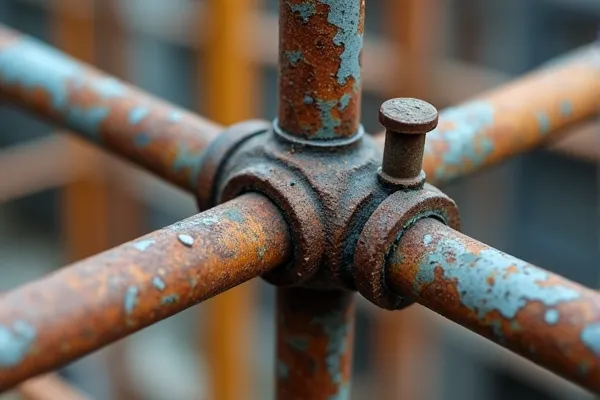
In scaffold cases, the “support failure” question is only half the fight. The other half is showing the defense had notice and chose speed over safety. When a scaffold is “repaired” immediately after a fall, that repair becomes a timeline issue that has to be pinned down with documents, not guesses.
- Police reports vs medical records: police often record the event; medical records preserve mechanism and progression.
- Scene photos vs repair documentation: photos show condition; repair tickets show who changed what and when.
- Treatment timeline consistency: consistent reporting protects causation and credibility in San Diego claims handling.
Magnitude expansion: what actually drives value in San Diego scaffold fall cases
A) Evidence Evaluation in San Diego Cases
Defense carriers price these cases based on proof density. They discount anything that looks like “no one can tell what happened.” My approach is to build a record that answers the control-and-condition questions cleanly.
- Condition documentation: bracing, base stability, planking, and tie points before alterations.
- Notice documentation: prior wobble complaints, informal warnings, and safety meeting references.
- Record consistency: mechanism, symptoms, and treatment that track logically from day one.
B) Settlement vs Litigation Reality
Pre-suit, scaffold cases get filtered through “comparative fault” narratives: you weren’t careful, you weren’t clipped in, you stepped wrong. Litigation shifts the focus to provable control and provable condition. In San Diego Superior Court, the file isn’t just a claims summary—it’s sworn testimony plus documents that either match the defense story or don’t.
- Discovery forces inspection logs and subcontractor scopes onto the table.
- Depositions crystallize who knew about instability and who had authority to fix it.
- Repair timing becomes an evidentiary issue with invoices, tickets, and internal emails.
C) San Diego-Specific Claim Wrinkles
San Diego job sites move fast: downtown remodels, UTC builds, Mission Valley projects. That speed creates predictable failures: “temporary” supports, rushed resets, and shared-use scaffolds—exactly where insurers try to push blame downhill.
- Multi-trade access increases the risk that “someone else moved it” becomes the defense shield.
- High schedule pressure increases post-incident “repairs” before documentation is taken.
- Insurer resistance typically targets mechanism and notice, not the injury itself.
Lived Experiences
Ethan
“The company acted like the scaffold was fine because it was ‘fixed’ the next day. Richard focused on what it looked like before the repair and who signed off on it. That changed the conversation from blaming me to proving control.”
Julia
“I kept hearing that falls are hard to prove. Richard pulled the inspection gaps and the timeline around the ‘temporary brace’ that was never replaced. The outcome felt practical—less guesswork, more proof, and a settlement that reflected reality.”
California Statutory Framework & Legal Authority
|
Attorney Advertising, Legal Disclosure & Authorship
ATTORNEY ADVERTISING.
This content is provided for general informational and educational purposes only and does not constitute legal advice.
Under the California Rules of Professional Conduct and applicable State Bar of California advertising regulations,
this material may be considered attorney advertising.
Viewing or reading this content does not create an attorney-client relationship.
Laws and procedures governing personal injury claims vary by jurisdiction and may change over time.
You should consult a qualified California personal injury attorney regarding your specific situation before taking any legal action.
Responsible Attorney:
Richard Morse, California Attorney (Bar No. 289241).
Morse Injury Law is a practice name and location used by Richard Peter Morse III, a California-licensed attorney.
About the Author & Legal Review Process
This article was prepared by the legal editorial team supporting Richard Peter Morse III,
with the goal of explaining California personal injury law and claims procedures in clear, accurate, and practical terms for injured individuals in San Diego and surrounding communities.
Legal Review:
This content was reviewed and approved by Richard Morse, a California-licensed attorney (Bar No. 289241),
who concentrates his practice on personal injury litigation and insurance claim disputes.
With more than 13 years of experience representing injury victims throughout California,
Mr. Morse focuses on serious personal injury matters including motor vehicle collisions, uninsured and underinsured motorist claims,
premises liability, catastrophic injury, and wrongful death.
His practice emphasizes claims evaluation, insurance carrier accountability, and litigation in California courts when fair resolution cannot be achieved.
|