
Modern warehouses are often “Multi-Employer Worksites,” filled with third-party delivery drivers, independent contractors, and temporary staffing agency workers. If you are a direct employee and you are injured by a temp worker or an outside truck driver, that is a Third-Party Case. We investigate training logs to prove the other company failed to certify their driver, allowing you to sue them directly for pain and suffering damages.

Industrial & warehouse injury lawyer in San Diego: what do you do when the company says “workers’ comp only”?
The single most important rule under the California legal framework is to identify every non-employer player early—vendors, staffing companies, contractors, property managers, and equipment manufacturers—because “workers’ comp only” is a defensive script. Liability often lives outside your direct employer, and evidence disappears fast in high-turnover warehouse operations. We apply the Morse Injury Law advantage to subpoena forklift telematics and loading dock surveillance before it is overwritten. This aggressive discovery is the only way to build a high-value civil claim for San Diego Superior Court. To learn how to protect the evidence before the warehouse “cleans up” the site, consult our client resources guide immediately.
How I handle San Diego industrial injury cases when the story changes by the hour
Warehouses and industrial sites run on metrics: pick rates, dock times, uptime. That pressure creates predictable failures—disabled alarms, rushed training, skipped maintenance, and “we’ll fix it later” hazards that become permanent. When someone gets hurt, the paper trail suddenly gets cleaned up.
In a San Diego case, an injured worker was told the incident was “unavoidable” and that the facility had “no prior issues.” Once we positioned the claim for San Diego Superior Court under California Law, discovery under CCP § 2017.010 pulled inspection notes, vendor service tickets, and internal emails showing the hazard had been flagged repeatedly. That’s the point: value comes from provable notice, control, and preventability—not outrage.
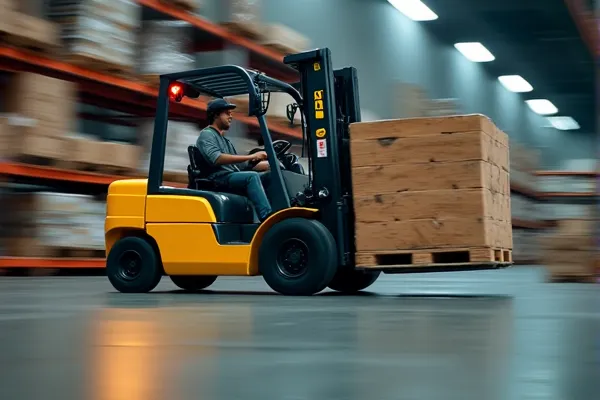
Most industrial cases rise or fall on a few hard questions:
- Control: who owned the area, the equipment, or the process that created the hazard.
- Notice: what was known before the injury—near-misses, prior incidents, inspections, maintenance requests.
- Condition: what the scene looked like before it was “corrected” after the event.
Negligence starts with Civ. Code § 1714. Premises liability is often part of the mix when a warehouse is operated by one entity, owned by another, and serviced by multiple contractors. The defense knows that, so they push the narrative toward “employee mistake” and away from shared responsibility.
Why California Law and San Diego Superior Court venue change leverage in warehouse claims
Before suit, insurers negotiate with limited information and broad denials. After filing in San Diego Superior Court, you can compel the operational records that show what the facility knew and what it chose to ignore. That’s not posturing; it’s how you turn a safety failure into an evidentiary timeline.
Document demands under CCP § 2031.010 target training materials, maintenance logs, staffing rosters, incident histories, and vendor contracts. Depositions under CCP § 2025.010 lock managers and safety personnel into what they knew before your injury—not what they wish they had known.
The “Immediate 5”: warehouse injury questions I ask because they decide liability in San Diego
1) Who controlled the hazard: your employer, the property owner, a contractor, a staffing company, or a vendor?
Under Civ. Code § 1714, duty and breach are usually proven through control of the area or equipment and the ability to correct the risk. In a San Diego warehouse, that often means separating “who employs you” from “who runs the floor” and “who services the equipment.” Control also determines who holds the records you’ll need.
2) What exactly failed: forklift operation, racking stability, dock equipment, conveyors, or a lockout procedure?
Industrial injuries are rarely “random.” The cause is usually a chain: a process shortcut, a maintenance issue, a bypassed safety step, or conflicting traffic patterns around docks and aisles. The defense tries to simplify it into one bad moment, because one bad moment is cheaper than a systemic failure.
3) Is there evidence of prior notice: near-misses, prior incidents, inspection notes, or maintenance requests?
Notice is leverage. If a rack leg was bent, a dock plate was malfunctioning, or a forklift had recurring braking issues, prior documentation changes the case from “accident” to “foreseeable hazard.” Discovery under CCP § 2017.010 is how you get the internal records that rarely surface voluntarily.
4) Are you within California’s deadline to sue while the video and operational data still exist?
Most injury claims are governed by the two-year statute in CCP § 335.1. But warehouse evidence—surveillance video, telematics, forklift logs, handheld scan records—often cycles out quickly, and the loss of that data quietly benefits the defense. Timing is not just a “deadline” issue; it’s an evidence survival issue.
5) What changes once we file in San Diego Superior Court?
Once filed, you can use CCP § 2031.010 to demand documents and inspection of tangible evidence, and CCP § 2025.010 to take sworn testimony. That’s how you force clarity on training, maintenance, vendor responsibility, and who had authority to pause operations before someone got hurt.
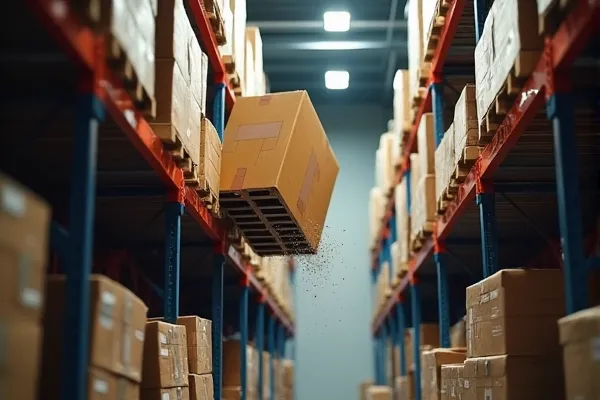
Industrial claims are priced on proof and documentation. The injury may be obvious; liability usually isn’t. Insurers pay when the timeline shows control, notice, and a preventable failure.
- Police reports vs medical records: a report may be minimal; medical records preserve mechanism and progression.
- Scene photos vs repair documentation: photos show conditions; repair logs show what was “fixed” after the incident.
- Treatment timeline consistency: consistent reporting protects causation in San Diego claims handling.
Magnitude expansion: what actually moves a San Diego industrial injury case
A) Evidence Evaluation in San Diego Cases
I look for evidence that survives cross-examination: objective records and repeatable facts. In a warehouse environment, the defense often relies on chaos—multiple shifts, multiple vendors, and “we don’t have that anymore.”
- Training and staffing: who was qualified, who was new, and who was supervising.
- Equipment and maintenance: inspection intervals, prior defects, and vendor involvement.
- Video and data: camera retention, forklift telematics, and incident reporting systems.
B) Settlement vs Litigation Reality
Pre-suit negotiations usually involve partial facts and confident denials. Litigation in San Diego Superior Court forces production of records and sworn testimony. That pressure changes valuations because it changes risk—especially when prior notice and cost-cutting decisions are documented.
- Document discovery exposes what was known and when it was known.
- Depositions lock in the “real” procedure versus the written one.
- Third-party responsibility becomes provable rather than speculative.
C) San Diego-Specific Claim Wrinkles
San Diego’s industrial mix—ports, logistics corridors, dense warehouse operations—creates predictable friction points: tight aisles, mixed pedestrian/forklift traffic, and continuous throughput expectations. Those pressures generate a familiar defense playbook: “the system is safe; the worker deviated.” The counter is objective evidence and control mapping.
- Forklift-and-pedestrian conflict zones around docks and staging areas.
- Racking stability and deferred repairs treated as “non-urgent” until they aren’t.
- Vendor and contractor involvement that spreads responsibility across multiple entities.
Lived Experiences
Vanessa
“They told me it was my fault for being in the wrong place. Richard focused on the layout, the traffic patterns, and the prior complaints that never got fixed. It felt like the case was built on facts they couldn’t dodge.”
Luis
“After I got hurt, everything changed overnight—new tape lines, new signs, and suddenly everyone was ‘trained.’ Richard pinned down what the floor looked like before the incident and who approved the shortcuts. That’s what finally moved the case.”
California Statutory Framework & Legal Authority
|
Attorney Advertising, Legal Disclosure & Authorship
ATTORNEY ADVERTISING.
This content is provided for general informational and educational purposes only and does not constitute legal advice.
Under the California Rules of Professional Conduct and applicable State Bar of California advertising regulations,
this material may be considered attorney advertising.
Viewing or reading this content does not create an attorney-client relationship.
Laws and procedures governing personal injury claims vary by jurisdiction and may change over time.
You should consult a qualified California personal injury attorney regarding your specific situation before taking any legal action.
Responsible Attorney:
Richard Morse, California Attorney (Bar No. 289241).
Morse Injury Law is a practice name and location used by Richard Peter Morse III, a California-licensed attorney.
About the Author & Legal Review Process
This article was prepared by the legal editorial team supporting Richard Peter Morse III,
with the goal of explaining California personal injury law and claims procedures in clear, accurate, and practical terms for injured individuals in San Diego and surrounding communities.
Legal Review:
This content was reviewed and approved by Richard Morse, a California-licensed attorney (Bar No. 289241),
who concentrates his practice on personal injury litigation and insurance claim disputes.
With more than 13 years of experience representing injury victims throughout California,
Mr. Morse focuses on serious personal injury matters including motor vehicle collisions, uninsured and underinsured motorist claims,
premises liability, catastrophic injury, and wrongful death.
His practice emphasizes claims evaluation, insurance carrier accountability, and litigation in California courts when fair resolution cannot be achieved.
|