
Proper venue is critical for a speedy resolution. Under San Diego Superior Court Local Rule 2.1.3, civil actions arising in zip codes such as 91910 (Chula Vista), 91950 (National City), or 92173 (San Ysidro) fall under the jurisdiction of the South County Regional Center on 3rd Avenue. Filing your case here is strategic. South County juries are often diverse and community-focused; they understand the unique traffic dynamics of the I-5/805 merge and the border region. We ensure your case is filed correctly in Chula Vista to prevent defense lawyers from delaying justice with “improper venue” motions.

Courts & Venues: South County Regional Center – Chula Vista — what you must do before “venue” becomes a weapon
If your injury case touches Chula Vista, National City, Imperial Beach, Otay Mesa, or the I-5/I-805 split, you’re in a lane where insurers expect people to get overwhelmed by scheduling and court logistics. Under California Law, your most important rule is this: keep procedure airtight, because the defense trades on uncertainty.
How South County venue plays out in real San Diego litigation
Once a case is filed in San Diego Superior Court, the defense stops “negotiating” and starts managing risk. South County handling matters because it changes the friction points: hearing calendars, travel, timing, and whether the insurer thinks you’ll miss a date or accept a low offer to make the process stop.
A realistic scenario: an I-5 collision near Main Street, a shoulder and neck injury that doesn’t resolve, and a carrier that labels treatment “excessive” because the car doesn’t look crushed. We stabilize the case by locking down liability proof, documenting the treatment logic, and filing/serving in a way that leaves the defense no procedural oxygen. When they can’t stall, they have to value.
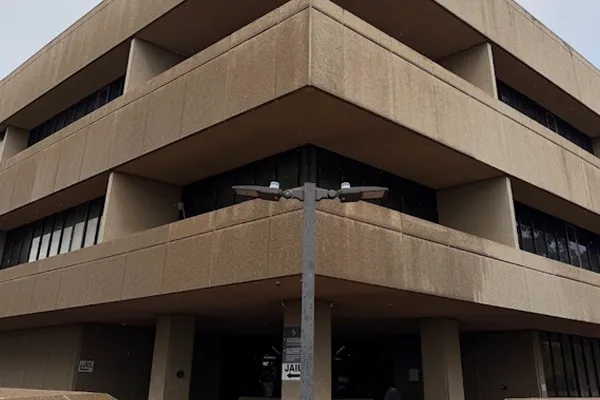
South County is not “less serious court.” It’s still the same rules, the same consequences, and the same insurer playbook: delay early, minimize later. If you want the defense to treat you like a litigant and not a file number, deadlines and service have to be clean.
Start with the clock: CCP § 335.1 controls the limitations window for many personal injury actions. Then you have to serve within the statutory time requirements, because late or sloppy service invites leverage attacks.
Why California Law and venue decisions change leverage in South Bay cases
Venue isn’t about convenience. It affects the defense budget, the timeline, and the court’s tolerance for gamesmanship. A properly venued and properly served case forces the insurer to spend real money to defend, which is the moment valuation starts moving toward reality.
If your case posture is uncertain, the insurer delays and waits for you to blink. If your posture is disciplined, the insurer has to evaluate exposure. That’s the entire difference.
The “Immediate 5” questions South County injury victims ask me
1) If my crash happened in Chula Vista or National City, how does venue get decided?
Venue is determined by statutes and the relationship between the dispute, the parties, and the county—not by guesswork. The baseline framework is governed by provisions like CCP § 395. In practice, you want a venue posture that is correct, defensible, and doesn’t invite procedural motions that buy the insurer time.
2) Does South County Regional Center mean my case is “smaller” or worth less?
No. Value comes from liability strength, damages proof, and litigation posture—venue changes the rhythm, not the truth. Under California procedure, a properly filed case is still a San Diego Superior Court case with enforceable deadlines and consequences. What lowers value is delay, inconsistent treatment documentation, and procedural mistakes that the defense can exploit.
3) What are the first deadlines I need to care about before we ever see a courtroom?
First, the filing deadline under CCP § 335.1. Second, the time to serve the summons and complaint under CCP § 583.210. Missing either one doesn’t just “complicate” the case—it hands the defense a leverage narrative.
4) What does “proper service” actually mean in a South County case?
Proper service means the summons and complaint are delivered in the legally required manner so the defendant is officially under the court’s authority. The summons itself is grounded in statutes like CCP § 412.20, which addresses required contents. The defense cares because a service defect buys time, creates motion practice, and pressures injured people into discount settlements.
5) If I have to appear for a hearing in Chula Vista, what should I expect from the defense?
Expect pressure. Defense counsel will use logistics—traffic, work conflicts, and uncertainty—to push for “quick” stipulations that quietly weaken your position. My rule is we treat every appearance as leverage protection: know what can be decided, what must be preserved, and what is non-negotiable.

South County crashes carry predictable patterns: heavy I-5/I-805 merging, SR-905 and Otay freight traffic, and rear-end chains where insurers try to flatten fault and flatten value. If the file looks “routine,” they treat your injury like it’s routine too.
That’s why we build the case around proof—not drama—and we keep procedure tight so the carrier can’t stall until you’re exhausted.
Magnitude expansion: what moves value in South County cases
A) Evidence Evaluation in San Diego Cases
Insurers evaluate your claim through contradictions. If you remove contradictions, they have to evaluate exposure. In South Bay cases, evidence discipline matters because traffic patterns create multi-vehicle arguments fast.
- Police reports vs medical records: consistency blocks “new injury” themes.
- Scene photos vs repair documentation: counters “low impact” minimizing tactics.
- Treatment timeline consistency: gaps become leverage for the defense if unexplained.
- South County claims handling: carriers delay early, then pressure late when people are worn down.
B) Settlement vs Litigation Reality
Filing in San Diego Superior Court changes the risk math because deadlines start running and defense spend becomes unavoidable. Discovery and motion practice are where “we’re not paying that” turns into “what do we need to pay to cap risk.”
That shift only happens if the case is procedurally clean and the evidence is trial-usable.
C) San Diego-Specific Claim Wrinkles
South Bay has unique insurer narratives tied to traffic and cross-border commuter patterns: “everyone is rushing,” “everyone is at fault,” and “your treatment is too long.” Those narratives are beatable, but not with vague paperwork.
- Traffic density and rear-end patterns: insurers normalize collisions to normalize low offers.
- Multi-vehicle freeway collisions: blame gets distributed to shrink any one payout.
- Common Southern California resistance patterns: delay, minimize, then push inconvenience as a settlement weapon.
Lived Experiences
Mitchell
“I was intimidated by the idea of a South County court date. Richard made sure every deadline and service detail was locked down so the defense couldn’t stall. That alone changed how they talked to us.”
Sabrina2
“The insurer acted like my case was ‘standard’ because the car didn’t look destroyed. Richard built the evidence so they couldn’t ignore the treatment and the impact on my work. I stopped feeling pushed around.”
California Statutory Framework & Legal Authority
|
Attorney Advertising, Legal Disclosure & Authorship
ATTORNEY ADVERTISING.
This content is provided for general informational and educational purposes only and does not constitute legal advice.
Under the California Rules of Professional Conduct and applicable State Bar of California advertising regulations,
this material may be considered attorney advertising.
Viewing or reading this content does not create an attorney-client relationship.
Laws and procedures governing personal injury claims vary by jurisdiction and may change over time.
You should consult a qualified California personal injury attorney regarding your specific situation before taking any legal action.
Responsible Attorney:
Richard Morse, California Attorney (Bar No. 289241).
Morse Injury Law is a practice name and location used by Richard Peter Morse III, a California-licensed attorney.
About the Author & Legal Review Process
This article was prepared by the legal editorial team supporting Richard Peter Morse III,
with the goal of explaining California personal injury law and claims procedures in clear, accurate, and practical terms for injured individuals in San Diego and surrounding communities.
Legal Review:
This content was reviewed and approved by Richard Morse, a California-licensed attorney (Bar No. 289241),
who concentrates his practice on personal injury litigation and insurance claim disputes.
With more than 13 years of experience representing injury victims throughout California,
Mr. Morse focuses on serious personal injury matters including motor vehicle collisions, uninsured and underinsured motorist claims,
premises liability, catastrophic injury, and wrongful death.
His practice emphasizes claims evaluation, insurance carrier accountability, and litigation in California courts when fair resolution cannot be achieved.
|