
Our approach hinges on deep-dive forensics to ensure app-based geolocation and rider identity data does not evaporate before the platform story hardens. We leverage GPS Breadcrumb Analysis and Software Liability Audits to pinpoint the true cause of the incident and dismantle the platform’s attempt to shift blame.

Bird & Lime scooter sidewalk injuries in San Diego: what is the one rule you must follow under California Law?
Document and preserve the facts before the story gets rewritten: identify the rider if possible, pull app and location data, and lock in medical proof immediately under California Law. These cases turn on sequence, visibility, and accountability. If you wait, the platform and insurer will fill the gaps with “unknown rider” and “no proof.”
What these cases look like once the platform, the rider, and the insurers start playing defense
Scooter sidewalk injuries are not treated like “real” collisions by the people who profit from the rides. The first move is to narrow responsibility: point to a user agreement, blame a rider you cannot find, and imply you stepped the wrong way. Under California Law, the baseline duty of reasonable care is still Civ. Code § 1714, and damages are measured by actual loss under Civ. Code § 3333.

A realistic San Diego scenario: a pedestrian is hit on a Downtown sidewalk near Gaslamp, the rider bolts, and the platform says it needs “more information” to locate the ride. The pedestrian’s health insurer pays some bills, then demands reimbursement, while the liability side tries to deny there was even a collision. If filing becomes necessary, San Diego Superior Court is where informal denial stops and sworn answers start.
- They exploit the missing driver problem: no plate, no carrier, no easy defendant.
- They minimize mechanism of injury: “low speed,” “trip and fall,” “preexisting,” “no objective findings.”
- They hide behind “policy compliance”: terms of service language used to stall instead of investigate.
Jurisdictional authority: why California Law and San Diego Superior Court venue change leverage
The legal framework still runs the show even when the collision is on a sidewalk and the rider is hard to identify. Negligence starts with Civ. Code § 1714 and the measure of damages is Civ. Code § 3333. When more than one party is responsible, Civ. Code § 1431.2 affects how non-economic exposure is evaluated across defendants.
Venue matters because San Diego Superior Court forces real discovery: app logs, trip metadata, rider identification processes, and internal incident records if they exist. Pre-suit, you get scripted responses and delay. In litigation, deadlines and sworn testimony force the defense to commit to positions it cannot casually change later.
The “Immediate 5”: questions San Diego pedestrians ask after a Bird or Lime scooter hits them on the sidewalk
1) Is riding a scooter on a San Diego sidewalk illegal, and does California Law help me prove fault?
Sidewalk operation is a major fault lever because California’s electric scooter rules are not optional, and violations shape how negligence is evaluated under Civ. Code § 1714. CVC § 21235 sets operating requirements for scooters, and in real claims the defense tries to blur “rule violation” into “everyone does it.” If the rider was operating unlawfully or unsafely, it strengthens causation and undercuts the “pedestrian error” story.
2) What evidence matters most when the scooter rider disappears and the platform will not volunteer data?
You need the same three categories every time: a verified timeline, medical proof, and identifiers that tie the scooter and ride to a specific event. Preserve photos of the scooter (if present), the scene, and your injuries, and write down the time and exact location immediately. If you wait, the defense will argue the ride cannot be matched and your damages under Civ. Code § 3333 are speculation.
3) How do Bird and Lime style claims get devalued by “trip and fall” arguments and soft tissue labeling?
They will try to reframe impact as a simple stumble, then treat your treatment as optional and your symptoms as subjective. That is why objective imaging, consistent care, and contemporaneous reporting are critical. Damages under Civ. Code § 3333 are built from records, not from how convincingly you describe pain on a phone call.
4) What deadlines apply if I was hit on a San Diego sidewalk by a scooter?
Many California personal injury cases are governed by CCP § 335.1, but the practical deadline is much sooner because app-based data can be overwritten, purged, or disputed. The legal clock does not preserve evidence for you. Act early so identification and proof do not become the entire fight.
5) When does filing in San Diego Superior Court become necessary in a scooter sidewalk injury case?
It becomes necessary when the platform refuses to identify the ride or rider, or when the defense leans on “no proof” while your bills and limitations continue. Filing forces discovery, sworn positions, and accountability for what data exists and what does not. In multi-party cases, Civ. Code § 1431.2 also changes how non-economic settlement risk is evaluated.
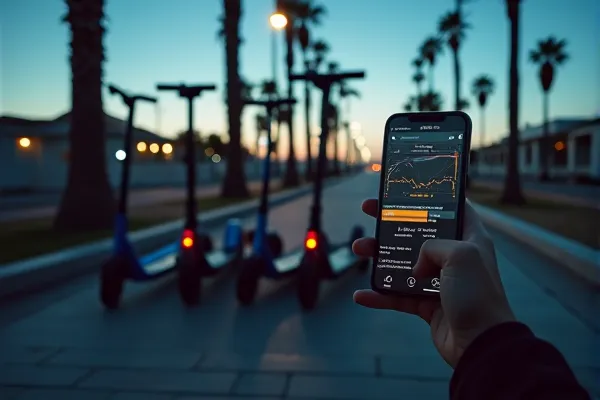
Sidewalk scooter cases look simple until you watch how quickly responsibility gets diluted. The rider says you stepped sideways, the platform says it is “just technology,” and the insurer says the injury is “minor.” The way you win that fight is not volume; it is proof.
- Immediate documentation: exact location, time, direction of travel, and whether the scooter was on the sidewalk.
- Objective medical anchors: imaging, concussion screening notes, and follow-up compliance.
- Data discipline: preserve screenshots, emails, and any app-related identifiers tied to the incident.
Magnitude expansion: what increases or destroys value in San Diego scooter sidewalk injury cases
A) Evidence Evaluation in San Diego Cases
Police reports can help, but medical records are the spine of the claim. Scene photos establish whether the scooter was where it should not have been and how visibility and pedestrian space were compromised. The defense will test every inconsistency to argue the collision never happened or did not cause your symptoms.
- Police reports vs medical records: a report supports the narrative; the records prove injury progression.
- Scene photos vs repair documentation: photos preserve the environment; device identifiers help link the scooter to the event.
- Treatment timeline consistency: gaps are weaponized; consistency narrows the defense playbook.
B) Settlement vs Litigation Reality
Pre-suit, you will often get a “we need more information” loop that lasts long enough for evidence to go cold. Once filed in San Diego Superior Court, the defense must respond with sworn answers and produce what is discoverable. Litigation is not a promise, but it is a mechanism that forces clarity.
C) San Diego-Specific Claim Wrinkles
Downtown, beach corridors, and tourist-heavy sidewalks create predictable arguments about crowding, distraction, and “shared space.” The rider and platform will lean on ambiguity because that is where liability evaporates. If you anchor the case to conduct rules like CVC § 21235 and negligence standards under Civ. Code § 1714, the defense has less room to improvise.
- Tourist density and nightlife zones: the defense will imply chaos; pin down the exact sequence.
- App and device identification issues: without identifiers, they say the ride cannot be matched.
- Common Southern California insurer resistance patterns: deny mechanism, minimize injury, nuisance money.
Lived Experiences
Kyle
“I was treated like I just fell on my own. Richard Morse focused on the timeline and the proof, and the defense stopped acting like the collision was imaginary once the records and documentation lined up.”
Lisa
“They kept saying they couldn’t identify the rider. Richard Morse explained how San Diego Superior Court discovery changes the game when a company refuses to be specific about what data exists.”
California Statutory Framework & Legal Authority
|
Attorney Advertising, Legal Disclosure & Authorship
ATTORNEY ADVERTISING.
This content is provided for general informational and educational purposes only and does not constitute legal advice.
Under the California Rules of Professional Conduct and applicable State Bar of California advertising regulations,
this material may be considered attorney advertising.
Viewing or reading this content does not create an attorney-client relationship.
Laws and procedures governing personal injury claims vary by jurisdiction and may change over time.
You should consult a qualified California personal injury attorney regarding your specific situation before taking any legal action.
Responsible Attorney:
Richard Morse, California Attorney (Bar No. 289241).
Morse Injury Law is a practice name and location used by Richard Peter Morse III, a California-licensed attorney.
About the Author & Legal Review Process
This article was prepared by the legal editorial team supporting Richard Peter Morse III,
with the goal of explaining California personal injury law and claims procedures in clear, accurate, and practical terms for injured individuals in San Diego and surrounding communities.
Legal Review:
This content was reviewed and approved by Richard Morse, a California-licensed attorney (Bar No. 289241),
who concentrates his practice on personal injury litigation and insurance claim disputes.
With more than 13 years of experience representing injury victims throughout California,
Mr. Morse focuses on serious personal injury matters including motor vehicle collisions, uninsured and underinsured motorist claims,
premises liability, catastrophic injury, and wrongful death.
His practice emphasizes claims evaluation, insurance carrier accountability, and litigation in California courts when fair resolution cannot be achieved.
|