
Burn injuries carry the highest “pain and suffering” multipliers in personal injury law due to the excruciating nature of recovery and permanent scarring. Beyond immediate medical bills, California law entitles you to compensation for disfigurement and the psychological impact of the injury. We consult with plastic surgeons to value your claim based on the cost of future scar revision surgeries (Z-plasty) that may be needed 5, 10, or 20 years down the road.

Severe Burn Injury Lawyer in San Diego: what you must do immediately under California Law
The single most important rule is this: preserve the burn scene and the burn documentation before anyone “cleans it up” or edits the story. Under the California legal framework, burn cases rise or die on early proof—photos, incident records, maintenance logs, and medical depth/extent documentation—because insurers attack causation and severity from day one. We use the Morse Injury Law advantage to lock in this evidence before it disappears, preparing every file for the specific requirements of San Diego venues. For a detailed checklist on evidence preservation, visit our client resources section.
What burn cases look like when the defense tries to shrink them
I’ve spent years watching insurers and defense counsel run the same play: concede the ER visit, then argue everything meaningful is “over-treatment,” “cosmetic,” or “unrelated.” Burns are different from fractures because the injury evolves—depth declares itself, infection changes outcomes, scarring matures, and functional limits show up months later.
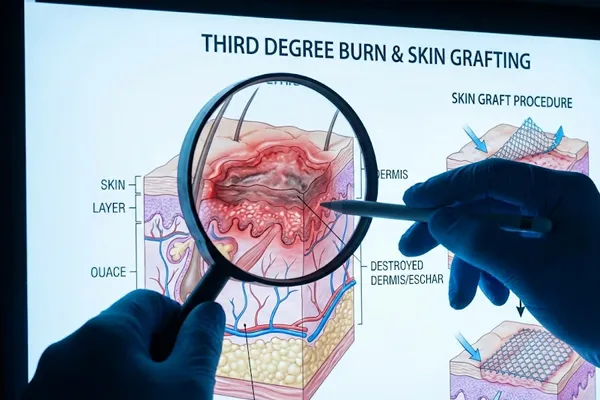
In one San Diego matter, the defense leaned on early notes that described “partial thickness” to argue the claim was minor, even though the later grafting and contracture risk told a different story. California Law controls the duty and damages framework, but San Diego Superior Court is where those contradictions get exploited in deposition unless the medical narrative is stabilized early and backed by records that are consistent from day one.
- They dispute depth: superficial vs partial vs full thickness becomes a valuation fight.
- They dispute time: “You healed” is used to deny scar management and revision needs.
- They dispute cause: maintenance, training, and foreseeability become the battlefield.
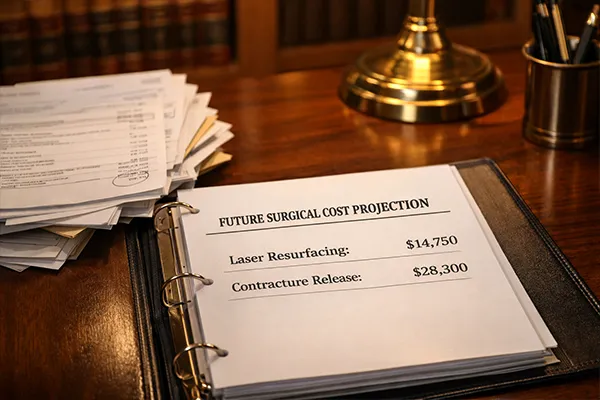
If the defense can reframe your injury as short-term discomfort, they can cap the case at a number that doesn’t track reality. The counter is evidence discipline: burn photos across time, complete charting, and proof of why the condition will predictably require ongoing care and limits.
That’s not “marketing.” It’s trial preparation—because catastrophic injuries settle when the other side believes you can prove them to a jury.
Why California venue and San Diego Superior Court procedure change the leverage
Burn cases are liability cases and damages cases at the same time. The duty analysis runs through Civ. Code § 1714, and your damages proof is measured under Civ. Code § 3333. But leverage comes from what the defense fears will happen once the file is litigated in San Diego Superior Court: sworn testimony, document subpoenas, and expert scrutiny of their “it wasn’t that bad” narrative.
Future detriment matters in severe burns—scar maturation, contractures, chronic pain, and revision needs are not “maybe,” they’re predictable in many serious cases when supported by competent evidence under Civ. Code § 3283.
The Immediate 5: what San Diego burn victims ask when the insurer starts minimizing the injury
1) What evidence matters most in a severe burn claim in San Diego?
The most valuable evidence is what disappears fastest: the condition of the scene (cleanliness, grease buildup, exposed wiring, missing guards), incident reports, and maintenance records, plus early photos and videos of the burn pattern before dressings change it. Liability still flows through Civ. Code § 1714, but insurers pay attention when you can prove the hazard existed, it was foreseeable, and the injury is medically consistent with the mechanism.
2) What is the California deadline to file a burn injury lawsuit?
Most California personal injury actions are subject to a two-year statute of limitations under C.C.P. § 335.1. In a burn case, waiting is not “safe” because scenes get repaired, surveillance cycles overwrite, and witnesses move on long before you ever reach San Diego Superior Court.
3) How do you prove future scar care, revision needs, and long-term limitations?
You prove it the way California requires: as reasonably certain future detriment under Civ. Code § 3283, supported by treating records that document depth, grafting, complications, and functional restriction over time. When the defense calls future care “speculation,” they are trying to reduce damages that are properly measured under Civ. Code § 3333.
4) Why do insurers argue burn injuries are “mostly cosmetic,” and how is that countered?
Because “cosmetic” sounds optional, and optional sounds cheap. The counter is functional proof: range-of-motion limits, hypersensitivity, nerve pain, heat intolerance, work restrictions, and documented psychological impact, all tied to the injury mechanism and the medical course—alongside clean claims handling expectations and pressure points that often arise when adjusters engage in unfair tactics referenced in Ins. Code § 790.03.
5) What if the burn occurred on public property or involved a San Diego public agency?
Then your first deadline is typically the government claim, not the lawsuit. Many claims against public entities must be presented within the timeframe in Gov. Code § 911.2, and failure to do so can bar a later civil action under Gov. Code § 945.4. In severe injury cases, missing that procedural step can erase leverage before you ever see a courtroom.
How magnitude expands when the proof is built like a trial file
A) Evidence evaluation in San Diego cases
Burn cases are evidence cases. If the scene is “cleaned,” your job becomes harder. I treat early preservation like oxygen—because once it’s gone, you don’t get it back.
- Police reports vs medical records: reports can confirm incident timing and location, but the medical chart proves depth, grafting, and functional loss.
- Scene photos vs repair documentation: photos show conditions; repair invoices and maintenance logs show knowledge and neglect.
- Treatment timeline consistency: gaps invite defense claims of “non-compliance” or unrelated complications.
B) Settlement vs litigation reality
Before filing, the insurer can stall behind “review.” After a complaint is filed in San Diego Superior Court, delay becomes costly, positions become sworn, and the defense has to answer subpoenas and expert opinions instead of just “asking for more.” That’s when severe burn claims get valued like real cases, not like bargaining chips.
C) San Diego-specific claim wrinkles
- Tourism and nightlife density: crowded venues and fast turnover can mean missing incident reports unless you secure them early.
- Multi-tenant properties: restaurants, bars, and retail spaces often involve finger-pointing over maintenance responsibility.
- Common SoCal insurer resistance: they minimize scar care, dispute future treatment, and push “independent” exams aimed at downgrading severity.
Lived experiences
Haley
“I kept hearing that my burns would ‘just heal.’ Richard focused on preserving the scene and the medical timeline so the insurer couldn’t pretend the grafting and scar care were optional.”
Cameron
“The adjuster treated my injuries like a short-term inconvenience. Richard built a file that showed what my life looked like after the accident, and once the defense saw the documentation, the tone changed fast.”
California Statutory Framework & Legal Authority
These are the California statutes referenced on this page, linked to the official source and explained in plain English.
|
Attorney Advertising, Legal Disclosure & Authorship
ATTORNEY ADVERTISING.
This content is provided for general informational and educational purposes only and does not constitute legal advice.
Under the California Rules of Professional Conduct and applicable State Bar of California advertising regulations,
this material may be considered attorney advertising.
Viewing or reading this content does not create an attorney-client relationship.
Laws and procedures governing personal injury claims vary by jurisdiction and may change over time.
You should consult a qualified California personal injury attorney regarding your specific situation before taking any legal action.
Responsible Attorney:
Richard Morse, California Attorney (Bar No. 289241).
Morse Injury Law is a practice name and location used by Richard Peter Morse III, a California-licensed attorney.
About the Author & Legal Review Process
This article was prepared by the legal editorial team supporting Richard Peter Morse III,
with the goal of explaining California personal injury law and claims procedures in clear, accurate, and practical terms for injured individuals in San Diego and surrounding communities.
Legal Review:
This content was reviewed and approved by Richard Morse, a California-licensed attorney (Bar No. 289241),
who concentrates his practice on personal injury litigation and insurance claim disputes.
With more than 13 years of experience representing injury victims throughout California,
Mr. Morse focuses on serious personal injury matters including motor vehicle collisions, uninsured and underinsured motorist claims,
premises liability, catastrophic injury, and wrongful death.
His practice emphasizes claims evaluation, insurance carrier accountability, and litigation in California courts when fair resolution cannot be achieved.
|