
If your hand or limb was injured by a machine, it often means a safety guard was missing or bypassed. Under California’s “Strict Product Liability” laws, the manufacturer is liable if their machine was sold with a design defect that made it unreasonably dangerous—even if your employer was also negligent. We hire mechanical engineers to prove the machine could have been made safer with a simple interlock switch or barrier.

Machinery Accident Lawyer in San Diego: what matters when a machine “was working fine” until it wasn’t?
The single most important rule under the California legal framework is evidence control: you have to preserve the machine’s condition, electronic settings, physical guards, and maintenance history before the employer, vendor, or manufacturer “inspects” it and the story gets rewritten. In machinery cases, delay is a defense tool used to hide design defects or bypassed safety sensors. We counter this by applying the Morse Injury Law advantage, immediately filing for protective orders to lock down the equipment in its post-accident state. This forensic approach is vital when presenting complex technical evidence in San Diego Superior Court venues. To ensure you don’t lose the chance to document the machine before it is repaired or scrapped, consult our client resources guide on industrial evidence preservation.
How I build machinery injury cases in San Diego when everyone points fingers
Machinery injuries create instant blame-shifting. The employer says “training issue.” The vendor says “misuse.” The manufacturer says “altered after sale.” In reality, the case turns on a timeline: what safety devices were present, what was bypassed, what maintenance was overdue, and who controlled the hazard at the moment of injury.
In one San Diego matter, the initial incident report described a “routine jam.” But the maintenance records told a different story: recurring stoppages, informal fixes, and a guard that had been removed to keep production moving. Once the case was positioned for San Diego Superior Court under California Law, discovery forced the work orders, emails, and vendor service tickets into the open under CCP § 2017.010, and the “unexpected malfunction” defense collapsed into a preventable pattern.
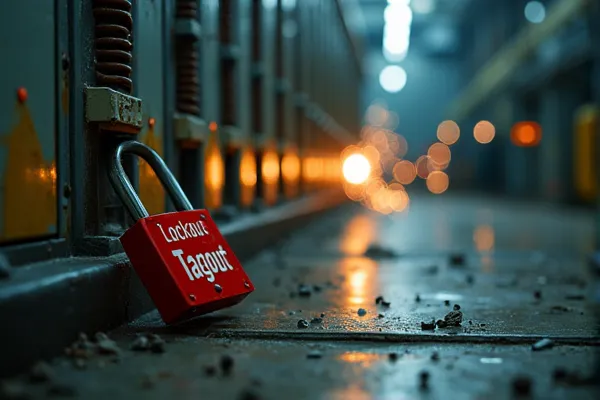
- Control mapping: who owned the machine, who maintained it, who serviced it, and who trained operators.
- Condition preservation: photos, settings, guards, interlocks, emergency stop function, and any bypass devices.
- Paper trail capture: maintenance logs, safety audits, vendor tickets, and prior incident reports.
Negligence generally starts with Civ. Code § 1714, but machinery cases often expand beyond one defendant. When a design defect or inadequate warnings are in play, product liability becomes part of the valuation reality. The defense knows this, which is why they fight hard over preservation and “post-incident changes.”
Why California Law and San Diego Superior Court venue change leverage in machine cases
Before a lawsuit, insurers negotiate in a vacuum and deny in broad strokes. After filing in San Diego Superior Court, you can compel the documents and testimony that reveal who knew what and when. That’s not theory; it’s how the machinery story becomes provable instead of arguable.
Discovery tools matter. Document demands under CCP § 2031.010 target maintenance systems, vendor contracts, training materials, and inspection checklists. Depositions under CCP § 2025.010 lock supervisors, safety staff, and vendor technicians into a timeline they can’t casually revise later.
The “Immediate 5”: machinery injury questions I ask because they decide liability in San Diego
1) Who had control over the machine’s condition that day: employer, vendor, or manufacturer?
Under Civ. Code § 1714, the duty is reasonable care, and control is how you prove it was breached. Control shows up in maintenance responsibility, who approved guard removal, and who had authority to keep the machine running despite known hazards. In San Diego, this is usually proven through work orders, safety audits, and supervisor communications.
2) What safety device failed or was bypassed: guard, interlock, lockout procedure, or emergency stop?
The defense will try to reduce the event to “operator error.” The practical way around that is mechanism: what moved, what engaged, and what safety device should have prevented it. When a guard is missing, an interlock is defeated, or an e-stop doesn’t function reliably, the causation story becomes mechanical rather than subjective.
3) Was the machine altered, repaired, or “reset” after the incident—and can we prove the timing?
Post-incident changes are where evidence disappears. Filing and discovery are how you force the service timeline into the record. Requests under CCP § 2031.010 target vendor tickets, replacement parts orders, internal maintenance notes, and any “corrective action” forms created after the injury.
4) Are you within California’s deadline to sue, and do we need to identify multiple defendants early?
Most injury cases run under the two-year statute in CCP § 335.1. Machinery cases can involve layered responsibility—employer practices, vendor maintenance, and manufacturer design—so early identification matters because each defendant controls different records and different defenses.
5) What changes once the case is filed in San Diego Superior Court?
Discovery scope under CCP § 2017.010 allows you to compel maintenance logs, training materials, safety audits, and vendor communications that don’t show up voluntarily. Depositions under CCP § 2025.010 turn “I don’t recall” into a record problem when the documents contradict the witness.
Machinery cases are priced on proof. The medical injury can be obvious, but liability isn’t assumed. Insurers pay when the timeline shows preventability: notice, bypassed safeguards, ignored maintenance, or a defect that existed before the incident.
- Police reports vs medical records: a report may be thin; medical records preserve mechanism and progression.
- Scene photos vs repair documentation: photos show condition; repair logs show who changed what and when.
- Treatment timeline consistency: consistent reporting protects causation in San Diego claims handling.
Magnitude expansion: what actually drives value in San Diego machinery accident claims
A) Evidence Evaluation in San Diego Cases
I separate “injury proof” from “liability proof.” The first is medical. The second is mechanical and documentary. The defense discounts cases where the machine condition can’t be pinned down.
- Maintenance history: recurring jams, out-of-service notes, deferred repairs, and vendor service tickets.
- Condition proof: guard presence, interlock function, bypass devices, and emergency stop reliability.
- Notice proof: prior incidents, near-misses, and written warnings that management ignored.
B) Settlement vs Litigation Reality
Before suit, insurers lean on ambiguity: “no defect proven,” “misuse,” “third-party responsibility.” After filing in San Diego Superior Court, you can compel the records that show whether those defenses are real or convenient. Litigation also forces the defense to commit to a theory—and that is where inconsistencies get expensive.
- Discovery compels documents that reveal recurring issues and prior knowledge.
- Depositions lock supervisors and technicians into a timeline.
- Repair and alteration evidence becomes part of the proof structure, not a footnote.
C) San Diego-Specific Claim Wrinkles
San Diego has a mix of manufacturing, logistics, biotech, and shipyard-adjacent work where equipment uptime is treated like a KPI. That cultural pressure produces predictable failures: safety devices bypassed for speed, informal “temporary fixes,” and outsourced vendor maintenance that leaves a paper trail—if you know how to get it.
- Shift changes and production pushes increase the risk of rushed jam-clearing and bypass behavior.
- Vendor maintenance can create shared responsibility, but only if the service history is preserved.
- Insurer resistance commonly targets “mechanism” and “control,” not the medical injury.
Lived Experiences
Emma
“They kept saying I ‘shouldn’t have been near the machine.’ Richard focused on the missing guard and the history of jams that everyone ignored. Once the records were pulled, it stopped being my word against theirs.”
Caleb
“After the accident, the machine was ‘serviced’ and suddenly everything was perfect. Richard pinned down what changed and when, and that was the difference. It felt like a case built on proof, not emotion.”
California Statutory Framework & Legal Authority
|
Attorney Advertising, Legal Disclosure & Authorship
ATTORNEY ADVERTISING.
This content is provided for general informational and educational purposes only and does not constitute legal advice.
Under the California Rules of Professional Conduct and applicable State Bar of California advertising regulations,
this material may be considered attorney advertising.
Viewing or reading this content does not create an attorney-client relationship.
Laws and procedures governing personal injury claims vary by jurisdiction and may change over time.
You should consult a qualified California personal injury attorney regarding your specific situation before taking any legal action.
Responsible Attorney:
Richard Morse, California Attorney (Bar No. 289241).
Morse Injury Law is a practice name and location used by Richard Peter Morse III, a California-licensed attorney.
About the Author & Legal Review Process
This article was prepared by the legal editorial team supporting Richard Peter Morse III,
with the goal of explaining California personal injury law and claims procedures in clear, accurate, and practical terms for injured individuals in San Diego and surrounding communities.
Legal Review:
This content was reviewed and approved by Richard Morse, a California-licensed attorney (Bar No. 289241),
who concentrates his practice on personal injury litigation and insurance claim disputes.
With more than 13 years of experience representing injury victims throughout California,
Mr. Morse focuses on serious personal injury matters including motor vehicle collisions, uninsured and underinsured motorist claims,
premises liability, catastrophic injury, and wrongful death.
His practice emphasizes claims evaluation, insurance carrier accountability, and litigation in California courts when fair resolution cannot be achieved.
|