
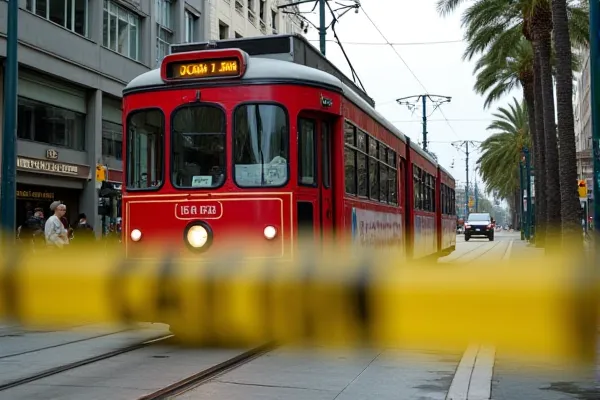
The San Diego Trolley is operated by MTS, a public entity. This means your claim is not governed by the standard 2-year statute of limitations. Under Government Code § 911.2, you must file a specific administrative claim within 6 months of the accident. If you miss this deadline by even one day, your right to sue is permanently barred, regardless of how severe your injuries are.

San Diego Trolley accidents Lawyer: what you must do first under California Law
Under the legal framework of California Law, the first rule in a trolley injury is not “wait and see.” It is to preserve evidence and identify the strict public-entity claim deadline immediately. If this involves MTS or another public agency, Government Code § 911.2 controls how long you have to file a claim before you can even sue. We manage this critical window using the Morse Injury Law advantage, ensuring that if the government rejects your claim, you are ready to file in specific San Diego legal venues. Because missing this 6-month deadline is fatal to your case, please consult our client resources guide for the exact steps to take right now.
What a real San Diego trolley case looks like when it becomes litigation
I’ve handled enough public-entity injury files to tell you the same thing every time: the fight is not just fault. It’s access. Video disappears, incident logs get sanitized, and the defense narrows your story to a “personal misstep” unless you lock the mechanics early.
In one anonymized San Diego matter, a rider was injured during a platform boarding incident near a busy downtown stop. We treated it like a San Diego Superior Court file from the start, because public-entity claims move on procedure, not sympathy. California Law still governs duty and damages, but Government Code rules decide whether the case even survives long enough to be heard.
- Problem: the agency frames it as “no defect” and “no notice,” with limited voluntary disclosure.
- Escalation: surveillance requests stall while the claim deadline approaches.
- Legal strategy: preserve medical causation, demand records, and prove a dangerous condition or operational negligence.
- Resolution: once notice, condition, and causation are pinned, valuation becomes risk-based instead of bureaucratic.

The insurer-side tactic in these cases is predictable: reduce it to a fall, ignore the condition, and force you to prove what the agency won’t volunteer. That’s why I build trolley cases on documents, video, measurements, and medical progression—not on “what everyone remembers.”
When a public entity is involved, the defense doesn’t need to “win” on fault if they can win on procedure. Miss the claim process, and the case can die before a jury ever hears it.
Why California Law and San Diego Superior Court venue change the leverage
California Law is the framework, but venue is where you force production. In San Diego Superior Court, the agency can’t hide behind endless “review” once discovery is in play. Government Code section 945.4 is the gate: without a timely claim, you typically can’t sue, and the defense knows it.
- Claims handling: public entities defend early through deadlines, not through open disclosure.
- Leverage: a timely claim plus preserved evidence forces the case to be evaluated on proof, not paperwork.
- Litigation outcomes: once notice and condition are supported, the agency has to defend the facts under oath.
The “Immediate 5” questions San Diego riders ask after a trolley injury
Is an injury on the San Diego Trolley treated differently because it’s a public agency?
Yes, because California Government Code section 911.2 can impose a short deadline to present a claim to the public entity. If you miss that window, California Government Code section 945.4 can bar a lawsuit even if liability is strong.
What if the injury happened on a platform, at a crossing, or while the doors were closing?
Those facts matter because public-entity liability often turns on whether there was a dangerous condition of public property or operational negligence. California Government Code section 835 is a core statute for dangerous-condition claims, and your job is proving the condition, causation, and that the agency had notice or should have had notice.
Do I need to prove the agency “knew” about the hazard before my injury?
Notice is a common defense focus, and it’s not solved by opinion. California Government Code section 835 requires proof that the dangerous condition existed and that the entity had actual or constructive notice in time to take protective measures. That’s why prior incident records, maintenance logs, and video can be case-defining.
How long do I have to file a lawsuit if a trolley accident also involved a private driver?
Claims can split into different timelines depending on defendants. Many California personal injury lawsuits against non-government defendants are governed by California Code of Civil Procedure section 335.1, while the public-entity claim process still runs through California Government Code section 911.2 and California Government Code section 945.4.
How are damages calculated in a San Diego trolley injury case?
Damages are still measured under California Civil Code section 3333, which is why consistent treatment, documented work impact, and clear functional limitations are essential. The defense will try to reframe a trolley incident as a “minor fall,” and the medical record either supports your claim or it doesn’t.
Public transit cases are procedural traps disguised as injury claims. If you handle the claim deadline, evidence, and notice proof correctly, the case becomes a liability-and-damages evaluation. If you don’t, it becomes a dismissal motion.
How magnitude is evaluated in San Diego trolley accident cases
Evidence Evaluation in San Diego Cases
- Police reports vs medical records: incident reports can identify location and time, but medical records establish causation, progression, and functional impact.
- Scene photos vs repair documentation: photos capture platform gaps, surface conditions, signage, and sight lines; maintenance/repair records show notice and response patterns.
- Treatment timeline consistency: delays are where the defense argues “unrelated”; consistent care tightens causation and damages.
- Tie to real San Diego claims handling: agencies often contest notice; objective documentation makes that defense expensive.
Settlement vs Litigation Reality
Before filing, public entities can slow-walk disclosure while the claim rules do their work. Once a case is in San Diego Superior Court, discovery obligations and sworn testimony compress the timeline and force clearer positions.
- Discovery obligations: records, video retention practices, and maintenance documents become discoverable issues.
- Leverage: a preserved timeline plus a timely claim forces evaluation on proof.
- Risk: the defense strategy shifts once internal records are at stake.
San Diego-Specific Claim Wrinkles
- Downtown and event surges: crowded platforms and hurried boardings near Gaslamp and transfer points create predictable door-and-gap mechanisms, and agencies will often argue “personal inattentiveness” unless the conditions are documented.
- Crossings and mixed traffic corridors: trolley corridors intersect surface streets, and liability can involve multiple parties when roadway behavior, signals, and train operations interact at crossings.
- Common Southern California defense patterns: “no dangerous condition,” “no notice,” and “design immunity” are standard positions unless the file proves condition, notice, and causation with hard evidence.
Lived Experiences
Olivia
The hardest part was feeling like the agency was just waiting me out. Once my attorney documented the stop, the records, and the medical progression, the case stopped being a debate about “what happened” and became about what it cost me.
Tim
I didn’t know there was a special deadline when public transit is involved. My attorney handled the claim process fast and built the case like it was headed to San Diego Superior Court from day one, which changed how seriously it was treated.
California Statutory Framework & Legal Authority
These are the exact statutes cited on this page, linked to the official LegInfo source, with a plain-English explanation of what each governs and why it matters in a San Diego personal injury claim.
|
Attorney Advertising, Legal Disclosure & Authorship
ATTORNEY ADVERTISING.
This content is provided for general informational and educational purposes only and does not constitute legal advice.
Under the California Rules of Professional Conduct and applicable State Bar of California advertising regulations,
this material may be considered attorney advertising.
Viewing or reading this content does not create an attorney-client relationship.
Laws and procedures governing personal injury claims vary by jurisdiction and may change over time.
You should consult a qualified California personal injury attorney regarding your specific situation before taking any legal action.
Responsible Attorney:
Richard Morse, California Attorney (Bar No. 289241).
Morse Injury Law is a practice name and location used by Richard Peter Morse III, a California-licensed attorney.
About the Author & Legal Review Process
This article was prepared by the legal editorial team supporting Richard Peter Morse III,
with the goal of explaining California personal injury law and claims procedures in clear, accurate, and practical terms for injured individuals in San Diego and surrounding communities.
Legal Review:
This content was reviewed and approved by Richard Morse, a California-licensed attorney (Bar No. 289241),
who concentrates his practice on personal injury litigation and insurance claim disputes.
With more than 13 years of experience representing injury victims throughout California,
Mr. Morse focuses on serious personal injury matters including motor vehicle collisions, uninsured and underinsured motorist claims,
premises liability, catastrophic injury, and wrongful death.
His practice emphasizes claims evaluation, insurance carrier accountability, and litigation in California courts when fair resolution cannot be achieved.
|