
Pedestrian and bicycle injury claims in San Diego turn on specific “Right of Way” statutes that protect vulnerable road users. We enforce CVC § 21950 (Driver Duty to Yield in Crosswalks) and the “Three Feet for Safety Act” (CVC § 21760), which mandates safe passing distance for cyclists. Insurance defense teams frequently attempt to shift blame by alleging “jaywalking” or “sudden movement.” We neutralize this by using impact mechanics and video evidence to prove the driver had ample time to react and failed to use reasonable care.

Pedestrian & Bicycle Injuries in San Diego: what is the one rule under California Law that protects the claim?
The single rule is this: identify the correct defendant and preserve intersection proof before the narrative hardens. Under California Law, pedestrians and cyclists get blamed fast—visibility, “dart-out,” “sudden movement,” or “no lights”—and that blame becomes a valuation lever.
Why these cases get discounted in San Diego unless the proof is locked early
I’ve handled California injury cases for 13+ years, and the insurer-side pattern is consistent: convert a vulnerable roadway user into a “shared fault” story, often twisting the legal framework of comparative negligence. Then, they minimize the injuries as “soft tissue” or “pre-existing.” We reject this narrative using the Morse Injury Law advantage. In San Diego, when negotiations don’t move, the case gets proven in specific San Diego Superior Court venues, and you want evidence that survives discovery. If you aren’t sure what physical evidence to keep, review our client resources guide immediately.
A realistic anonymized scenario: a cyclist is struck at an intersection near Downtown when a driver turns across a bike lane during rush traffic. The carrier immediately claims “no time to react” and insinuates the rider was “outside the lane,” while the city’s footage and nearby business cameras overwrite. Strategy: secure scene proof, witness identities, and roadway condition documentation early, then build a clean medical timeline and track the filing deadline under CCP § 335.1. The resolution turned when the defense realized the intersection facts could be proven, not argued.
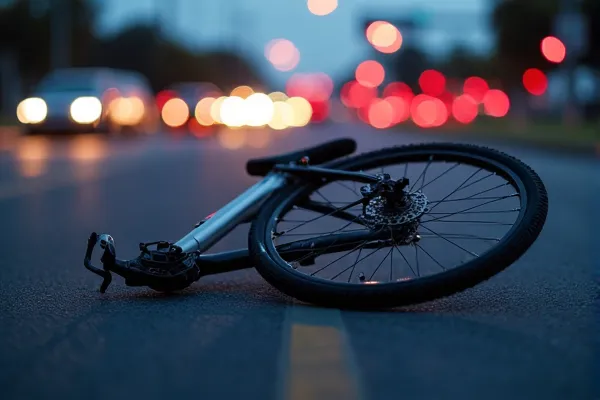
Pedestrian and bicycle cases are proof cases. Liability often hinges on seconds: signal phase, sight lines, speed, and whether the driver was scanning or simply rolling. The medical side is equally unforgiving—delays and gaps get weaponized against causation.
- Intersection proof: signal timing, markings, sight lines, and point of impact.
- Driver conduct proof: speed, distraction indicators, turn sequence, and stopping distance.
- Medical proof: early documentation of function loss and symptom progression tied to the mechanism of injury.
Why California Law and San Diego Superior Court venue materially affect leverage
California Law governs negligence and comparative responsibility, which is exactly where insurers attack these claims. Under Civ. Code § 1714, any allegation of shared fault becomes a settlement discount unless it’s defeated with facts. Filing in San Diego Superior Court forces sworn discovery, subpoenas, and depositions that test the defense story against documents.
These claims also raise a public-entity issue more often than car-on-car cases: crosswalk design, signage, signals, curb ramps, and road maintenance. If a public entity may be responsible, the claim presentation deadline under Gov. Code § 911.2 can arrive well before most injured people realize it.
The “Immediate 5”: questions San Diego pedestrians and cyclists ask when fault gets contested
1) What deadline controls a San Diego pedestrian or bicycle injury claim, and what can shorten it?
Most injury lawsuits are governed by CCP § 335.1, but the timeline can be effectively shorter when roadway design or maintenance is in play. If a public entity may share responsibility, the claim presentation deadline under Gov. Code § 911.2 can control whether the case survives at all.
- Evidence pressure: intersection video and signal data can overwrite quickly.
- Leverage pressure: insurers discount claims when deadlines compress investigation options.
2) If I was in a crosswalk, does California Law automatically make the driver responsible?
Crosswalk right-of-way rules matter, but insurers still fight causation and comparative responsibility. Under CVC § 21950, drivers have duties regarding pedestrians in crosswalks, but the defense will scrutinize signal phase, speed, and visibility, then argue comparative fault under Civ. Code § 1714. The outcome turns on provable facts, not assumptions.
- What matters: where you entered, the signal phase, and the driver’s turn sequence.
- What insurers push: “sudden movement” and “no time to react,” even when the driver rolled through a turn.
3) What if the driver says they “didn’t see” me or claims I was distracted?
“Didn’t see you” is not a defense; it’s often an admission of failure to scan, but insurers treat it as a pathway to comparative fault. Under California negligence principles in Civ. Code § 1714, they reduce value by alleging shared responsibility, then hunt for anything that supports it: phone use, headphones, jaywalking, or lane position. Your protection is objective proof—scene facts, timestamps, and consistent medical documentation.
- Proof that helps: photos, witness names, and any nearby video sources captured early.
- Medical consistency: records that match the mechanism of injury and explain symptom progression.
4) If I was on a bicycle, does it matter whether I was using a bike lane or following vehicle rules?
Yes, because the defense uses lane position and compliance arguments to discount the claim. California vehicle rules apply to bicycles in defined ways under CVC § 21200, and insurers try to convert any alleged deviation into comparative fault under Civ. Code § 1714. The key is proving what the roadway required, what the driver did, and what was avoidable.
- What matters: intersection geometry, driver turn behavior, and predictable conflict points.
- What gets distorted: “outside the lane” claims used to reduce value without real proof.
5) What evidence actually moves value in a San Diego pedestrian or bicycle injury claim?
Medical records drive damages, but liability proof controls whether the insurer pays fairly or discounts aggressively. The strongest cases align three things: the scene proof (photos/video), the liability story (right-of-way and driver conduct), and a clean medical timeline. The deadline under CCP § 335.1 does not protect you from early evidence loss.
- Scene proof: crosswalk markings, signals, lighting, and vehicle approach angles.
- Documentation: repair documentation, bike condition, shoes/clothing condition, and injury photos when appropriate.
- Medical proof: objective findings and consistent reporting of functional limitations.

These cases don’t get paid because the injuries are “sympathetic.” They get paid when the defense understands the proof will hold up under sworn testimony. In San Diego Superior Court, discovery forces records, and depositions lock drivers into a version of events they can’t keep changing.
- Discovery pressure: signal records, maintenance logs, and witness information become producible evidence.
- Deposition pressure: “I didn’t see” gets tested against speed, sight lines, and decision timing.
- Valuation: insurers price measurable litigation risk once the file is built.
Magnitude expansion: what changes pedestrian and bicycle claim value in San Diego
A) Evidence Evaluation in San Diego Cases
Police reports can help establish the basic narrative, but they are not the whole case. Medical records prove injury and causation, and scene documentation proves what was avoidable. In pedestrian and bicycle claims, the defense hunts for any uncertainty that supports a “shared fault” discount.
- Police reports vs medical records: reports help with event basics; records prove injury and function loss.
- Scene photos vs repair documentation: photos show geometry; documentation anchors impact mechanics and forces.
- Treatment timeline consistency: gaps become causation weapons in San Diego claims handling.
B) Settlement vs Litigation Reality
Before suit, insurers control the pace and can stall while they “evaluate.” Once filed in San Diego Superior Court, deadlines and discovery obligations force progress, and the defense has to support its story with documents and testimony.
- Leverage change: delay loses value when court schedules govern the file.
- Risk change: sworn testimony exposes weak comparative-fault narratives.
- Procedure: proof, not persistence, determines outcome posture.
C) San Diego-Specific Claim Wrinkles
San Diego has predictable danger zones: nightlife corridors, high-turn intersections, coastal pedestrian flows, and congested freeway-adjacent surface streets. Insurers often argue “visibility” and “chaos” to dilute fault while overlooking basic driver duties. These claims are won by showing what was reasonably avoidable.
- Traffic density: right-turn and left-turn conflicts are common in dense surface-street corridors.
- Multi-vehicle factors: one driver’s stop can mask another driver’s failure to yield.
- Resistance patterns: quick blame-shifting and early causation discounting unless evidence is secured.
Verified Outcomes or Lived Experiences
Stephanie
“They tried to say I stepped out too fast and that the driver couldn’t have avoided it. Once the crosswalk layout and timing evidence were collected, the liability argument shifted and the resolution reflected what the proof actually showed.”
James
“The insurer treated my injuries like they were minor because I didn’t go to the ER that night. After the medical timeline and documentation were organized, the causation argument lost traction and the outcome matched my actual limitations.”
Authority Link Reference Table
|
Attorney Advertising, Legal Disclosure & Authorship
ATTORNEY ADVERTISING.
This content is provided for general informational and educational purposes only and does not constitute legal advice.
Under the California Rules of Professional Conduct and applicable State Bar of California advertising regulations,
this material may be considered attorney advertising.
Viewing or reading this content does not create an attorney-client relationship.
Laws and procedures governing personal injury claims vary by jurisdiction and may change over time.
You should consult a qualified California personal injury attorney regarding your specific situation before taking any legal action.
Responsible Attorney:
Richard Morse, California Attorney (Bar No. 289241).
Morse Injury Law is a practice name and location used by Richard Peter Morse III, a California-licensed attorney.
About the Author & Legal Review Process
This article was prepared by the legal editorial team supporting Richard Peter Morse III,
with the goal of explaining California personal injury law and claims procedures in clear, accurate, and practical terms for injured individuals in San Diego and surrounding communities.
Legal Review:
This content was reviewed and approved by Richard Morse, a California-licensed attorney (Bar No. 289241),
who concentrates his practice on personal injury litigation and insurance claim disputes.
With more than 13 years of experience representing injury victims throughout California,
Mr. Morse focuses on serious personal injury matters including motor vehicle collisions, uninsured and underinsured motorist claims,
premises liability, catastrophic injury, and wrongful death.
His practice emphasizes claims evaluation, insurance carrier accountability, and litigation in California courts when fair resolution cannot be achieved.
|