
Our approach hinges on deep-dive forensics to ensure speed and positioning data does not evaporate before the defense story hardens. We leverage Visibility Mapping and Traffic Wave Sequence Reconstruction to pinpoint the true cause of the incident and dismantle the defense’s attempt to shift blame.

Lane-splitting & lane-sharing in San Diego: what’s the one rule you must follow right now under California Law?
Do not let the other side define lane-splitting as “illegal” or “reckless” by default. Under California Law, the case turns on provable lane movement, speed context, and whether the driver made an unsafe lane change. If you preserve that early, the insurer loses its favorite shortcut argument.
How lane-splitting cases really get blamed in San Diego, and where the defense starts its discount
I’ve watched insurance defense teams treat lane-splitting claims like a permission slip to accuse the rider first, often misapplying the legal framework of California’s lane-sharing laws. They do it because it works when the file is thin: no clear lane position, no clean speed context, and a medical timeline with gaps. My job is to strip the case down using the Morse Injury Law advantage and force the insurer to price reality. If they refuse, we are prepared to validate the facts in specific San Diego legal venues where evidence outweighs bias.
A realistic San Diego scenario: a rider is filtering between lanes on I-805 in Kearny Mesa during a crawl, and a driver moves left to “escape” the slow lane. The driver says they “didn’t see the motorcycle,” and the insurer claims the rider “came out of nowhere.” If the facts justify it, we build it as a San Diego Superior Court case from day one, because lane-splitting files only resolve fairly when the defense expects lane-change conduct and visibility to be tested against evidence.
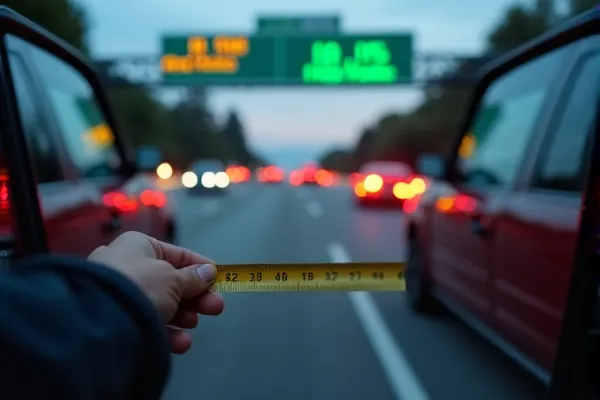
- Legality is not the same as fault: lane-splitting is addressed in Veh. Code § 21658.1, but liability still comes down to negligence proof under Civ. Code § 1714.
- Unsafe lane movement is the pivot point: the defense cannot dodge a bad lane change if the facts line up with Veh. Code § 22107 and Veh. Code § 21658.
- Speed context matters: insurers try to inflate “unsafe speed” by citing the Basic Speed Law (Veh. Code § 22350) without tying it to conditions and evidence.
Why California Law and San Diego Superior Court venue change leverage in lane-splitting claims
California’s lane-splitting framework exists, but the fight is always about who created the hazard and whether it was foreseeable. Negligence still runs through Civ. Code § 1714, and unsafe lane movement is evaluated through rules like Veh. Code § 22107 and Veh. Code § 21658. That’s the law; the leverage comes from proof.
When a case is positioned for San Diego Superior Court, the defense has to stop relying on stereotypes and start explaining lane position, timing, and decision-making in discovery. That process exposes contradictions: “I checked” becomes “I glanced,” “I signaled” becomes “I assumed,” and “no contact” becomes a clear impact story supported by damage and medical documentation. And the filing clock does not pause just because the insurer wants more time to “review,” which is why CCP § 335.1 is not a footnote.
The “Immediate 5”: questions San Diego riders ask after a lane-splitting crash
1) Is lane-splitting legal in California, and does that stop the insurer from blaming me in San Diego?
Lane-splitting is addressed in Veh. Code § 21658.1, but legality does not decide fault by itself. The insurer will still argue negligence under Civ. Code § 1714 by claiming your speed or positioning created an unreasonable risk. The way you beat that is evidence: lane position, traffic speed, and what the driver did before impact.
2) If a driver changed lanes and hit me while I was filtering, what rules usually matter most?
Unsafe lane movement is evaluated through Veh. Code § 22107 (unsafe turning or lane change) and Veh. Code § 21658 (lane discipline). If the driver moved without reasonable safety or without accounting for traffic conditions, that conduct becomes the center of liability. I build these cases around sequence and visibility, because insurers love vague “I didn’t see them” stories.
3) The insurer says I was “going too fast for conditions” while lane-splitting—how is that analyzed?
The Basic Speed Law (Veh. Code § 22350) is the defense’s go-to citation when they want a speed-based discount without doing real analysis. The question is not a slogan; it is conditions, traffic flow, and whether speed is supported by evidence instead of assumptions. In a San Diego lane-splitting claim, speed arguments collapse when the file has clear traffic context and consistent injury documentation.
4) What evidence matters most in the first two weeks after a lane-splitting crash in San Diego?
You want proof that survives a denial: photos of lane position and damage, helmet and gear documentation, and a clean medical timeline that starts early. If the driver’s story involves “merging” or entering traffic, Veh. Code § 21804 can become relevant to show the duty to yield and proceed safely. I also look for any inconsistencies the defense will exploit, because lane-splitting cases get devalued when the record is sloppy.
5) How long do I have to file a lane-splitting injury lawsuit in San Diego, and what’s the risk of waiting?
For many California personal injury cases, CCP § 335.1 controls the limitations period. Waiting helps the defense: footage gets overwritten, witnesses disappear, and your medical story turns into “maybe.” If your case belongs in San Diego Superior Court, you do not let an adjuster manage your deadline.
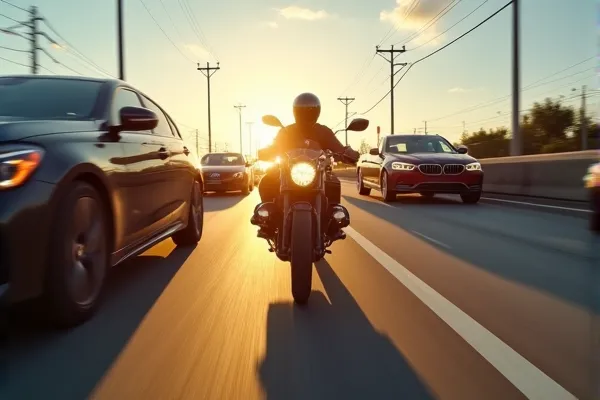
Lane-splitting is not a novelty in San Diego traffic; it is a daily reality. That also means insurers have a rehearsed playbook to push comparative fault onto the rider. I treat that playbook like a checklist: identify it, cut it off with evidence, and force the claim to be valued on facts.
- Driver lane movement: the claim rises or falls on what the driver did before contact, not on the insurer’s opinion of motorcycles.
- Speed context: a “too fast” argument must be proven under conditions, not assumed from bias.
- Medical credibility: the cleaner the treatment timeline, the harder it is to discount causation under Civ. Code § 1714.
Magnitude expansion: what moves a lane-splitting case in San Diego
A) Evidence Evaluation in San Diego Cases
Police reports can help, but they are not the final word on lane position, speed, or visibility. I weigh the report against scene photos, damage patterns, and the treatment timeline, because that is what the defense will attack first. The goal is to prove sequence and causation, not to argue about motorcycle culture.
- Police reports vs medical records: the report frames the event; records prove injury progression and consistency.
- Scene photos vs repair documentation: photos show lane placement; repairs show contact points and force indicators.
- Treatment timeline consistency: gaps are used as “you were fine” arguments in valuation.
B) Settlement vs Litigation Reality
Pre-suit, the insurer can stall while it repeats the same theme: “lane-splitting equals shared fault.” Once filed in San Diego Superior Court, that theme has to survive discovery and sworn testimony, where vague claims get exposed. And CCP § 335.1 still controls the clock, regardless of how many “re-reviews” the adjuster requests.
C) San Diego-Specific Claim Wrinkles
San Diego traffic density creates constant lane compression, and lane-splitting collisions often happen during lane changes, merges, or sudden braking waves. That is where “rear-end patterns” show up in motorcycle cases: a rider filters, a car brakes hard, and another driver changes lanes late, triggering a chain reaction. Insurers respond with common Southern California resistance patterns: blame the rider, question speed, and minimize impact.
- Traffic density and rear-end patterns: braking waves and lane escapes create predictable collision sequences around filtering riders.
- Multi-vehicle freeway collisions: chain events are used to muddy fault and dilute causation unless the sequence is documented.
- Common Southern California insurer resistance patterns: comparative fault framing, speed allegations under Veh. Code § 22350, and causation attacks under Civ. Code § 1714.
Verified Outcomes or Lived Experiences
Lauren
“The adjuster acted like lane-splitting made the crash my fault no matter what. Richard Morse rebuilt the story from the lane-change sequence and my medical timeline, and the conversation finally shifted from blame to proof.”
Nicholas
“They kept repeating that I was ‘going too fast’ even though traffic was crawling. Richard Morse pushed back with specifics, not slogans, and the outcome reflected what the crash actually did to my shoulder and my work.”
California Statutory Framework & Legal Authority
|
Attorney Advertising, Legal Disclosure & Authorship
ATTORNEY ADVERTISING.
This content is provided for general informational and educational purposes only and does not constitute legal advice.
Under the California Rules of Professional Conduct and applicable State Bar of California advertising regulations,
this material may be considered attorney advertising.
Viewing or reading this content does not create an attorney-client relationship.
Laws and procedures governing personal injury claims vary by jurisdiction and may change over time.
You should consult a qualified California personal injury attorney regarding your specific situation before taking any legal action.
Responsible Attorney:
Richard Morse, California Attorney (Bar No. 289241).
Morse Injury Law is a practice name and location used by Richard Peter Morse III, a California-licensed attorney.
About the Author & Legal Review Process
This article was prepared by the legal editorial team supporting Richard Peter Morse III,
with the goal of explaining California personal injury law and claims procedures in clear, accurate, and practical terms for injured individuals in San Diego and surrounding communities.
Legal Review:
This content was reviewed and approved by Richard Morse, a California-licensed attorney (Bar No. 289241),
who concentrates his practice on personal injury litigation and insurance claim disputes.
With more than 13 years of experience representing injury victims throughout California,
Mr. Morse focuses on serious personal injury matters including motor vehicle collisions, uninsured and underinsured motorist claims,
premises liability, catastrophic injury, and wrongful death.
His practice emphasizes claims evaluation, insurance carrier accountability, and litigation in California courts when fair resolution cannot be achieved.
|