
Our approach hinges on deep-dive forensics to ensure municipal maintenance logs and surveillance data do not evaporate before the government’s story hardens. We leverage Public Records Act Discovery and Structural Integrity Forensics to pinpoint the true cause of the incident and dismantle the city’s attempt to shift blame.

Government entity claims in San Diego: what is the one rule you must follow under California Law?
Do not treat this like a normal insurance claim: under California Law, you generally must present a timely government claim before you can file suit. Miss the claim deadline and you can have a serious injury with a zero-dollar recovery path. The first move is procedure, not negotiation.
How MTS and the City defend these cases when the hazard was “known,” but the paperwork is where they win
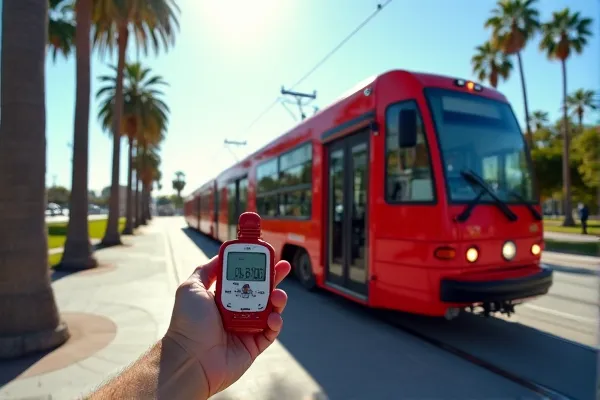
A realistic San Diego scenario: a rider is injured at an MTS stop where the walking surface is broken and the edge line is inconsistent. MTS documents “no incident observed,” the City points to maintenance schedules, and everyone waits to see whether you miss the statutory claim window under California Law. If the dispute is not resolved, San Diego Superior Court is where the evidence gets tested, but you do not get there unless the claims statute is satisfied.
I’ve seen this from both angles, including how defense teams are trained to frame the issue as “unavoidable” and “no notice.” They will treat your injury like a customer service complaint unless your proof forces them into a dangerous condition analysis. Government Code § 835 is where those arguments live, and Government Code § 945.4 is the gate you must pass through to litigate.
- Delay is the tactic: they let the claim clock run while you are focused on treatment and work disruptions.
- Notice is the battleground: they argue they did not know, or that the condition was “trivial,” until your proof says otherwise.
- Causation gets rewritten: they push “you weren’t paying attention” even when the hazard is structural and recurring.
Jurisdictional authority: why California Law and San Diego Superior Court venue change leverage
Government cases in San Diego are not just “harder,” they are structurally different. The Government Claims Act is a procedural filter, and Government Code § 945.4 generally blocks suit until a claim is presented and acted on. Government Code § 911.2 sets the basic claim timing rule that catches people who assume they have “two years.”
Venue matters because San Diego Superior Court is where the public entity has to commit under oath to what it knew, when it knew it, and what it did. If the hazard is a dangerous condition, Government Code § 835 is the legal frame, and discovery is how you prove notice, prior incidents, and maintenance reality. That is litigation leverage based on proof, not posturing.
The “Immediate 5”: questions San Diego victims ask after an MTS or City-related injury
1) What is the government claim deadline in a San Diego injury case against MTS or the City under California Law?
In many injury cases against a public entity, the claim timing rule starts with Government Code § 911.2, and it is far shorter than what people expect. The defense does not need to win on facts if it wins on procedure. If you suspect a public entity is involved, treat the claim deadline as an emergency step, not a later formality.
2) Can I sue first and “sort out the claim paperwork later” if my injuries are serious?
Government Code § 945.4 is designed to prevent that approach in many cases by requiring claim presentation before suit. Severity does not override the statute. If you file without satisfying the claim requirement, the entity will push dismissal before the hazard ever gets discussed.
3) What do I actually have to prove for a dangerous condition claim involving an MTS station or a City sidewalk?
Government Code § 835 is the core statute: you are proving a dangerous condition of public property, causation, and the entity’s responsibility tied to notice and reasonableness. This is not a “they should have been careful” argument, it is a structured proof problem. The defense will try to downgrade the condition into “trivial defect,” so your photos, measurements, and incident history matter.
4) Who is liable: the agency itself, the employee, or both?
Government Code § 815.2 is the general rule for when a public entity can be liable for employee acts within scope, and Government Code § 820 addresses when the employee can be personally liable. In practice, defense counsel uses structure to split responsibility and reduce payout pressure. Your case theory should match the liability path the statutes actually allow.
5) What evidence moves a San Diego government claim from denial posture to real settlement discussion?
The proof is built around notice and foreseeability: prior complaints, maintenance records, incident history, and the condition as it existed at the time. Your medical documentation still matters, but public cases turn on whether the entity “should have fixed it” long before you arrived. If your evidence supports Government Code § 835 elements cleanly, the defense has less room to hide behind bureaucratic fog.
Here is the practical difference between a normal injury case and a government entity case in San Diego: the first battle is the doorway. If you do not meet the statutory requirements, you never reach the jury question of whether the property was unsafe. That is why I treat the claim timeline as the first piece of evidence.
- Lock the condition: photos, measurements, lighting, signage, and how a normal pedestrian moves through the area.
- Lock the timeline: incident time, report numbers, witness names, and any agency communications.
- Lock the medical anchor: contemporaneous diagnosis and a treatment timeline that matches the mechanism.
Magnitude expansion: what increases or destroys value in San Diego government entity injury cases
A) Evidence Evaluation in San Diego Cases
Police reports and security notes can be helpful, but they are not neutral; they are written with agency risk in mind. Medical records remain the damages backbone, but government cases rise or fall on hazardous condition proof and notice. If you want a claim taken seriously, you preserve the condition before it gets patched.
- Incident notes vs medical records: notes shape narrative; records prove injury reality and progression.
- Scene photos vs repair documentation: photos prove the condition; later repairs prove the entity knew it was a problem.
- Treatment timeline consistency: gaps become “not serious” arguments, even when the hazard is obvious.
B) Settlement vs Litigation Reality
In public entity claims, “adjusting” is often a denial letter dressed up as process. Once you are in San Diego Superior Court, discovery forces clarity on what the entity knew, what policies existed, and what maintenance really looked like. Litigation is not a threat, it is the tool that replaces delay with deadlines.
C) San Diego-Specific Claim Wrinkles
San Diego transit corridors and downtown pedestrian zones create repeatable hazards: uneven surfaces, platform edges, construction transitions. Entities tend to argue “open and obvious” and “trivial,” especially where foot traffic is dense. Your job is to show why the condition was dangerous as maintained, not merely imperfect.
- Transit platform transitions: predictable foot placement points where minor defects become major falls.
- Downtown sidewalk wear patterns: high traffic magnifies small failures into recurring injury sites.
- Common defense pattern: deny notice first, then argue the condition was too minor to matter.
Lived Experiences
Mark
“I assumed it was just like a normal claim and I almost missed the deadline. Richard Morse explained the government claim process in plain English and focused on proving the condition before it changed.”
Jamie
“They denied responsibility and acted like the hazard wasn’t a big deal. Richard Morse built the case around notice and maintenance history, and the tone changed once the proof matched the statute.”
California Statutory Framework & Legal Authority
|
Attorney Advertising, Legal Disclosure & Authorship
ATTORNEY ADVERTISING.
This content is provided for general informational and educational purposes only and does not constitute legal advice.
Under the California Rules of Professional Conduct and applicable State Bar of California advertising regulations,
this material may be considered attorney advertising.
Viewing or reading this content does not create an attorney-client relationship.
Laws and procedures governing personal injury claims vary by jurisdiction and may change over time.
You should consult a qualified California personal injury attorney regarding your specific situation before taking any legal action.
Responsible Attorney:
Richard Morse, California Attorney (Bar No. 289241).
Morse Injury Law is a practice name and location used by Richard Peter Morse III, a California-licensed attorney.
About the Author & Legal Review Process
This article was prepared by the legal editorial team supporting Richard Peter Morse III,
with the goal of explaining California personal injury law and claims procedures in clear, accurate, and practical terms for injured individuals in San Diego and surrounding communities.
Legal Review:
This content was reviewed and approved by Richard Morse, a California-licensed attorney (Bar No. 289241),
who concentrates his practice on personal injury litigation and insurance claim disputes.
With more than 13 years of experience representing injury victims throughout California,
Mr. Morse focuses on serious personal injury matters including motor vehicle collisions, uninsured and underinsured motorist claims,
premises liability, catastrophic injury, and wrongful death.
His practice emphasizes claims evaluation, insurance carrier accountability, and litigation in California courts when fair resolution cannot be achieved.
|