How Do Hitandrun Cases Affect Civil Claims

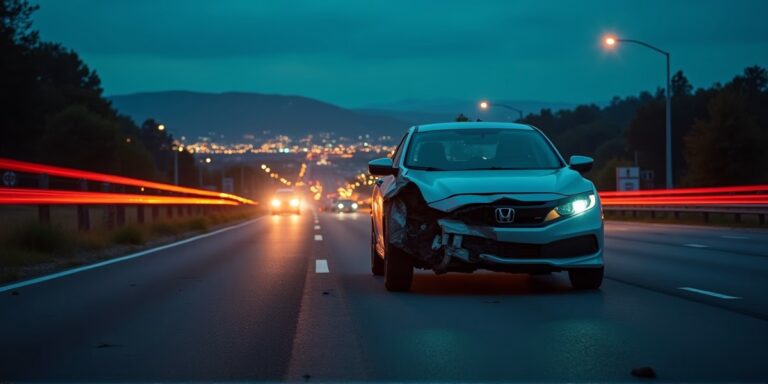
This scenario – a hit-and-run accident – presents unique challenges to a civil claim. Unlike typical car accident cases where you pursue a claim against the at-fault driver’s insurance, a hit-and-run requires a different strategy. The first hurdle is identifying the responsible party, but even without a name, you may still have avenues for recovery. Often, we can utilize police reports, witness statements, and even surveillance footage to build a case.
One common misconception is that a hit-and-run automatically means you’re out of luck. That’s simply not true. In California, even if the other driver remains unidentified, your own insurance policy likely contains provisions for Uninsured Motorist (UM) coverage. This is designed to protect you when you’re injured by a driver without insurance—or, critically, in cases where the driver’s identity is unknown.
I’ve been practicing personal injury law in San Diego for over 13 years, and I’ve seen firsthand how insurance companies attempt to undervalue and deny hit-and-run claims. They will often try to argue the lack of a known at-fault party diminishes the claim’s validity. That’s why it’s vital to consult with an attorney early on. Having been trained by former insurance defense attorneys, I possess a unique understanding of their evaluation tactics.
What happens if the hit-and-run driver is never found?

If diligent investigation doesn’t reveal the driver’s identity, you’ll likely need to pursue a claim under your own Uninsured Motorist (UM) coverage. The amount of your UM coverage will dictate the maximum recovery potential. It’s crucial to review your policy details carefully. If you have significant injuries and damages, you may also want to explore the possibility of pursuing a claim against your own collision coverage, even if it means paying a deductible.
The process of filing a UM claim is somewhat different than a standard third-party claim. Insurance companies are often more scrutinizing with UM claims, and they may require a more extensive investigation. We often see disputes over the extent of your injuries and the reasonableness of medical expenses. Maintaining meticulous medical records and documentation is essential.
Moreover, understanding the legal limitations on UM claims is paramount.
Can I still pursue legal action even if I don’t have UM coverage?
If you don’t have UM coverage, your options become more limited, but not necessarily nonexistent. You may be able to explore a claim for damages against your own collision coverage, but this will be subject to your deductible and policy limits. It’s also worth investigating whether the hit-and-run occurred on government property. If so, you may have a claim against the government entity responsible for maintaining the roadway, though strict notice requirements apply under the Government Tort Claims Act.
California law provides a two-year window from the date of the accident to file a lawsuit for personal injury. If the claim is against a government entity (like a San Diego City vehicle), you MUST file a formal administrative claim within 6 months (180 days) under the Government Tort Claims Act.
Another avenue, though less common, is pursuing a “John Doe” lawsuit. This involves filing a lawsuit against the unknown driver, and then attempting to identify them through the discovery process. This can be costly and time-consuming, and requires a strong legal justification.
What evidence is most important in a hit-and-run case?
Gathering evidence immediately after a hit-and-run is critical. If possible, take photos of the damage to your vehicle and the surrounding scene. Note the location, time of day, and any potential witnesses. Even seemingly insignificant details, such as paint transfer or broken vehicle parts, can be valuable clues. If there are security cameras nearby, request the footage as soon as possible, as it may have captured the driver or their vehicle.
Police reports are obviously essential. Make sure you obtain a copy of the official report and review it carefully for any inaccuracies. Witness statements are also incredibly valuable, as they provide independent corroboration of the events. Finally, document all medical treatments, bills, and lost wages.
In San Diego, it’s also crucial to report the hit-and-run to the police immediately. A police report not only aids in the investigation but also establishes an official record of the incident, which can be important for your insurance claim.
What are the common challenges insurance companies present in hit-and-run claims?
Insurance companies often approach hit-and-run claims with skepticism. They may question the credibility of your account, challenge the extent of your injuries, and attempt to undervalue your damages. One tactic they frequently use is arguing that the lack of a known at-fault party makes it difficult to determine liability. They may also dispute the reasonableness of your medical expenses, particularly if you’ve received treatment from specialists or have a complex medical history.
Another challenge is proving the other driver’s negligence. Without a known driver, it can be more difficult to establish fault. We often rely on circumstantial evidence, such as witness statements and police reports, to build a strong case. It’s important to be prepared to defend your claim and provide compelling evidence to support your damages.
Furthermore, the insurance company may attempt to delay the claims process or deny your claim outright. This is where the experience of a seasoned attorney can be invaluable.
What if the hit-and-run driver is later identified?
If the hit-and-run driver is subsequently identified, the case transitions into a more traditional car accident claim. You can then pursue a claim against the driver’s insurance policy. The statute of limitations will likely be extended from the date of the identification. However, it’s still important to act promptly to preserve your legal rights.
Even if the driver is uninsured, you may be able to pursue a claim against their personal assets. In California, you can obtain a judgment against an uninsured driver, which can then be enforced through wage garnishment or property seizure.
While pursuing a judgment is possible, it’s important to be realistic about the chances of recovery. If the driver has limited assets, it may be difficult to collect on the judgment.
|
Attorney Advertising, Legal Disclosure & Authorship
ATTORNEY ADVERTISING.
This content is provided for general informational and educational purposes only and does not constitute legal advice.
Under the California Rules of Professional Conduct and applicable State Bar of California advertising regulations,
this material may be considered attorney advertising.
Viewing or reading this content does not create an attorney-client relationship.
Laws and procedures governing personal injury claims vary by jurisdiction and may change over time.
You should consult a qualified California personal injury attorney regarding your specific situation before taking any legal action.
Local Office:
Morse Injury Law2831 Camino del Rio S #109 San Diego, CA 92108 (619) 684-3092
Responsible Attorney:
Richard Morse, California Attorney (Bar No. 289241).
Morse Injury Law is a practice name and location used by Richard Peter Morse III, a California-licensed attorney.
About the Author & Legal Review Process
This article was prepared by the legal editorial team supporting Richard Peter Morse III,
with the goal of explaining California personal injury law and claims procedures in clear, accurate, and practical terms for injured individuals in San Diego and surrounding communities.
Legal Review:
This content was reviewed and approved by Richard Morse, a California-licensed attorney (Bar No. 289241),
who concentrates his practice on personal injury litigation and insurance claim disputes.
With more than 13 years of experience representing injury victims throughout California,
Mr. Morse focuses on serious personal injury matters including motor vehicle collisions, uninsured and underinsured motorist claims,
premises liability, catastrophic injury, and wrongful death.
His practice emphasizes claims evaluation, insurance carrier accountability, and litigation in California courts when fair resolution cannot be achieved.
|