How Is Accident Fault Determined Without Witnesses

When witnesses are absent, establishing liability in a car accident requires a more in-depth investigation. While eyewitness testimony is ideal, it’s not the only path to recovery. California law relies heavily on physical evidence, the police report, and established traffic principles to reconstruct the accident and pinpoint responsibility. In these situations, the burden shifts to collecting and analyzing all available data.
This evidence includes, but isn’t limited to, the damage to the vehicles, skid mark measurements, the final resting positions of the cars, and any available camera footage from traffic signals, businesses, or dashcams. Accident reconstruction experts can analyze this information to determine speed, direction of travel, and the point of impact. Critically, the police report, even if lacking in independent corroboration, will detail the officer’s observations at the scene and any statements made by the drivers involved.
I’ve spent over 13 years practicing personal injury law in San Diego, and a significant portion of my experience has been dedicated to cases where establishing fault isn’t straightforward. Having been trained by former insurance defense attorneys, I intimately understand how insurance companies evaluate these scenarios – often attempting to minimize payouts or deny claims outright by highlighting the lack of corroborating testimony. They will aggressively seek to create doubt, even when the physical evidence tells a clear story.
Can the police report be used even without witnesses?
Yes, absolutely. The police report is a crucial starting point, even if it lacks external witness statements. The investigating officer will document the scene, vehicle damage, and each driver’s initial account of the events. California law doesn’t require a police report to file a claim, but it provides a valuable foundation for your case. However, it’s important to remember that the report is often based solely on the officer’s subjective observations and the potentially biased statements of the drivers.
The officer’s notes on road conditions, vehicle safety equipment, and any potential violations of California Vehicle Code (CVC) can be extremely helpful. For example, if the report indicates the other driver admitted fault at the scene, even without a witness, this carries significant weight. Similarly, evidence of a CVC violation, such as speeding, can strongly suggest negligence. In San Diego, the police report’s initial assessment is almost always reviewed extensively by insurance adjusters.
What if both drivers have conflicting stories and no witnesses?
Conflicting accounts are common, and the absence of witnesses doesn’t automatically preclude a recovery. In these cases, the focus shifts to objective evidence. Accident reconstruction experts play a vital role in analyzing the dynamics of the collision to determine which driver’s version of events is more consistent with the physical facts. This may include examining the angle of impact, the extent of vehicle damage, and the location of debris.
Furthermore, insurance companies will often conduct their own investigations, including hiring their own experts. It’s crucial to have your own legal representation to ensure a fair and thorough evaluation of the evidence. We can secure independent experts to challenge the insurance company’s findings and present a compelling case on your behalf. As a San Diego personal injury attorney, I routinely work with these experts to build strong claims in challenging situations.
How does California’s comparative fault rule apply when fault is unclear?
California operates under a “pure” comparative fault system, meaning you can recover damages even if you are partially at fault for the accident. Civ. Code § 1714 dictates that your recovery will simply be reduced by your percentage of fault. For example, if you are deemed 30% at fault, you can still recover 70% of your damages.
However, insurance companies will aggressively attempt to assign as much fault to you as possible to minimize their payout. This is especially true in cases without witnesses where they can easily dispute your account. It’s vital to understand your rights and potential liabilities in these scenarios. We can effectively counter these tactics and protect your interests. This often involves meticulous documentation of your actions leading up to the accident and challenging any unsupported claims of negligence.
What role does vehicle damage play in determining fault?
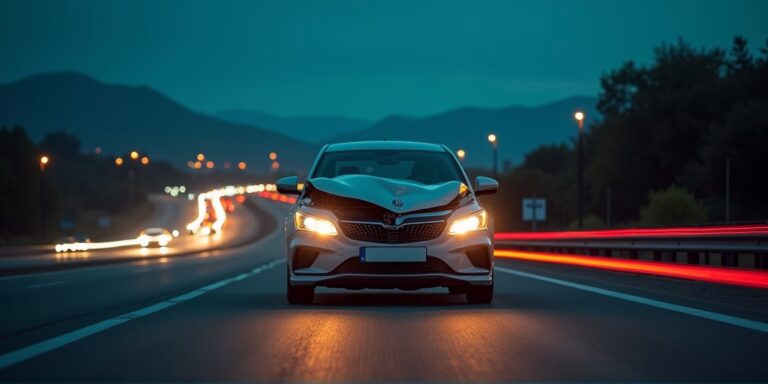
Vehicle damage is a crucial piece of the puzzle when witnesses are absent. The location and severity of the damage can provide clues about the direction of impact and the force of the collision. Accident reconstruction experts can use this information to determine the sequence of events and establish which vehicle was the primary cause of the accident. For instance, extensive front-end damage on one vehicle and rear-end damage on another strongly suggest the other driver was following too closely.
However, it’s important to note that vehicle damage alone isn’t conclusive proof of fault. Other factors, such as vehicle speed, road conditions, and driver actions, must also be considered. A thorough investigation, including a detailed analysis of the damage patterns, is essential to accurately assess liability. In these cases, we will gather all available information, including repair records and photos of the vehicles, to build the strongest possible case.
Can dashcam footage from other vehicles be used as evidence?
Absolutely. Dashcam footage is becoming increasingly valuable evidence in car accident cases. Even if the dashcam wasn’t directly involved in the collision, footage from nearby vehicles can provide crucial insights into the events leading up to the accident. This footage can corroborate your account of events, establish the other driver’s speed or actions, and identify potential contributing factors.
California law allows for the admissibility of dashcam footage as evidence, provided it meets certain criteria. We can work to obtain and analyze this footage, and if admissible, present it to the insurance company to support your claim. A San Diego personal injury attorney familiar with digital evidence can be invaluable in navigating these complexities and ensuring your case benefits from all available resources.
|
Attorney Advertising, Legal Disclosure & Authorship
ATTORNEY ADVERTISING.
This content is provided for general informational and educational purposes only and does not constitute legal advice.
Under the California Rules of Professional Conduct and applicable State Bar of California advertising regulations,
this material may be considered attorney advertising.
Viewing or reading this content does not create an attorney-client relationship.
Laws and procedures governing personal injury claims vary by jurisdiction and may change over time.
You should consult a qualified California personal injury attorney regarding your specific situation before taking any legal action.
Local Office:
Morse Injury Law2831 Camino del Rio S #109 San Diego, CA 92108 (619) 684-3092
Responsible Attorney:
Richard Morse, California Attorney (Bar No. 289241).
Morse Injury Law is a practice name and location used by Richard Peter Morse III, a California-licensed attorney.
About the Author & Legal Review Process
This article was prepared by the legal editorial team supporting Richard Peter Morse III,
with the goal of explaining California personal injury law and claims procedures in clear, accurate, and practical terms for injured individuals in San Diego and surrounding communities.
Legal Review:
This content was reviewed and approved by Richard Morse, a California-licensed attorney (Bar No. 289241),
who concentrates his practice on personal injury litigation and insurance claim disputes.
With more than 13 years of experience representing injury victims throughout California,
Mr. Morse focuses on serious personal injury matters including motor vehicle collisions, uninsured and underinsured motorist claims,
premises liability, catastrophic injury, and wrongful death.
His practice emphasizes claims evaluation, insurance carrier accountability, and litigation in California courts when fair resolution cannot be achieved.
|