Morse Injury Law helping San Diego clients covering: Are Companies Responsible For Maintaining Fleets?

Are Companies Responsible For Maintaining Fleets?

Last Tuesday, I received a call from Ariana, a 34-year-old carpenter, after a catastrophic collision involving a semi-truck on I-5 near Carlsbad. Ariana was rear-ended while merging onto the freeway, suffering a traumatic brain injury, multiple fractures, and extensive nerve damage. The initial police report indicated the truck driver was at fault, but the trucking company’s insurance adjuster immediately began questioning the severity of Ariana‘s injuries and his pre-existing conditions. Now, Ariana faces over $163,881 in medical bills and lost income, and the insurance company is digging in their heels, offering a settlement barely covering a fraction of his expenses.

Confidential Confidential Case Review • No Fee Unless We Win

Attorney Richard Morse a San Diego Injury Attorney

The question of fleet maintenance liability is often at the heart of truck accident claims here in San Diego. While the driver is often the initial point of focus, the trucking company—the employer—bears significant responsibility for ensuring its vehicles are safely operated. This isn’t merely a question of good business practice; it’s a legal obligation. Companies aren’t just responsible for what their drivers do, but also for how they’re equipped to do it, and that includes maintaining their vehicles to the highest standards.

A crucial aspect of this liability stems from the Federal Motor Carrier Safety Regulations (FMCSRs). These regulations, codified in Title 49 of the Code of Federal Regulations (49 CFR § 395), dictate everything from driver qualifications and hours of service to vehicle inspection, repair, and maintenance. A trucking company that fails to comply with these regulations can be held directly liable for accidents caused by preventable mechanical failures, even if the driver themselves wasn’t directly negligent.

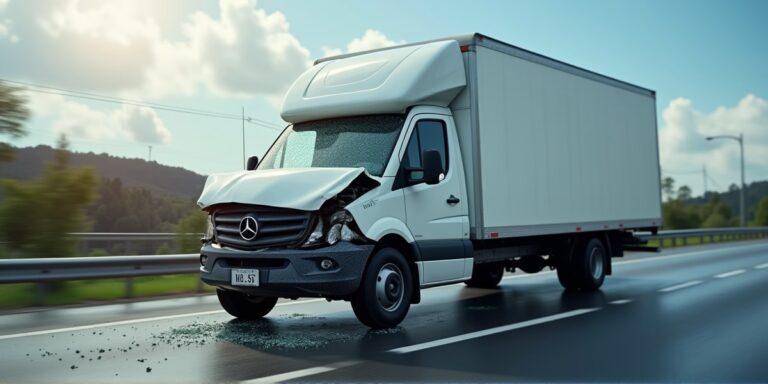
One common source of liability is a failure to conduct regular inspections and repairs. Commercial vehicles are subject to rigorous safety and inspection regulations. Failure to maintain brakes, tires, or lighting systems according to California’s commercial vehicle safety framework can be used to establish direct liability against the carrier for ‘negligent maintenance’. Records of these inspections – or the lack thereof – are often key pieces of evidence in these cases. We often seek this data through discovery, utilizing legal channels to compel the company to produce these critical documents.

Furthermore, companies have a duty to implement and enforce preventative maintenance programs. This means scheduled servicing, addressing identified defects promptly, and ensuring drivers are trained to identify and report mechanical issues. If a company knows about a problem with a vehicle—say, faulty brakes—but fails to address it, and that faulty brake causes an accident, they can be held liable for negligence. This concept of ‘knowing’ or ‘should have known’ is often central to proving fleet maintenance liability.

However, proving negligence isn’t always straightforward. Trucking companies often have extensive defenses, including claiming the driver tampered with inspection reports or that the mechanical failure was unforeseeable. That’s why retaining experienced legal counsel is crucial. We understand the intricacies of the FMCSRs, know where to look for evidence, and how to build a compelling case demonstrating the company’s failure to properly maintain its fleet.

Federal Hours of Service (HOS) regulations dictate exactly how long a driver can be behind the wheel. Violations of these federal safety standards, often proven through Electronic Logging Device (ELD) data, are used to demonstrate driver fatigue. Driver fatigue, stemming from excessive hours, can directly contribute to accidents, further highlighting the company’s responsibility to monitor and enforce compliance.

Finally, it’s important to remember that even if a driver is technically employed by a separate motor carrier, the leasing company or broker may also bear liability if they were negligent in vetting the carrier or failed to adequately oversee their operations. Complex commercial relationships often obscure lines of responsibility, and our legal team is skilled at untangling these connections to ensure all responsible parties are held accountable.

What Happens When a Trucker is Injured on the Job?
Morse Injury Law helping San Diego clients covering: Are Companies Responsible For Maintaining Fleets?

If a commercial driver is injured on the job in San Diego, they are entitled to workers’ compensation. However, workers’ compensation is generally the exclusive remedy against the employer. Separate personal injury claims are typically limited to negligent third parties who are not the employer.

Can You Sue a Trucking Company if Workers’ Comp Covers Your Injuries?

California law preserves the right to pursue a separate civil claim against a negligent third party whose actions contributed to the truck accident, even when workers’ compensation benefits apply. This means if another driver or a faulty part caused the accident, you can still file a lawsuit against them.

What if the Trucking Company Claims the Driver Was At Fault?

California’s ‘pure’ comparative fault system applies to trucking claims. Even if a truck driver argues you shared responsibility, you can still recover damages; however, your total compensation will be reduced by your percentage of fault.

What if the Accident Was a Wrongful Death?

When a truck accident results in a fatality, specific family members have the right to file a wrongful death claim. This allows for the recovery of financial support, funeral expenses, and the loss of the decedent’s love, companionship, and guidance.

What if the Trucker Was Driving Under the Influence?

The legal BAC limit for commercial drivers in California is 0.04 percent. This stricter standard reflects the higher duty of care required of those operating heavy machinery on San Diego roads.

Authority Link Reference Table

Authority Link Reference Table
Statutory Authority Description
CCP § 335.1 Sets the 2-year limitations period for most California personal injury claims. In San Diego trucking cases, preserving evidence early is critical because carriers and insurers often move quickly to control records and narrative.
Gov. Code § 911.2 Requires timely presentation of claims against public entities (often 6 months). This matters when a crash involves roadway design, construction zones, transit agencies, or city/county responsibility.
CCP § 2017.010 Defines the scope of discovery. In trucking litigation, discovery targets driver logs/ELD data, qualification files, inspection/maintenance records, dispatch communications, and safety program documents.
CCP § 377.60 Identifies who has standing to bring a wrongful death claim. This is essential for fatal commercial vehicle crashes where multiple family members may have rights.
CCP § 377.30 Survival action authority. In fatal trucking cases, this can apply to claims the decedent could have brought (often tied to pre-death harms and litigation strategy alongside wrongful death).
Civ. Code § 1714 California’s general negligence framework. Trucking defendants often use comparative-fault narratives (lane position, following distance, speed, “cut-off” claims) to reduce claimed damages.
Evid. Code § 669 Negligence per se when a safety law is violated. This is frequently argued in trucking cases when FMCSA rules or CVC safety provisions are breached.
Civ. Code § 2338 Vicarious liability principles (respondeat superior). Critical when proving a motor carrier, delivery company, or fleet operator is responsible for a driver’s on-duty conduct.
CVC § 22406 Maximum speed limits for certain commercial vehicles and vehicles towing. Supports liability arguments and reconstruction when speed/conditions are disputed.
CVC § 34500 California’s commercial vehicle safety/inspection framework. Often relevant to maintenance failures, equipment defects, and inspection noncompliance.
Civ. Code § 3294 Punitive damages standard (oppression, fraud, or malice). Can matter in extreme trucking conduct cases (e.g., reckless safety policy violations, egregious impairment, or intentional evidence games).
Howell v. Hamilton Meats Damages valuation authority addressing medical specials (amounts actually paid/owed). Frequently impacts settlement math in catastrophic injury cases.
Li v. Yellow Cab Co. Foundational California comparative negligence authority. Trucking defendants often argue shared fault to reduce value; this anchors the comparative-fault framework used in negotiations and trial.
Civ. Code § 1431.2 Several liability allocation for non-economic damages. Important when multiple parties share responsibility (carrier, shipper/loader, broker, maintenance vendor, public entities).
Ins. Code § 11580.2 UM/UIM statutory framework. Relevant when a truck, delivery vehicle, or other responsible party is underinsured, unidentified, or coverage disputes arise.
Federal Motor Carrier Safety Regulations (FMCSA)
49 CFR Part 395 Hours-of-service rules (fatigue). Directly tied to ELD/logbook questions, forced driving, rest break violations, and crash causation analysis.
49 CFR Part 396 Inspection, repair, and maintenance duties. Central for brake failures, tire failures, equipment defects, inspection records, and maintenance contractor liability.
49 CFR Part 391 Driver qualification rules (DQ files). Supports negligent hiring/retention claims and discovery of licensing, medical certification, training, and prior safety history.
49 CFR Part 382 Controlled substances and alcohol testing rules. Relevant to post-crash testing questions, DUI/impairment claims, and carrier compliance obligations.
49 CFR Part 392 Operational driving rules (safe driving, distracted driving policies, etc.). Used to frame duty, safety standards, and negligence arguments tied to driver conduct.
49 CFR Part 393 Parts and accessories necessary for safe operation. Supports defect/equipment theories involving brakes, lights, tires, underride guards, and other safety components.
49 CFR Part 383 Commercial driver’s license (CDL) standards. Relevant to CDL impact questions, qualification issues, endorsements, and compliance expectations for commercial drivers.

Similar Posts