Are Port Trucks Dangerous Near Shipping Terminals?

Port trucking presents a unique set of dangers, and understanding the legal landscape surrounding these accidents is crucial for protecting your rights. These aren’t your typical highway collisions. The sheer volume of traffic, the constant movement of containers, and the often-aggressive schedules of trucking companies create a hazardous environment. Drivers are frequently under pressure to make quick turns, navigate tight spaces, and prioritize speed over safety. This can lead to preventable accidents with devastating consequences.
One of the biggest challenges in these cases is establishing liability. It’s rarely a simple matter of blaming the truck driver. Often, multiple parties may be at fault, including the trucking company, the port authority, the cargo loader, or even the manufacturer of a faulty truck component. Thorough investigation is key to identifying all responsible parties and maximizing your potential recovery.
As a personal injury attorney with over 13 years of experience practicing in San Diego, I’ve seen firsthand the tactics insurance companies use to minimize payouts in port truck accidents. I was trained by a former insurance defense attorney, giving me intimate knowledge of how these companies evaluate, devalue, and deny claims. I understand the strategies they employ, and I’m prepared to fight back on your behalf.
What types of negligence commonly cause port truck accidents?
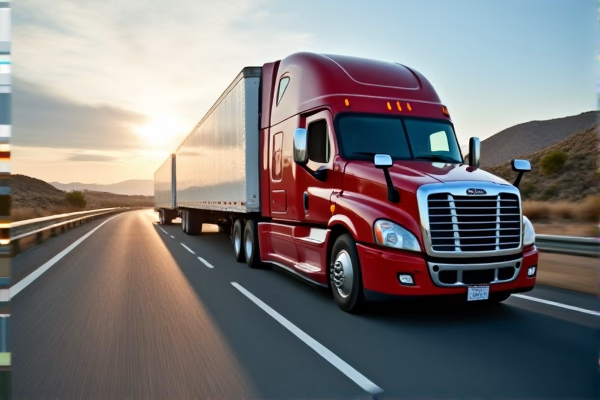
Several forms of negligence frequently contribute to port truck accidents. Driver fatigue is a major factor, as truckers often work long hours to meet demanding delivery schedules. This can lead to impaired judgment and slower reaction times. Another common issue is improper cargo securement. Containers that are not properly loaded and secured can shift during transport, causing the truck to become unstable and potentially overturn. Additionally, inadequate truck maintenance is a frequent cause, with issues like faulty brakes or worn tires increasing the risk of a collision.
Distracted driving, particularly with the use of mobile devices, is also a growing concern. The pressure to stay connected and manage logistics can tempt drivers to take their eyes off the road. Finally, a lack of proper training and experience can contribute to accidents, especially among newer drivers unfamiliar with the unique challenges of port trucking. These factors often combine to create a dangerous situation for other drivers on the road.
It’s important to remember that proving negligence requires evidence. This can include police reports, witness statements, truck driver logs, maintenance records, and even data from the truck’s electronic logging device (ELD). A comprehensive investigation is essential to gather the necessary evidence and build a strong case.
How does California law impact my ability to recover damages after a port truck accident?
California law provides a **two-year** window from the date of the truck accident to file a lawsuit. Because trucking companies often begin evidence destruction (like purging ELD data) as soon as the law allows, immediate filing is critical to preserve the integrity of the claim. The state’s ‘pure’ comparative fault system means you can recover damages even if you were partially at fault for the accident, though your compensation will be reduced by your percentage of fault. This is outlined in Civ. Code § 1714.
Furthermore, California’s regulations regarding commercial vehicle safety and driver qualifications play a significant role. Trucking companies are required to adhere to strict standards for vehicle maintenance, driver training, and hours of service. Violations of these regulations can be used as evidence of negligence in a lawsuit. The complexities of these laws underscore the importance of having an experienced attorney on your side.
Understanding these legal nuances is vital for maximizing your recovery. A skilled attorney can navigate the legal process, gather the necessary evidence, and advocate for your rights.
What if the truck driver was an independent contractor, not a direct employee of the trucking company?
Determining the employment status of a truck driver is often a contentious issue in port truck accidents. Trucking companies may attempt to classify drivers as independent contractors to avoid liability for their actions. However, California’s ‘ABC test’ determines if a delivery driver (Amazon/FedEx) is an employee or contractor. Even if labeled a ‘contractor,’ a company may be liable if they exercise control over the driver’s work, a key factor in San Diego delivery truck litigation, as defined in Labor Code § 2775.
Factors considered under the ABC test include the level of control the company exercises over the driver’s work schedule, the tools and equipment provided, and the extent to which the driver is integrated into the company’s operations. If the company exerts significant control over the driver, they may be deemed an employee, even if they are classified as an independent contractor. This is a complex legal determination that requires careful analysis.
If the driver is found to be an employee, the trucking company can be held liable for their negligence under the doctrine of vicarious liability (respondeat superior), as outlined in Civ. Code § 2338. This means the company is responsible for the wrongful acts of its drivers committed within the scope of their employment.
What evidence should I gather after a port truck accident?
Gathering evidence is crucial for building a strong case after a port truck accident. First and foremost, obtain a copy of the police report. This report will contain valuable information about the accident, including witness statements and the investigating officer’s findings. If possible, take photos of the accident scene, including the damage to all vehicles involved, the surrounding area, and any visible injuries. Collect contact information from any witnesses who may have seen the accident.
Additionally, document your medical treatment and expenses. Keep records of all doctor’s visits, hospital stays, and therapy sessions. Preserve any evidence related to lost income, such as pay stubs and tax returns. If you have dashcam footage or any other digital evidence, be sure to secure it immediately. Finally, it’s important to avoid making any statements to the insurance company without first consulting with an attorney.
Preserving this evidence is critical, as it can be used to establish liability and maximize your potential recovery. An attorney can help you gather and organize this evidence, ensuring that your claim is as strong as possible.
What should I expect when dealing with the insurance company after a port truck accident?
Dealing with the insurance company after a port truck accident can be a challenging process. Insurance companies are often motivated by their own financial interests and may attempt to minimize payouts. They may try to downplay your injuries, question your credibility, or argue that the truck driver was not at fault. It’s important to be prepared for these tactics and to avoid making any statements that could harm your claim.
The insurance company will likely ask you to provide a recorded statement. While you are not legally obligated to provide a statement, doing so can be detrimental to your case. Insurance adjusters are trained to ask leading questions and elicit information that could be used against you. It’s best to decline the request for a recorded statement and consult with an attorney before providing any information.
Insurance companies may also attempt to settle your claim quickly for a low amount. It’s important to resist the urge to accept a quick settlement without first consulting with an attorney. A skilled attorney can evaluate your claim, negotiate with the insurance company on your behalf, and ensure that you receive the full compensation you deserve.
What is the deadline for filing a claim against the government if the accident involved a government vehicle or roadway?
If a truck accident involves a government-owned vehicle or a dangerous road condition maintained by a public entity, a formal administrative claim **MUST** be presented within **6 months** (180 days). Failure to meet this strict deadline under the Government Tort Claims Act can result in the permanent loss of your right to recover, as outlined in Gov. Code § 911.2. This is a significantly shorter timeframe than the two-year statute of limitations for general personal injury claims.
The claim must be submitted to the appropriate government agency and include detailed information about the accident, your injuries, and your damages. It’s crucial to follow the proper procedures and provide all required documentation. Failure to do so can result in the denial of your claim.
Given the strict deadline and complex requirements, it’s essential to consult with an attorney as soon as possible if your accident involved a government entity. An attorney can help you prepare and submit a timely and complete claim, maximizing your chances of a successful recovery.
What should I do if the insurance company claims I was partially at fault for the accident?
Insurance companies frequently employ comparative fault tactics to reduce their payouts. They may argue that you were partially responsible for the accident, citing factors such as speeding, distracted driving, or failure to yield. California’s ‘pure’ comparative fault system applies to trucking claims. Even if a truck driver argues you shared responsibility, you can still recover damages; however, your total compensation will be reduced by your percentage of fault, as defined in Civ. Code § 1714.
It’s important to challenge any claims of comparative fault that are not supported by evidence. An attorney can investigate the accident, gather witness statements, and analyze the police report to determine the true cause of the collision. They can also present evidence to demonstrate that the truck driver was primarily at fault.
Even if you were partially at fault, you may still be entitled to significant compensation for your injuries and damages. An attorney can help you navigate the complexities of comparative fault and ensure that you receive a fair settlement.
How can dashcam footage or other digital evidence help my port truck accident claim?
Dashcam footage or other digital evidence can be invaluable in proving liability in a port truck accident. Dashcam videos can provide a clear and objective record of the events leading up to the collision, including the truck driver’s actions and the surrounding traffic conditions. Similarly, data from the truck’s electronic logging device (ELD) can reveal information about the driver’s hours of service, speed, and braking patterns.
Other types of digital evidence, such as GPS data and telematics information, can also be helpful. This data can provide insights into the truck’s location, speed, and other critical factors. It’s important to secure this evidence as soon as possible, as it may be subject to deletion or alteration.
An attorney can help you obtain and analyze this digital evidence, ensuring that it is properly preserved and presented in court. This evidence can be crucial in establishing liability and maximizing your potential recovery.
What happens if I have medical liens after a port truck accident?
After a port truck accident, you may receive medical bills from various healthcare providers. These providers may place a lien on your settlement or judgment to ensure that they are compensated for their services. Medical liens can significantly reduce the amount of money you ultimately receive, so it’s important to understand your options for resolving them. ER billing vs. medical liens can be a complex issue, as emergency room bills are often higher than the actual cost of treatment.
An attorney can negotiate with the healthcare providers to reduce the amount of the liens. They can also explore options for resolving the liens through a structured settlement or other creative financing arrangements. It’s important to address these liens proactively to avoid any unexpected surprises at the time of settlement.
Understanding the intricacies of medical liens and reimbursement claims is vital for maximizing your net recovery. An experienced attorney can help you navigate this process and ensure that you receive the full compensation you deserve.
What is the process for UM/UIM arbitration if the truck driver was uninsured or underinsured?
If the truck driver was uninsured or underinsured, you may be able to pursue a claim under your own uninsured/underinsured motorist (UM/UIM) policy. UM/UIM arbitration procedures (insured’s own policy) can be complex and require strict adherence to specific deadlines and procedures. It’s important to understand your rights and obligations under your policy.
An attorney can help you file a UM/UIM claim, gather the necessary evidence, and represent you in arbitration. They can also negotiate with the insurance company on your behalf to ensure that you receive a fair settlement. It’s important to act quickly, as there are often strict deadlines for filing a UM/UIM claim.
Navigating the UM/UIM arbitration process can be challenging, but an experienced attorney can help you protect your rights and maximize your potential recovery.
What steps should I take to preserve evidence and documentation after a port truck accident?
Evidence preservation and documentation timelines (spoliation letters, data overwrite windows) are critical in port truck accidents. Trucking companies often have policies in place for purging ELD data and other evidence as soon as the law allows. It’s important to act quickly to secure any evidence that could be relevant to your claim. A spoliation letter can be sent to the trucking company demanding that they preserve all relevant evidence.
This includes police reports, witness statements, truck driver logs, maintenance records, and dashcam footage. It’s also important to document your medical treatment and expenses, as well as any lost income. An attorney can help you identify and preserve all relevant evidence, ensuring that your claim is as strong as possible.
Failure to preserve evidence can have serious consequences, potentially weakening your case. An experienced attorney can help you navigate this process and protect your rights.