Are Port Trucks More Dangerous Near The Port Of San Diego?

Port trucking, by its very nature, presents unique dangers. The constant flow of massive vehicles, tight turns, limited visibility, and the pressure to meet tight deadlines create a volatile environment. While all truck accidents are serious, those involving port trucks often result in more severe injuries and complex liability issues. The sheer size and weight of these vehicles mean even a low-speed collision can be catastrophic.
One of the biggest contributing factors to port truck accidents is driver fatigue. Long hours, demanding schedules, and inadequate rest breaks are common in the industry. This is compounded by the fact that many port truck drivers are independent contractors, incentivizing them to push themselves beyond safe limits to maximize earnings. When a fatigued driver is behind the wheel of an 80,000-pound vehicle, the consequences can be devastating.
As a personal injury attorney with over 13 years of experience practicing in San Diego, I’ve seen firsthand the devastating impact of port truck accidents. I was trained by a former insurance defense attorney, giving me intimate knowledge of how insurance companies evaluate, devalue, and deny claims. This insight allows me to build strong cases and fight for the maximum compensation my clients deserve. I understand the tactics these companies use, and I’m prepared to counter them.
What makes port trucks so dangerous?
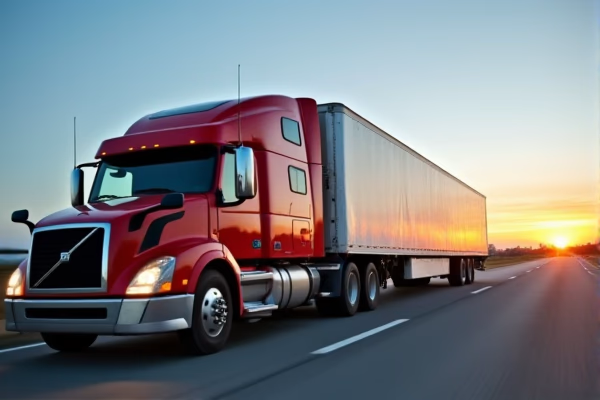
Port trucks differ significantly from typical highway tractor-trailers in several key ways. They often operate in confined spaces with increased pedestrian and cyclist traffic. The constant loading and unloading of cargo adds another layer of complexity, creating blind spots and potential for collisions. Many port trucks are older models with less advanced safety features, and the drivers frequently navigate complex port layouts unfamiliar to outsiders. These factors combine to create a higher risk of accidents.
Furthermore, the sheer volume of traffic around the Port of San Diego contributes to the danger. The area is a hub of activity, with trucks, cars, pedestrians, and trains all vying for space. This congestion increases the likelihood of collisions, especially during peak hours. The pressure to move goods quickly also leads to aggressive driving behaviors, further exacerbating the risk.
What are the common causes of accidents involving port trucks?
While a variety of factors can contribute to port truck accidents, some are more common than others. Driver fatigue is a major issue, as mentioned earlier. Other common causes include distracted driving, speeding, improper lane changes, and failure to yield the right-of-way. Mechanical failures, such as brake problems or tire blowouts, also play a role in some cases. Often, it’s a combination of factors that leads to a collision.
Another significant cause is inadequate maintenance. Trucking companies have a legal responsibility to properly maintain their vehicles, ensuring they are safe for operation. When they fail to do so, it can lead to catastrophic consequences. This is particularly concerning with older port trucks, which may require more frequent maintenance and repairs.
What kind of compensation can I recover after a port truck accident?
If you’ve been injured in an accident involving a port truck, you may be entitled to compensation for a variety of damages. This can include medical expenses, lost wages, pain and suffering, and property damage. In some cases, you may also be able to recover compensation for future medical expenses and lost earning capacity. The amount of compensation you’re entitled to will depend on the severity of your injuries, the extent of your losses, and the specific circumstances of the accident.
It’s important to remember that insurance companies will often try to minimize your claim. They may argue that you were partially at fault for the accident, or that your injuries are not as serious as you claim. That’s why it’s crucial to have an experienced attorney on your side who can fight for your rights and ensure you receive the compensation you deserve. Under the doctrine of **vicarious liability** (respondeat superior), a principal is responsible to third persons for the negligence of their agent in the transaction of business. This holds the trucking company legally liable for the wrongful acts of its drivers committed within the scope of their employment. Civ. Code § 2338
What if the port truck driver was an independent contractor?
Determining liability can be complex when the port truck driver is an independent contractor. Insurance companies often argue that they are not responsible for the actions of independent contractors. However, this is not always the case. If the trucking company exercised control over the driver’s work, such as dictating their schedule or requiring them to use specific routes, they may still be held liable for the accident. This is a critical point in San Diego delivery truck litigation.
California’s ‘ABC test’ determines if a delivery driver (Amazon/FedEx) is an employee or contractor. Even if labeled a ‘contractor,’ a company may be liable if they exercise control over the driver’s work, a key factor in San Diego delivery truck litigation. Labor Code § 2775
How long do I have to file a lawsuit after a port truck accident?
In California, you have a limited amount of time to file a lawsuit after a truck accident. The statute of limitations for personal injury claims is generally **two years** from the date of the accident. Because trucking companies often begin evidence destruction (like purging ELD data) as soon as the law allows, immediate filing is critical to preserve the integrity of the claim. CCP § 335.1
It’s important to act quickly to protect your rights. Waiting too long to file a lawsuit can result in the loss of your claim. An experienced attorney can help you understand the statute of limitations and ensure you meet all necessary deadlines.
What should I do if I receive a call from the insurance company requesting a recorded statement?
Insurance companies often request recorded statements from accident victims shortly after a collision. While it may seem harmless, providing a recorded statement can be detrimental to your claim. Insurance adjusters are trained to ask leading questions and elicit information that can be used to minimize your compensation. It’s best to politely decline the request and consult with an attorney before speaking with the insurance company.
An attorney can advise you on the best course of action and ensure you don’t inadvertently say something that could harm your case. They can also handle all communication with the insurance company on your behalf, protecting your rights and interests.
What if I have medical liens after my port truck accident?
Medical liens are claims placed on your settlement or judgment by healthcare providers who have treated you for your injuries. These liens ensure that they are compensated for their services. Dealing with medical liens can be complex, especially if you have multiple providers. An experienced attorney can help you negotiate with healthcare providers to reduce the amount of your liens and ensure you receive the maximum compensation possible.
It’s important to understand your rights and options when it comes to medical liens. An attorney can explain the process and help you navigate the complexities of the lien resolution process. They can also ensure that the liens are valid and reasonable.
What if the accident involved a government vehicle or roadway?
If a truck accident involves a government-owned vehicle or a dangerous road condition maintained by a public entity, a formal administrative claim **MUST** be presented within **6 months** (180 days). Failure to meet this strict deadline under the Government Tort Claims Act can result in the permanent loss of your right to recover. Gov. Code § 911.2
These claims have specific requirements and procedures that must be followed carefully. An attorney can help you prepare and file the necessary claim, ensuring you meet all deadlines and maximize your chances of recovery.
What if the insurance company makes a policy limits tender?
A policy limits tender is an offer from the insurance company to settle your claim for the maximum amount of their policy. While it may seem like a generous offer, it’s important to carefully consider whether it adequately compensates you for your injuries and losses. An experienced attorney can evaluate the offer and advise you on whether to accept or reject it.
In some cases, there may be other sources of recovery available, such as underinsured motorist coverage or coverage from other responsible parties. An attorney can explore all available options and fight for the maximum compensation possible.
How does comparative fault affect my port truck accident claim?
California’s ‘pure’ comparative fault system applies to trucking claims. Even if a truck driver argues you shared responsibility, you can still recover damages; however, your total compensation will be reduced by your percentage of fault. Civ. Code § 1714
Insurance companies often attempt to assign a percentage of fault to the victim in order to reduce their payout. An attorney can investigate the accident and gather evidence to refute any claims of comparative fault.