Can I Reopen A Claim After Settlement?

The short answer is: it’s extremely difficult, but not always impossible, to reopen a settled claim. Once you’ve signed a release of all claims, you’ve essentially relinquished your right to pursue further legal action against the at-fault party. Insurance companies draft these releases very carefully to be comprehensive and legally binding. However, there are limited circumstances where a court might allow you to revisit a settlement.
One of the most common grounds for reopening a settlement is **fraud**. If the insurance company intentionally misrepresented or concealed information that influenced your decision to settle, you may have grounds to rescind the agreement. This could include hiding the driver’s prior accidents, falsifying maintenance records, or downplaying the severity of the truck driver’s negligence. Proving fraud is a high burden, requiring clear and convincing evidence.
I’ve been practicing personal injury law in San Diego for over 13 years, and I’ve seen firsthand how insurance companies operate. Trained by a former insurance defense attorney, I have intimate knowledge of how they evaluate, devalue, and deny claims. They are experts at minimizing payouts, and often rely on tactics designed to get you to settle quickly for less than your case is worth. This is why it’s crucial to have experienced legal counsel before accepting any settlement offer.
Can I Sue for Additional Damages After a Settlement?
Generally, a settlement is a full and final resolution of your claim. However, there are exceptions. If new evidence emerges after the settlement that was not reasonably discoverable at the time of the agreement, you might be able to pursue a supplemental claim. This could include previously unknown medical conditions directly caused by the accident, or the discovery of additional at-fault parties.
Another potential avenue is if the settlement did not fully account for all of your damages. For example, if you later require extensive and unforeseen medical treatment, or if your earning capacity is significantly reduced, you may be able to argue that the original settlement was insufficient. This is a complex legal argument and requires a thorough review of the settlement agreement and the circumstances of your case.
What if the Insurance Company Didn’t Disclose the Truck Driver’s Full Driving Record?
Insurance companies have a legal duty to disclose all relevant information about the at-fault party, including their driving history. If they intentionally concealed prior accidents, violations, or other red flags, this could be considered fraud. To succeed in a claim for fraud, you’ll need to demonstrate that you relied on the insurance company’s representations when deciding to settle, and that you suffered damages as a result of their concealment. This often requires obtaining the driver’s complete driving record through legal discovery.
How Long Do I Have to Reopen a Claim?
California law provides a **two-year** window from the date of the truck accident to file a lawsuit. Because trucking companies often begin evidence destruction (like purging ELD data) as soon as the law allows, immediate filing is critical to preserve the integrity of the claim. Even if you believe you have grounds to reopen a settled claim, you must act quickly to avoid missing the statute of limitations. CCP § 335.1
What Evidence Do I Need to Reopen a Settled Claim?
Reopening a settled claim requires substantial evidence. This could include medical records documenting the full extent of your injuries, expert testimony establishing causation, evidence of the insurance company’s fraud or misrepresentation, and documentation of any additional damages you’ve incurred. It’s crucial to gather as much evidence as possible to support your claim. This often involves working with investigators to uncover hidden information.
What is the Process for Reopening a Claim?
The process typically involves filing a motion with the court to vacate the settlement agreement. This motion must demonstrate that you have grounds to reopen the claim, such as fraud, mistake, or newly discovered evidence. The insurance company will likely oppose the motion, and the court will hold a hearing to determine whether to grant your request. This is a complex legal process that requires the assistance of an experienced attorney.
What if the Truck Accident Involved a Government Vehicle or Road Hazard?
If a truck accident involves a government-owned vehicle or a dangerous road condition maintained by a public entity, a formal administrative claim **MUST** be presented within **6 months** (180 days). Failure to meet this strict deadline under the Government Tort Claims Act can result in the permanent loss of your right to recover. Gov. Code § 911.2
What if the Driver Was Classified as an Independent Contractor?
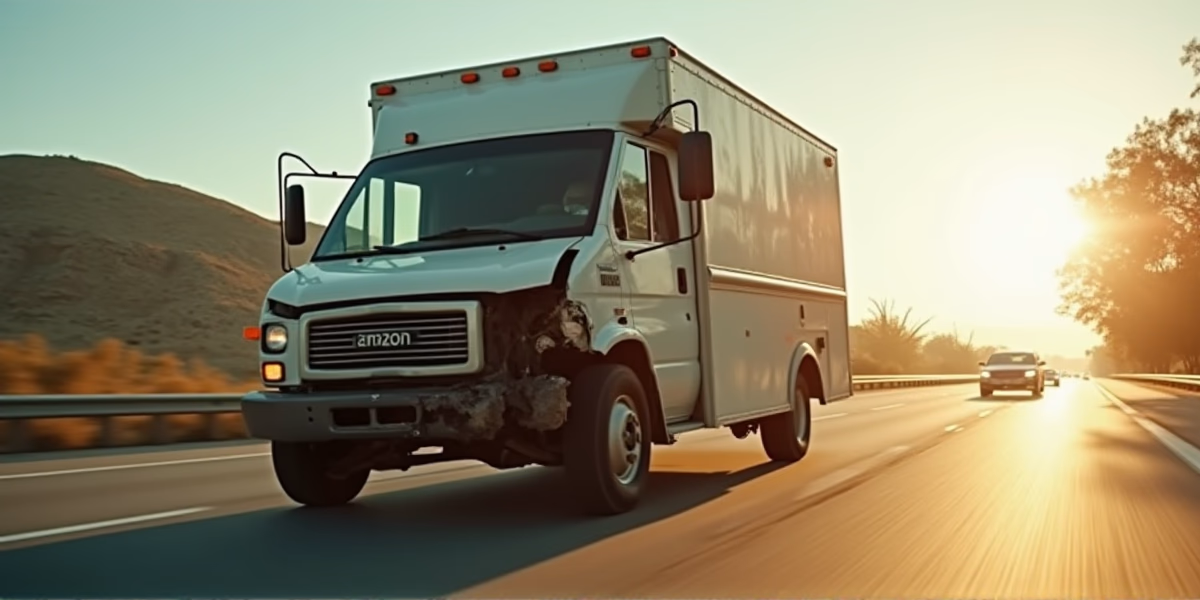
California’s ‘ABC test’ determines if a delivery driver (Amazon/FedEx) is an employee or contractor. Even if labeled a ‘contractor,’ a company may be liable if they exercise control over the driver’s work, a key factor in San Diego delivery truck litigation. Labor Code § 2775
Could the Trucking Company Be Held Liable Under Respondeat Superior?
Under the doctrine of **vicarious liability** (respondeat superior), a principal is responsible to third persons for the negligence of their agent in the transaction of business. This holds the trucking company legally liable for the wrongful acts of its drivers committed within the scope of their employment. Civ. Code § 2338
What if the Truck Driver Violated Speed Limits?
In California, commercial trucks (including semi-tractors with three or more axles) are strictly prohibited from exceeding **55 miles per hour** on any highway. In San Diego freeway crashes, proving a violation of this speed limit is a primary tool for establishing statutory negligence. CVC § 22406