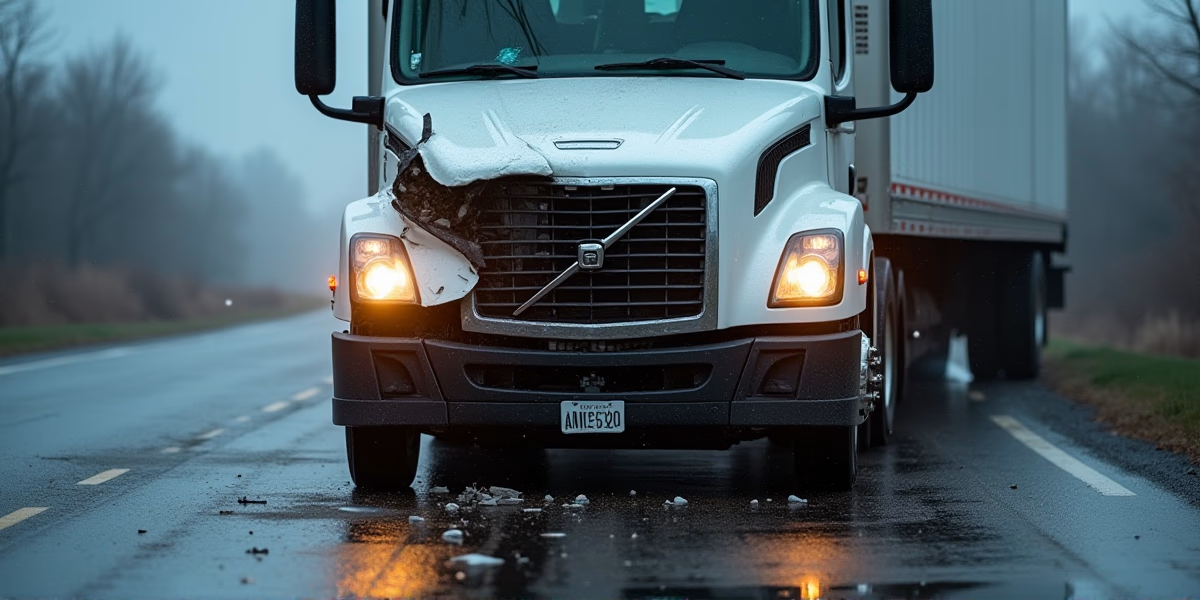
Can I Sue Amazon After A Delivery Truck Accident?

The question of whether you can sue Amazon after a delivery truck accident is complex, and the answer depends heavily on the specific circumstances. While Amazon doesn’t directly employ all of its delivery drivers, they maintain significant control over the delivery process, which can create liability. It’s not as simple as just filing a claim against a large corporation. Determining the correct legal path requires a thorough investigation into the driver’s employment status, the nature of Amazon’s control, and the insurance coverage available.
Many people assume that because they see the Amazon logo on the truck, Amazon is automatically responsible. This isn’t always the case. Amazon often utilizes independent contractor delivery services. However, even if the driver is technically an independent contractor, Amazon’s level of control over the driver’s operations can blur the lines and establish a legal responsibility. This is where the “ABC test” comes into play, as outlined in Labor Code § 2775, which determines if a delivery driver is an employee or contractor.
As a personal injury attorney with over 13 years of experience practicing in San Diego, I’ve handled numerous cases involving accidents with delivery vehicles. I was trained by a former insurance defense attorney, giving me intimate knowledge of how insurance companies evaluate, devalue, and deny claims. I understand the tactics they use and how to build a strong case to protect your rights. I’ve seen firsthand how Amazon and its insurance carriers will attempt to minimize their liability, often focusing on the independent contractor status of the driver to avoid responsibility.
What Evidence Do I Need to Prove Amazon’s Liability?
Gathering evidence is crucial in these types of cases. This includes the police report, witness statements, photos of the accident scene and vehicle damage, and your medical records. However, simply having this information isn’t enough. You’ll need to demonstrate Amazon’s control over the driver. This can be shown through delivery route assignments, performance metrics, training materials, and any policies that dictate how drivers operate.
Specifically, look for evidence of Amazon’s control over things like delivery schedules, route optimization, vehicle maintenance requirements, and safety protocols. Documentation of any communication between Amazon and the driver regarding performance expectations or disciplinary actions can also be valuable. Dashcam footage, if available, is incredibly helpful, as is any data from the vehicle’s Electronic Logging Device (ELD).
What If the Driver Was an Independent Contractor?
Even if the driver was classified as an independent contractor, Amazon can still be held liable under the doctrine of **vicarious liability** (respondeat superior), as defined in Civ. Code § 2338. This means that if the driver was acting within the scope of their employment when the accident occurred, Amazon can be held responsible for their negligence. Proving this requires demonstrating that Amazon had the right to control the driver’s actions, even if they didn’t directly supervise them.
How Long Do I Have to File a Lawsuit?
In California, the **Statute of Limitations** for personal injury claims is generally **two years** from the date of the accident. However, because trucking companies often begin evidence destruction (like purging ELD data) as soon as the law allows, immediate filing is critical to preserve the integrity of the claim. This is especially true in cases involving Amazon, where the potential for evidence spoliation is high. As outlined in CCP § 335.1, you have a limited window to take legal action.
What Damages Can I Recover in an Amazon Delivery Truck Accident Case?
If you are successful in your claim against Amazon, you may be entitled to recover a variety of damages, including medical expenses (past and future), lost wages, pain and suffering, property damage, and potentially punitive damages if Amazon’s conduct was particularly egregious. The amount of compensation you receive will depend on the severity of your injuries, the extent of your losses, and the strength of your evidence.
What Should I Do If a Government Vehicle Was Involved?
If the Amazon delivery truck was a government-owned vehicle or the accident occurred due to a dangerous road condition maintained by a public entity, a formal administrative claim **MUST** be presented within **6 months** (180 days) of the incident. Failure to meet this strict deadline under the Government Tort Claims Act can result in the permanent loss of your right to recover, as stated in Gov. Code § 911.2. This is a complex process with specific requirements, so it’s essential to consult with an attorney immediately.
What is the Best Way to Handle a Recorded Statement Request from Amazon’s Insurer?
Amazon’s insurance company will likely request a recorded statement soon after the accident. While you are not legally obligated to provide one, doing so can be detrimental to your case. Insurance adjusters are trained to ask leading questions designed to minimize their liability. It’s best to politely decline the request and consult with an attorney before speaking to any insurance representative. They will attempt to use your own words against you later in the process.
How Do Medical Liens Affect My Amazon Truck Accident Settlement?
If you received medical treatment for your injuries, the healthcare provider may file a medical lien against your potential settlement. A medical lien is a legal claim for the payment of medical expenses. Negotiating these liens can be complex, and it’s important to understand your rights and options. I have extensive experience working with medical providers and insurance companies to resolve medical lien issues in San Diego, ensuring you receive the maximum possible compensation.
What Happens if Amazon Tenders Their Policy Limits Early in the Claim?
Sometimes, Amazon’s insurance company will offer a policy limits tender early in the claim process. This is essentially an offer to settle your case for the maximum amount of their insurance coverage. While it may seem tempting to accept this offer, it’s crucial to carefully consider whether it adequately compensates you for your losses. I can help you evaluate the offer, investigate potential sources of additional coverage (such as an umbrella policy), and negotiate a fair settlement.
How Can Dashcam Footage Help My Case?
Dashcam footage is incredibly valuable evidence in truck accident cases. It provides a clear and objective record of the events leading up to the collision. If you have dashcam footage, preserve it immediately and do not alter it in any way. Even if you don’t have your own dashcam footage, you can request footage from the Amazon delivery truck or any nearby businesses or traffic cameras. Digital evidence, including ECM/EDR data, can also be critical.
What is the Difference Between ER Billing and a Medical Lien?
ER billing refers to the initial charges you receive from the emergency room for your treatment. A medical lien, as previously discussed, is a legal claim for the payment of those charges. The ER bill is often significantly higher than the actual amount the healthcare provider will ultimately accept. I can help you negotiate both the ER bill and any medical liens to ensure you are not overpaying for your medical care.
What Delay Tactics Do Insurance Companies Use in Amazon Truck Accident Cases?
Insurance companies often employ delay tactics to try to minimize their payout. This can include requesting excessive documentation, delaying responses to your inquiries, and disputing the severity of your injuries. It’s important to be patient and persistent, and to have an attorney who can navigate these tactics and keep your case moving forward. I am familiar with these strategies and can effectively counter them.
What is UM/UIM Arbitration and How Does It Apply to Amazon Truck Accidents?
If the driver was underinsured or uninsured, you may be able to pursue a claim under your own Uninsured/Underinsured Motorist (UM/UIM) policy. This process typically involves arbitration, where a neutral third party will determine the amount of compensation you are entitled to. I have extensive experience handling UM/UIM arbitration cases in San Diego, ensuring you receive the maximum possible recovery under your policy.
What is Evidence Preservation and What is the Timeline for Documenting My Losses?
Evidence preservation is critical in truck accident cases. This includes preserving the vehicle, photos of the accident scene, medical records, and any other relevant documentation. It’s important to act quickly, as evidence can be lost or destroyed over time. I can send a spoliation letter to Amazon and any other relevant parties, demanding that they preserve all evidence related to the accident. Data overwrite windows can be short, so immediate action is essential.