Can Poor Truck Maintenance Cause Jackknifing?

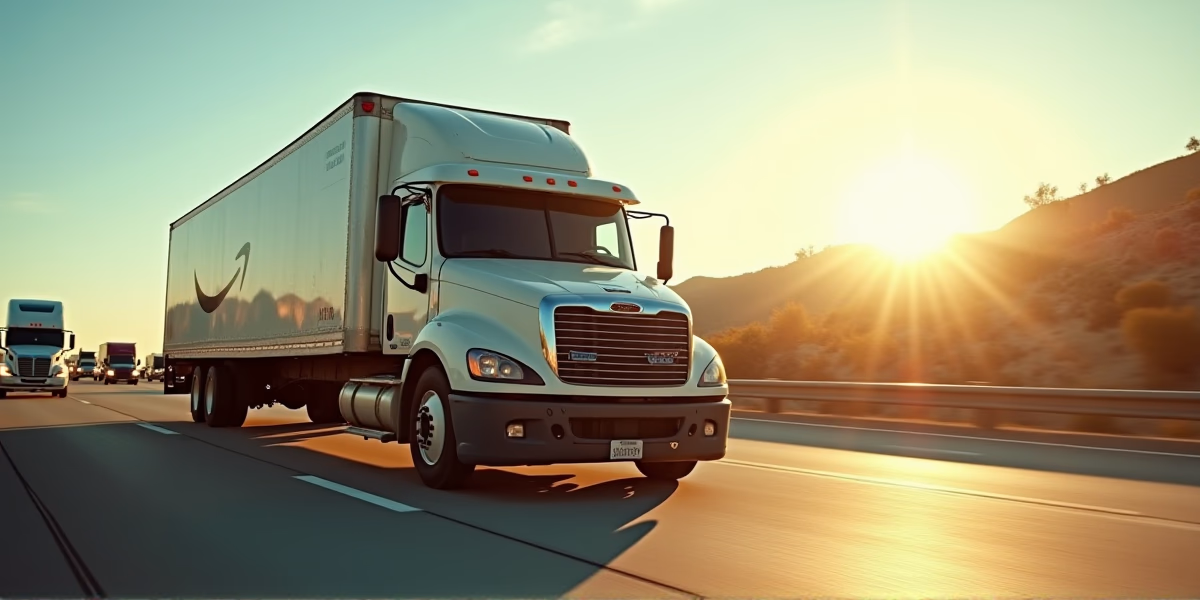
Jackknifing, a particularly dangerous type of truck accident, occurs when the trailer swings out of control, forming a “V” shape with the tractor. While driver error is often cited as a cause, a frequently overlooked factor is inadequate truck maintenance. Federal and California regulations mandate rigorous inspection and upkeep of commercial vehicles, and failures in this area can have devastating consequences.
A truck’s braking system is paramount to preventing jackknifing. If brakes are poorly maintained—worn pads, leaking fluid, or a malfunctioning anti-lock braking system (ABS)—the trailer can easily lose traction, especially during sudden stops or on wet roads. This loss of control is a direct result of negligence on the part of the trucking company or the party responsible for vehicle upkeep. Similarly, tire blowouts, often stemming from insufficient tread depth or improper inflation, can destabilize the trailer and initiate a jackknifing event.
I’ve spent over 13 years representing clients injured in truck accidents throughout San Diego. Having been trained by a former insurance defense attorney, I possess intimate knowledge of how insurance companies evaluate, devalue, and deny claims. They often focus on driver error to deflect blame from the company’s failure to properly maintain their fleet. Understanding the intricacies of commercial vehicle regulations is critical to building a strong case and securing the compensation you deserve.
Can a Trucking Company Be Held Liable for Negligent Maintenance?
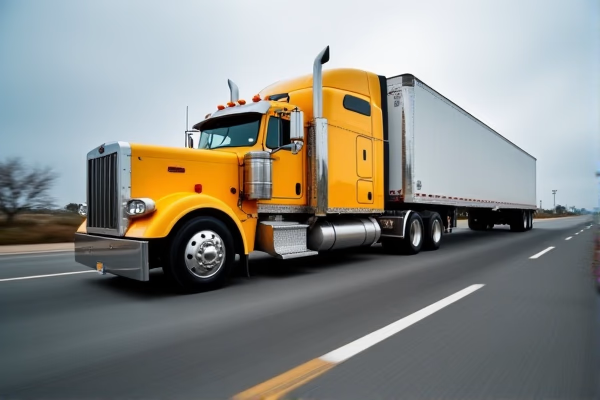
Absolutely. Under the doctrine of vicarious liability (respondeat superior), a principal is responsible to third persons for the negligence of their agent in the transaction of business. This means the trucking company can be held legally liable for the wrongful acts of its drivers committed within the scope of their employment. More directly, a company is directly liable if it was negligent in hiring, supervising, or retaining an unfit driver. This is critical in cases where the driver has a history of FMCSA violations or lacked the proper CDL endorsements.
Establishing negligent maintenance requires demonstrating that the company failed to adhere to federal and state safety standards. This can involve presenting maintenance logs, inspection reports, and expert testimony highlighting deficiencies in the vehicle’s upkeep. Evidence of prior mechanical issues, ignored repair requests, or a pattern of inadequate inspections can all contribute to a successful claim.
What California Regulations Govern Truck Maintenance?
Commercial vehicles are subject to rigorous safety and inspection regulations. Failure to maintain brakes, tires, or lighting systems according to California’s commercial vehicle safety framework can be used to establish direct liability against the carrier for ‘negligent maintenance’. Specifically, CVC § 34500 outlines the requirements for safe operation, including regular inspections and repairs.
These regulations aren’t merely suggestions; they are legally binding standards. Trucking companies have a duty to ensure their vehicles are roadworthy, and a breach of this duty can lead to significant legal consequences in the event of an accident. Documentation is key, and we often subpoena maintenance records to uncover evidence of negligence.
How Often Are Truck Brakes Inspected?
Federal regulations, outlined in 49 CFR § 395, dictate the frequency and scope of truck inspections. Generally, pre-trip inspections are required before each trip, and more comprehensive inspections must be conducted at least annually. These inspections cover a wide range of components, including brakes, tires, lights, steering, and suspension.
However, the mere fact that an inspection was *conducted* doesn’t guarantee its thoroughness. We often find instances where inspections were superficial or failed to identify critical safety issues. Independent expert review of inspection reports is crucial to determine if the company met the required standards of care.
What Role Do Electronic Logging Devices (ELDs) Play in Maintenance Cases?
Electronic Logging Devices (ELDs) are now mandatory for most commercial trucks and record a driver’s hours of service. While primarily used to prevent driver fatigue, ELD data can also provide valuable insights into maintenance patterns. For example, frequent breakdowns or extended periods of inactivity may indicate underlying mechanical problems.
Federal Hours of Service (HOS) regulations dictate exactly how long a driver can be behind the wheel. Violations of these federal safety standards, often proven through Electronic Logging Device (ELD) data, are used to demonstrate driver fatigue. Furthermore, ELD data can reveal if a driver was operating a vehicle with known mechanical issues, further strengthening a claim of negligent maintenance.
What If the Truck Was Recently Repaired?
Even if a truck recently underwent repairs, the company can still be held liable if the repairs were substandard or failed to address underlying issues. In fact, faulty repairs can be even more dangerous than no repairs at all, as they can create a false sense of security.
We often investigate the qualifications of the repair facility and the quality of the parts used. If the repairs were performed negligently or used substandard components, the company may be liable for the resulting accident. It’s important to gather all documentation related to the repairs, including invoices, work orders, and any warranties.
What Should I Do If I Suspect Poor Maintenance Contributed to My Truck Accident?
If you’ve been injured in a truck accident and suspect poor maintenance played a role, it’s crucial to act quickly. First, document everything you can remember about the accident, including the condition of the truck and any visible defects. Second, seek immediate medical attention and keep detailed records of your treatment.
Finally, and most importantly, consult with an experienced truck accident attorney. I can help you investigate the accident, gather evidence, and build a strong case against the responsible parties. In San Diego, navigating the complexities of truck accident litigation requires a thorough understanding of federal and state regulations, and I am prepared to fight for your rights.
How Long Do I Have to File a Lawsuit After a Truck Accident in California?
California law provides a two-year window from the date of the truck accident to file a lawsuit. Because trucking companies often begin evidence destruction (like purging ELD data) as soon as the law allows, immediate filing is critical to preserve the integrity of the claim.
Don’t delay in seeking legal counsel. The statute of limitations can be complex, and missing the deadline can result in the permanent loss of your right to recover compensation. I can ensure your claim is filed within the required timeframe and that all necessary evidence is preserved.
What Damages Can I Recover in a Truck Accident Case?
If you’ve been injured in a truck accident due to negligent maintenance, you may be entitled to recover a wide range of damages, including medical expenses, lost wages, pain and suffering, and property damage. In some cases, you may also be able to recover punitive damages if the company’s negligence was particularly egregious.
Calculating the full extent of your damages can be complex, especially when dealing with long-term injuries or lost earning capacity. I can help you assess your losses and fight for the maximum compensation you deserve.
What If the Truck Driver Was Also At Fault?
California’s ‘pure’ comparative fault system applies to trucking claims. Even if a truck driver argues you shared responsibility, you can still recover damages; however, your total compensation will be reduced by your percentage of fault.
The key is to establish the primary cause of the accident. Even if you were partially at fault, the trucking company may still be liable for its negligence in maintaining a safe vehicle. I can investigate all contributing factors and ensure you receive fair compensation for your injuries.
What If the Accident Involved a Government Vehicle or Road Hazard?
If a truck accident involves a government-owned vehicle or a dangerous road condition maintained by a public entity, a formal administrative claim MUST be presented within 6 months (180 days). Failure to meet this strict deadline under the Government Tort Claims Act can result in the permanent loss of your right to recover.
These claims have specific requirements and procedures. I can help you navigate the complex process of filing a government claim and ensure your rights are protected.
What If the Trucker Was an Independent Contractor?
California’s ‘ABC test’ determines if a delivery driver (Amazon/FedEx) is an employee or contractor. Even if labeled a ‘contractor,’ a company may be liable if they exercise control over the driver’s work, a key factor in San Diego delivery truck litigation.
Determining the employment status of a truck driver can be challenging. I can investigate the driver’s relationship with the company and ensure the correct parties are held accountable for your injuries.