
Can Trucking Companies Delete Black Box Data?

The short answer is yes, trucking companies *can* delete black box data, but it’s rarely legal and almost always a red flag. These devices, officially known as Electronic Logging Devices (ELDs) and Event Data Recorders (EDRs), are critical pieces of evidence in truck accident cases. They record vital information like speed, braking patterns, engine hours, and driver fatigue. The temptation to erase or alter this data is high when a company is facing a potential liability claim.
Fortunately, California law and federal regulations provide some protection. While there isn’t a blanket prohibition on deleting data, there are strict rules about retention periods and spoliation of evidence. Trucking companies are legally obligated to preserve evidence that they know, or should know, will be relevant to a potential lawsuit. Deleting data with the intent to destroy evidence is known as “spoliation,” and it can have severe consequences for the company, including financial sanctions and adverse inferences at trial.
As a personal injury attorney with over 13 years of experience in San Diego, I’ve seen firsthand how insurance companies evaluate, devalue, and deny claims. I was trained by a former insurance defense attorney, giving me intimate knowledge of their tactics. Knowing how they operate is crucial to building a strong case and protecting your rights. The immediate preservation of evidence is paramount, and that includes securing the black box data.
What happens if a trucking company claims the black box data is unavailable?
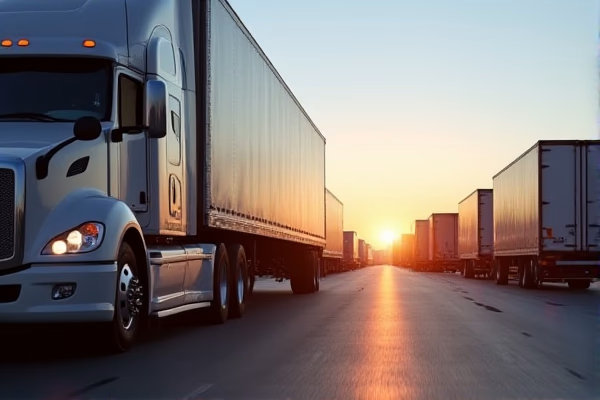
If a trucking company claims the data is corrupted, lost, or deleted, don’t accept that explanation at face value. It’s often a tactic to avoid accountability. We immediately send a “preservation of evidence” letter, formally demanding they retain all relevant data and explain the circumstances of the alleged loss. We also investigate independently, often hiring forensic experts to attempt data recovery from the ELD or EDR itself.
It’s important to understand that even if the original data is unavailable, there are often other sources of evidence we can use to reconstruct the accident. This includes police reports, witness statements, dashcam footage (if available), and the truck’s maintenance records. A thorough investigation is key to uncovering the truth.
Can I force the trucking company to provide the black box data?
Yes, you can. Through the discovery process in a lawsuit, you have the legal right to request documents and information from the trucking company, including the black box data. If they refuse to comply, we can file a motion with the court to compel them to produce the evidence. The court can impose sanctions if they continue to withhold relevant information.
What is “spoliation of evidence” and how does it affect my case?
Spoliation of evidence refers to the intentional destruction or alteration of evidence with the intent to conceal or suppress facts. If a trucking company intentionally deleted black box data to hide evidence of negligence, it can be considered spoliation. Under California law, the court can issue adverse inferences, meaning the jury can assume the deleted data would have been unfavorable to the trucking company. This can significantly strengthen your case.
What are the retention requirements for ELD data?
Federal regulations, specifically 49 CFR § 395, require trucking companies to retain ELD data for a minimum of six months. However, they are legally obligated to preserve data if they are aware of a pending lawsuit or potential claim. Any deletion of data after a claim is filed is highly suspect and could be considered spoliation.
How does the “ABC test” apply to delivery truck accidents involving independent contractors?
California’s ‘ABC test’ determines if a delivery driver (Amazon/FedEx) is an employee or contractor. Even if labeled a ‘contractor,’ a company may be liable if they exercise control over the driver’s work, a key factor in San Diego delivery truck litigation. If the driver is deemed an employee, the company is directly responsible for their actions. This is a complex legal issue, and it’s crucial to consult with an attorney to determine the driver’s employment status.
What should I do if I’ve been injured in a truck accident in San Diego?
If you’ve been injured in a truck accident, the first step is to seek medical attention. Then, contact an experienced personal injury attorney as soon as possible. We can investigate the accident, gather evidence, and protect your rights. Don’t speak to the insurance company without first consulting with an attorney, as they are likely to try and minimize your claim.
What is the statute of limitations for filing a truck accident lawsuit in California?
In California, you generally have **two years** from the date of the truck accident to file a lawsuit, as outlined in CCP § 335.1. Because trucking companies often begin evidence destruction (like purging ELD data) as soon as the law allows, immediate filing is critical to preserve the integrity of the claim.
What if the truck accident involved a government vehicle or a dangerous road condition?
If a truck accident involves a government-owned vehicle or a dangerous road condition maintained by a public entity, a formal administrative claim **MUST** be presented within **6 months** (180 days). Failure to meet this strict deadline under the Government Tort Claims Act can result in the permanent loss of your right to recover, per Gov. Code § 911.2.
What if the driver was a contractor, and I suspect the company was negligent in hiring or training them?
California’s ‘ABC test’ determines if a delivery driver (Amazon/FedEx) is an employee or contractor. Even if labeled a ‘contractor,’ a company may be liable if they exercise control over the driver’s work, a key factor in San Diego delivery truck litigation. A trucking company is directly liable if it was negligent in hiring, supervising, or retaining an unfit driver. This is critical in cases where the driver has a history of FMCSA violations or lacked the proper CDL endorsements, as defined by CACI No. 426.
What if the truck company tenders their policy limits to settle my claim?
A policy limits tender is an offer from the insurance company to settle your claim for the maximum amount of their insurance coverage. Accepting a policy limits tender releases the trucking company from any further liability. Before accepting any settlement offer, it’s crucial to consult with an attorney to ensure it adequately compensates you for your injuries, lost wages, and other damages. We can assess the full value of your claim and negotiate a fair settlement on your behalf.
What role does comparative fault play in truck accident cases?
California’s ‘pure’ comparative fault system applies to trucking claims. Even if a truck driver argues you shared responsibility, you can still recover damages; however, your total compensation will be reduced by your percentage of fault, as outlined in Civ. Code § 1714. It’s important to have an attorney analyze the accident to determine if comparative fault applies and minimize your percentage of responsibility.