How Do I Report A Truck Accident To The Fmcsa?

Reporting a truck accident to the Federal Motor Carrier Safety Administration (FMCSA) is a critical step in protecting your rights and ensuring accountability. While you’ll likely be dealing with insurance companies immediately following the crash, the FMCSA maintains a national database of crashes, violations, and safety records for commercial carriers. A report to the FMCSA can trigger investigations, lead to increased scrutiny of the trucking company, and provide valuable evidence for your claim.
The FMCSA’s Crash and Safety Reporting System (CSSR) is the primary portal for submitting accident information. However, it’s important to understand the reporting thresholds. Accidents resulting in serious injury, fatality, or significant property damage (currently $75,000 or more) **must** be reported within five business days of the incident. Even if your accident doesn’t meet these thresholds, it’s still advisable to file a report, as it creates an official record and can be beneficial in the long run.
I’ve been practicing personal injury law in San Diego for over 13 years, and I’ve seen firsthand how crucial a timely FMCSA report can be. I was trained by a former insurance defense attorney, giving me intimate knowledge of how insurance companies evaluate, devalue, and deny claims. They often downplay the severity of accidents and attempt to minimize their liability. Reporting to the FMCSA levels the playing field and provides an independent source of information.
What information do I need to report a truck accident to the FMCSA?
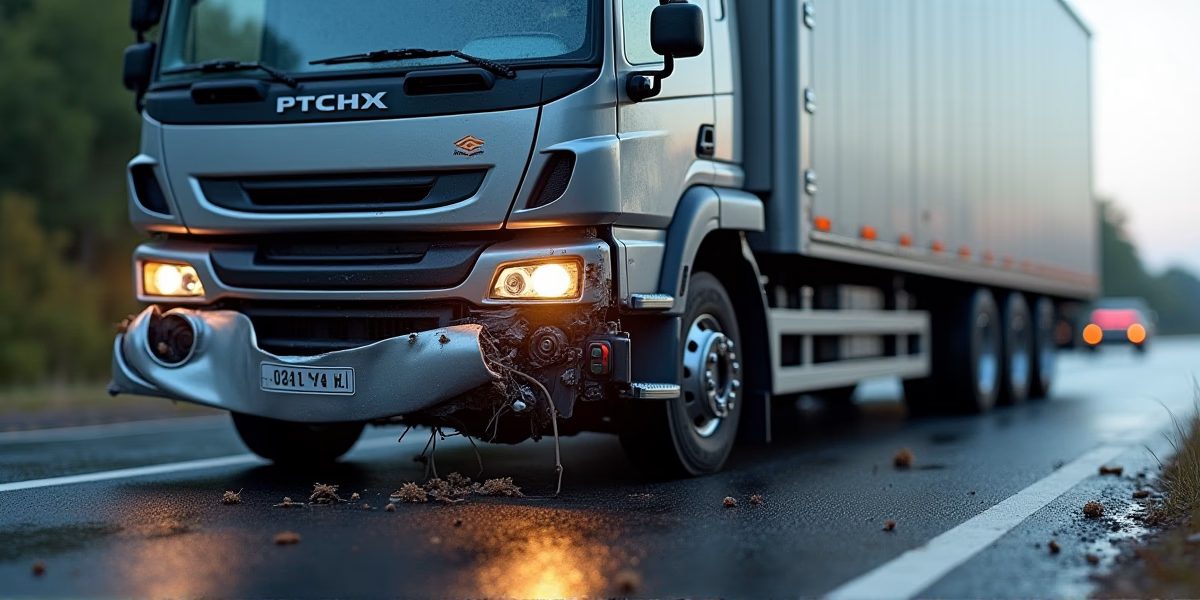
The FMCSA requires detailed information about the accident, the vehicles involved, and the parties involved. This includes the date, time, and location of the crash, as well as the names and contact information of all drivers, passengers, and witnesses. You’ll also need the trucking company’s USDOT number, the driver’s CDL information, and the insurance details for both vehicles. Accurate documentation of the accident scene, including photos, police reports, and witness statements, is also essential.
It’s important to note that the FMCSA report is separate from any police report you’ve filed. The police report focuses on determining fault for criminal purposes, while the FMCSA report is geared towards safety regulations and carrier compliance. Both reports are valuable, and you should obtain copies of both whenever possible.
Can I report an accident to the FMCSA if I wasn’t the driver of the other vehicle?
Yes, absolutely. As a passenger, pedestrian, or another driver involved in a truck accident, you have the right to report the incident to the FMCSA. In fact, it’s often the responsibility of those *not* directly involved in operating the commercial vehicle to ensure a report is filed, especially if the truck driver or company is reluctant to do so. The CSSR portal is accessible to anyone with relevant information about the crash.
What happens after I submit a report to the FMCSA?
Once you submit a report, the FMCSA will review the information and may initiate an investigation. This could involve inspecting the trucking company’s safety records, interviewing drivers and witnesses, and examining the vehicles involved. The FMCSA has the authority to issue fines, suspend operating licenses, and even shut down trucking companies that violate safety regulations. The information you provide can be instrumental in triggering such actions.
What if the trucking company refuses to cooperate with the FMCSA investigation?
Trucking companies are legally obligated to cooperate with FMCSA investigations. If a company refuses to provide requested information or obstructs the investigation, the FMCSA can impose significant penalties. Furthermore, their lack of cooperation can be used as evidence of negligence in your civil claim. It’s crucial to document any instances of non-compliance and report them to the FMCSA immediately.
What is the role of the DOT number in reporting a truck accident?
The USDOT number is a unique identifier assigned to commercial carriers by the Department of Transportation. It’s essential for accurately identifying the trucking company involved in the accident and accessing their safety records. You can find the DOT number on the truck itself, on the company’s website, or through the FMCSA’s SAFER website. Having this number is critical for a complete and accurate FMCSA report.
How does a government claim deadline affect my ability to pursue a claim after a truck accident?
If a truck accident involves a government-owned vehicle or a dangerous road condition maintained by a public entity, a formal administrative claim **MUST** be presented within **6 months** (180 days). Failure to meet this strict deadline under the Government Tort Claims Act can result in the permanent loss of your right to recover. This is a separate requirement from the FMCSA report, but equally important.
What should I do if the insurance company asks me to sign a medical release form?
Never sign a medical release form without first consulting with an attorney. Insurance companies often use these forms to gain access to your entire medical history, which they can then use to find pre-existing conditions or other information to deny or reduce your claim. I strongly advise reviewing any documents provided by the insurance company with legal counsel before signing them.
What is the best way to preserve evidence after a truck accident?
Evidence preservation is critical in any truck accident claim. This includes taking photos of the accident scene, the vehicles involved, and any visible injuries. Obtain contact information from all witnesses and preserve any dashcam footage or other digital evidence. It’s also important to document your medical treatment and any lost wages. A spoliation letter can be sent to the trucking company to preserve their evidence, such as ELD data, maintenance records, and driver logs.
What are the common comparative fault tactics used by trucking companies?
Trucking companies often attempt to shift blame to the other driver, alleging contributory negligence. They may claim you were speeding, distracted driving, or failed to yield the right-of-way. California’s ‘pure’ comparative fault system applies to trucking claims. Even if a truck driver argues you shared responsibility, you can still recover damages; however, your total compensation will be reduced by your percentage of fault.
How can I determine if the driver was operating within the Federal Hours of Service regulations?
Federal **Hours of Service (HOS)** regulations dictate exactly how long a driver can be behind the wheel. Violations of these federal safety standards, often proven through Electronic Logging Device (ELD) data, are used to demonstrate driver fatigue. Obtaining the driver’s ELD data can be challenging, but it’s a crucial piece of evidence in many truck accident claims.