
How Do Insurance Companies Handle Distracted Driving Claims?

Distracted driving claims present unique challenges, and insurance companies are notorious for minimizing their exposure in these cases. They often attempt to shift blame onto the victim, arguing comparative negligence or questioning the extent of the injuries. However, California law provides avenues for recovery, even when fault isn’t entirely clear-cut. The key is understanding how these companies operate and building a strong case with compelling evidence.
One of the first tactics an insurer will employ is a thorough investigation of the accident. This includes obtaining police reports, witness statements, and, crucially, the driver’s electronic logging device (ELD) data. They’ll scrutinize the driver’s hours of service logs, looking for any violations that might indicate fatigue or negligence. They will also look for any evidence of cell phone use or other distractions at the time of the accident. It’s vital to remember that insurance adjusters are trained to find weaknesses in your claim, not to fairly assess your damages.
I’ve been practicing personal injury law in San Diego for over 13 years, and I’ve seen firsthand how insurance companies evaluate, devalue, and deny claims. Trained by a former insurance defense attorney, I have intimate knowledge of their strategies and tactics. This experience allows me to anticipate their moves and build a robust defense for my clients.
What evidence is needed to prove a distracted driving claim against a truck driver?
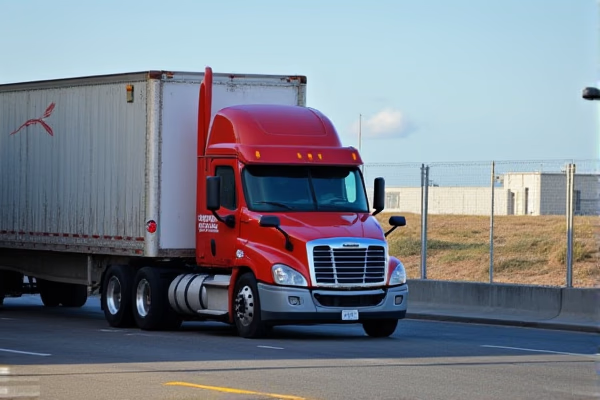
Establishing liability in a distracted driving case requires solid evidence. Police reports are a good starting point, but they often lack the detail needed to definitively prove distraction. Witness testimony can be helpful, but it’s often subjective and unreliable. The most compelling evidence comes from the truck driver’s ELD data, which can reveal cell phone use, speeding, or other violations. Dashcam footage, if available, is also invaluable. In cases where the driver admits to being distracted, a recorded statement can be incredibly powerful.
Beyond the immediate accident scene, it’s crucial to document your injuries and treatment thoroughly. Medical records, bills, and expert testimony from doctors and therapists are essential to prove the extent of your damages. Furthermore, any lost wages or diminished earning capacity should be carefully calculated and documented. The more comprehensive your evidence, the stronger your claim will be.
Remember, insurance companies will often request a recorded statement early in the claims process. While it may seem harmless, this is a tactic to gather information that can be used against you. It’s best to consult with an attorney before providing any statement to the insurer.
How does California’s comparative fault law affect my distracted driving claim?
California operates under a “pure” comparative fault system, meaning you can recover damages even if you were partially at fault for the accident. However, your recovery will be reduced by your percentage of fault. For example, if you are found to be 20% at fault, you will only receive 80% of your total damages. Insurance companies will aggressively attempt to assign you a portion of the blame, even if it’s unwarranted. They might argue you were speeding, not paying attention, or failed to take evasive action.
It’s important to understand that the burden of proof lies with the insurance company to demonstrate your comparative negligence. They must present evidence to support their claim. An experienced attorney can challenge their arguments and protect your rights. Civ. Code § 1714 outlines the principles of comparative negligence in California.
Successfully navigating comparative fault requires a detailed analysis of the accident circumstances and a strong presentation of your case. Don’t let the insurance company dictate the narrative – fight for your rightful compensation.
What if the truck driver was an independent contractor, not a direct employee?
Determining the employment status of a truck driver can be complex. Insurance companies often argue that the driver was an independent contractor to avoid liability. However, California’s “ABC test” determines if a worker is an employee or contractor. Even if labeled a “contractor,” the company may be liable if they exercise control over the driver’s work. Factors considered include who provides the equipment, who sets the schedule, and who controls the details of the job.
In San Diego delivery truck litigation, this is a common issue. If the company exercises significant control over the driver, they may be considered a de facto employer, even if they claim otherwise. This means they are responsible for the driver’s negligence. Labor Code § 2775 provides the legal framework for determining employment status in California.
Proving employer control often requires a thorough investigation of the company’s policies and practices. An attorney can gather evidence to demonstrate the level of control they exerted over the driver and establish their liability.
What is the deadline for filing a lawsuit in a distracted driving truck accident case?
California law provides a **two-year** window from the date of the truck accident to file a lawsuit. Because trucking companies often begin evidence destruction (like purging ELD data) as soon as the law allows, immediate filing is critical to preserve the integrity of the claim. Waiting too long can jeopardize your ability to recover compensation. It’s also important to consider that investigations can take time, and gathering all necessary evidence can be a lengthy process.
Furthermore, if the accident involved a government-owned vehicle or a dangerous road condition maintained by a public entity, a formal administrative claim **MUST** be presented within **6 months** (180 days). Failure to meet this strict deadline under the Government Tort Claims Act can result in the permanent loss of your right to recover. CCP § 335.1 outlines the statute of limitations for personal injury claims in California.
Don’t delay seeking legal counsel. An attorney can ensure that all deadlines are met and that your claim is properly filed.
What should I do if the insurance adjuster is delaying my claim or refusing to cooperate?
Insurance companies often employ delay tactics to discourage claimants and reduce payouts. They might request excessive documentation, schedule unnecessary inspections, or simply fail to respond to your inquiries. These tactics are designed to frustrate you and force you to settle for less than your claim is worth. If you suspect the insurance company is stalling, it’s important to document all communication and consult with an attorney.
An attorney can send a demand letter outlining your claim and threatening legal action. This often prompts the insurance company to take your claim more seriously. They can also file a lawsuit to protect your rights and compel the insurance company to cooperate. Remember, you have the right to a fair settlement, and an attorney can help you fight for it.
Don’t let the insurance company bully you into accepting a lowball offer. Protect your interests and seek the guidance of an experienced attorney.