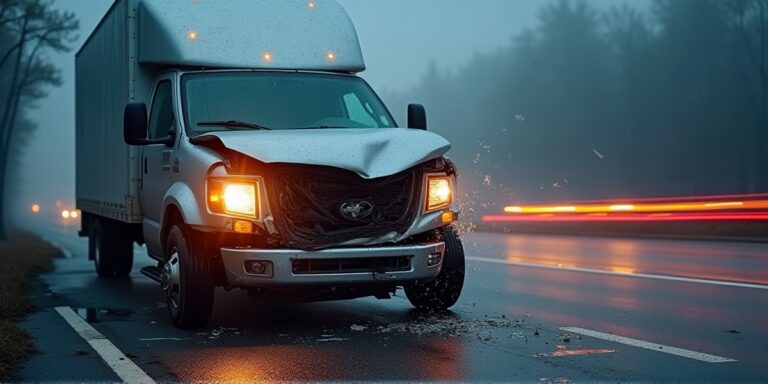
How Do Lawyers Investigate Maintenance Failures?

Investigating maintenance failures in trucking accidents is a complex undertaking, far beyond simply reviewing a driver’s logbook. It requires a deep understanding of federal and state regulations, meticulous record-keeping, and often, the expertise of forensic mechanical engineers. The trucking industry operates under a strict regime of safety standards, and violations can be a clear indication of negligence. As a personal injury attorney practicing in San Diego for over 13 years, I’ve seen firsthand how insurance companies attempt to downplay or conceal evidence of inadequate maintenance. I was trained by a former insurance defense attorney, giving me intimate knowledge of how insurance companies evaluate, devalue, and deny claims.
The first step is obtaining the complete maintenance history of the truck involved. This isn’t always easy. Insurance companies are not forthcoming with this information, and often require a subpoena to compel its production. We’re looking for patterns of deferred maintenance, falsified inspection reports, and any documentation of known mechanical issues that were ignored. Federal regulations, specifically 49 CFR § 395, dictate exactly how long a driver can be behind the wheel and require detailed logs of vehicle inspections and repairs. Any discrepancies or missing records are red flags.
What types of records are crucial in a truck maintenance investigation?

Several types of records are essential. First, the driver’s daily vehicle inspection report (DVIR). These reports, completed before and after each trip, document the driver’s assessment of the truck’s safety condition. Second, the truck’s complete repair history, including invoices, work orders, and diagnostic reports. Third, any records of safety audits or inspections conducted by the trucking company or a third-party inspector. Finally, Electronic Logging Device (ELD) data can reveal if a driver was operating the vehicle while it was known to be unsafe or in violation of federal Hours of Service regulations.
We also look for evidence of systemic failures within the trucking company. Was the company cutting corners on maintenance to save money? Were drivers pressured to operate unsafe vehicles? Were mechanics properly trained and qualified? These questions often require depositions of company personnel and a thorough review of internal policies and procedures.
How do you prove a trucking company knew about a defect?
Proving knowledge is often the biggest challenge. Direct evidence, such as a written repair order documenting a known defect, is ideal. However, it’s more common to build a case through circumstantial evidence. This can include multiple reports of the same issue, testimony from former employees, and evidence of similar incidents involving other trucks in the company’s fleet. Civ. Code § 2338, the doctrine of vicarious liability, is often used to hold the trucking company legally liable for the wrongful acts of its drivers committed within the scope of their employment.
Forensic mechanical engineers play a critical role in these investigations. They can inspect the truck, identify the cause of the failure, and determine whether it was due to a lack of maintenance. They can also analyze the wreckage for evidence of pre-existing defects or improper repairs. Their expert testimony is often crucial in establishing negligence and proving causation.
What if the truck was leased to an independent owner-operator?
Determining liability in these situations can be more complex. The leasing agreement will dictate the responsibilities of the owner-operator and the leasing company. Often, the leasing company retains some control over maintenance and safety. Labor Code § 2775, California’s ‘ABC test’ determines if a delivery driver (Amazon/FedEx) is an employee or contractor. Even if labeled a ‘contractor,’ a company may be liable if they exercise control over the driver’s work, a key factor in San Diego delivery truck litigation.
What role does the Federal Motor Carrier Safety Administration (FMCSA) play?
The FMCSA is the federal agency responsible for regulating the trucking industry. They maintain a database of truck and company safety records, which can be a valuable source of information. We often review a company’s FMCSA safety rating and any past violations or enforcement actions. A poor safety rating is a strong indication of negligence. In San Diego, we frequently use this data to build a stronger case against negligent carriers.
What happens if the trucking company refuses to cooperate with the investigation?
Trucking companies are often reluctant to cooperate, fearing the discovery of damaging evidence. In these cases, we will pursue all available legal remedies, including subpoenas, depositions, and court orders. We may also file a lawsuit to compel the production of evidence. It’s important to act quickly, as trucking companies often begin evidence destruction (like purging ELD data) as soon as the law allows, immediate filing is critical to preserve the integrity of the claim.
What should I do if I’ve been injured in a truck accident?
If you’ve been injured in a truck accident, it’s crucial to seek legal counsel immediately. An experienced attorney can protect your rights, investigate the accident, and build a strong case on your behalf. Don’t speak to the insurance company without first consulting with an attorney. They are trained to minimize your claim and will likely attempt to take advantage of your vulnerability.
How long do I have to file a lawsuit after a truck accident in California?
In California, you generally have **two years** from the date of the truck accident to file a lawsuit. CCP § 335.1 provides a **two-year** window from the date of the truck accident to file a lawsuit. Because trucking companies often begin evidence destruction (like purging ELD data) as soon as the law allows, immediate filing is critical to preserve the integrity of the claim.
What if the accident involved a government vehicle or roadway defect?
If a truck accident involves a government-owned vehicle or a dangerous road condition maintained by a public entity, a formal administrative claim **MUST** be presented within **6 months** (180 days). Gov. Code § 911.2 states that failure to meet this strict deadline under the Government Tort Claims Act can result in the permanent loss of your right to recover.
What is the importance of preserving evidence after a truck accident?
Preserving evidence is paramount. This includes photographs of the accident scene, the truck, and your injuries; witness statements; and any documentation related to the accident. Civ. Code § 1714, California’s ‘pure’ comparative fault system applies to trucking claims. Even if a truck driver argues you shared responsibility, you can still recover damages; however, your total compensation will be reduced by your percentage of fault.
What are common delay tactics used by insurance companies in truck accident cases?
Insurance companies often employ delay tactics to wear down claimants and reduce the value of their claims. These tactics can include requesting numerous medical records, conducting lengthy investigations, and offering low settlement offers. It’s important to remain patient and persistent, and to work with an attorney who can navigate these challenges.
What is UM/UIM coverage, and how does it apply to truck accident cases?
UM/UIM (Uninsured/Underinsured Motorist) coverage protects you if you’re injured by an uninsured or underinsured driver. In truck accident cases, this coverage can be crucial if the truck driver doesn’t have sufficient insurance to cover your damages.