
How Long Do Dui Truck Accident Cases Take?

The timeline for resolving a DUI truck accident case in California is rarely straightforward. Unlike a typical fender-bender, these cases involve multiple layers of complexity, including criminal investigations, federal regulations, and often, disputes over the driver’s employment status. The length of time it takes to settle or litigate a claim depends on a multitude of factors, but understanding the general process can help you prepare for what lies ahead.
One of the first hurdles is determining liability. While the driver’s DUI is a significant factor, we must also investigate the trucking company’s potential negligence. Was the driver properly vetted? Did they have a history of violations? Was the company aware of any potential issues? These investigations can take weeks or even months, especially if the company is uncooperative. It’s also important to gather all available evidence, including police reports, witness statements, and the truck’s event data recorder (EDR) information.
As a personal injury attorney practicing in San Diego for over 13 years, I’ve seen firsthand how insurance companies attempt to delay and devalue claims. I was trained by a former insurance defense attorney, giving me intimate knowledge of how they evaluate, devalue, and deny claims. They often exploit the complexities of these cases to their advantage, hoping you’ll settle for less than you deserve. That’s why it’s crucial to have an experienced advocate on your side who understands their tactics and can fight for your rights.
How Does a Criminal Case Affect My Civil Claim?
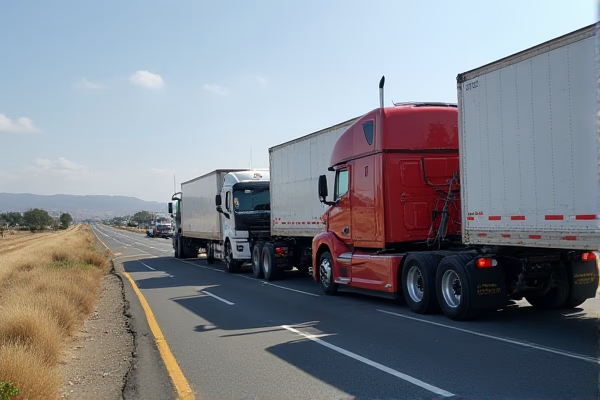
The criminal case against the truck driver and the civil case you pursue are separate legal proceedings. However, they are often intertwined. The outcome of the criminal case—a conviction, a plea bargain, or even an acquittal—can significantly impact your civil claim. For example, a conviction for DUI provides strong evidence of negligence in your civil case. However, even without a conviction, we can still pursue a claim based on other evidence of the driver’s impairment.
It’s important to understand that the criminal case is handled by the District Attorney’s office, and their priorities may not align with yours. They may offer a plea bargain that doesn’t fully address your damages. That’s why it’s essential to have your own independent investigation and legal representation to protect your interests.
What Role Do Federal Regulations Play in a DUI Truck Accident Case?
The trucking industry is heavily regulated by the Federal Motor Carrier Safety Administration (FMCSA). These regulations cover everything from driver qualifications and hours of service to vehicle maintenance and safety inspections. Violations of these regulations can be a strong indication of negligence and can significantly increase the value of your claim. For example, if the driver was operating outside of their allowed hours of service, or if the truck was not properly maintained, it could be evidence of the trucking company’s disregard for safety.
How Long Does It Take to Negotiate With the Insurance Company?
Negotiating with the insurance company can be a lengthy and frustrating process. They will likely start by offering a low settlement, and they may require extensive documentation to support your claim. This includes medical records, bills, wage loss information, and a detailed account of your pain and suffering. It’s important to be patient and persistent, and to have an attorney who can effectively advocate on your behalf. In some cases, negotiations can be resolved within a few months, but more complex cases can take a year or longer.
What If the Insurance Company Refuses to Settle?
If the insurance company refuses to offer a fair settlement, the next step is to file a lawsuit. This will initiate the litigation process, which includes discovery, depositions, and potentially a trial. Litigation can be a time-consuming and expensive process, but it may be necessary to protect your rights and recover the full amount of your damages. The timeline for litigation can vary depending on the complexity of the case and the court’s schedule, but it typically takes 18-24 months to reach trial.
What is the Statute of Limitations for a Truck Accident Case in California?
In California, you have a limited amount of time to file a lawsuit after a truck accident. According to CCP § 335.1, you generally have **two years** from the date of the accident to initiate legal action. Because trucking companies often begin evidence destruction (like purging ELD data) as soon as the law allows, immediate filing is critical to preserve the integrity of the claim.
What Happens If the Truck Driver Was an Independent Contractor?
Determining whether a truck driver is an employee or an independent contractor can be complex. California’s ‘ABC test’ determines if a delivery driver (Amazon/FedEx) is an employee or contractor. Even if labeled a ‘contractor,’ a company may be liable if they exercise control over the driver’s work, a key factor in San Diego delivery truck litigation. If the driver is deemed an employee, the trucking company is directly liable for their actions. However, if the driver is an independent contractor, it may be more difficult to hold the company responsible.
How Can I Preserve Evidence in My DUI Truck Accident Case?
Preserving evidence is crucial in any truck accident case, but it’s especially important in DUI cases. This includes gathering police reports, witness statements, medical records, and photos of the accident scene. It’s also important to document any communication with the insurance company. If the truck was equipped with an event data recorder (EDR), it’s essential to obtain that data as soon as possible, as it can provide valuable information about the driver’s speed, braking habits, and other critical details.
What is Vicarious Liability in the Context of Trucking Accidents?
Under the doctrine of **vicarious liability** (respondeat superior), a principal is responsible to third persons for the negligence of their agent in the transaction of business. This holds the trucking company legally liable for the wrongful acts of its drivers committed within the scope of their employment. This is a critical concept in trucking litigation, as it allows us to hold the company accountable for the driver’s negligence, even if the driver was the one who caused the accident.
What Should I Do If the Government is Involved in the Truck Accident?
If a truck accident involves a government-owned vehicle or a dangerous road condition maintained by a public entity, a formal administrative claim **MUST** be presented within **6 months** (180 days). Failure to meet this strict deadline under the Government Tort Claims Act can result in the permanent loss of your right to recover. This claim must be filed with the appropriate government agency and include detailed information about the accident and your damages.