
What Deadlines Apply To Government Vehicle Lawsuits?

When accidents involve government-owned vehicles or property, the rules change dramatically. Unlike a typical collision claim against an insurance company, you’re dealing with a strict set of legal requirements and deadlines imposed by the state of California. Failing to adhere to these timelines can result in the complete loss of your right to recover compensation, even if the government entity was clearly at fault.
The primary hurdle is the requirement to file a formal administrative claim with the government agency within a very limited timeframe. This isn’t simply a matter of notifying them of the incident; it’s a detailed legal document outlining your damages, the basis for the claim, and supporting evidence. It’s a process designed to be complex, and insurance companies are well aware that many claimants stumble over these initial steps, effectively preventing them from pursuing a lawsuit.
As a personal injury attorney with over 13 years of experience practicing in San Diego, I’ve seen firsthand how these government claim deadlines can derail otherwise valid cases. I was trained by a former insurance defense attorney, giving me intimate knowledge of how insurance companies evaluate, devalue, and deny claims. This insight allows me to anticipate their tactics and build a stronger case from the outset.
What is the deadline for filing a claim against a government vehicle?
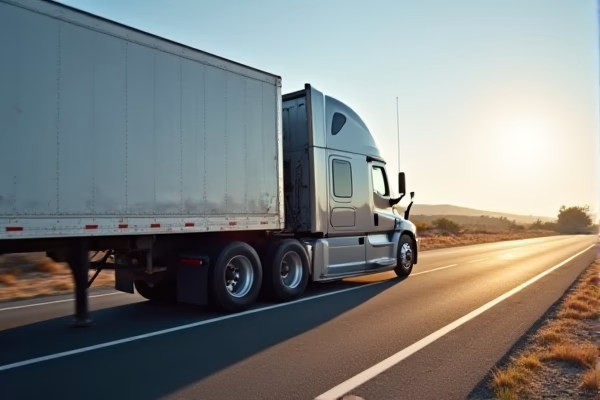
In California, if a truck accident involves a government-owned vehicle or a dangerous road condition maintained by a public entity, a formal administrative claim **MUST** be presented within **6 months** (180 days). This deadline is absolute, and it begins running from the date of the incident. It’s crucial to understand that simply reporting the accident to the police or a supervisor does not satisfy this requirement. A properly prepared and submitted claim is essential.
The claim must be detailed and include all known damages, such as medical expenses (past and future), lost wages, property damage, and pain and suffering. Supporting documentation, like police reports, medical records, and vehicle repair estimates, should be included. It’s also important to identify the specific government entity responsible for the negligence.
Once the claim is filed, the government agency has a specific period to investigate and respond. If they deny the claim, or fail to respond within a certain timeframe, you then have the right to file a lawsuit. However, this right is contingent upon having first met the 6-month claim filing deadline.
What happens if I miss the 6-month deadline?
Missing the 6-month deadline for filing a government claim is almost always fatal to your case. Under the Government Tort Claims Act, you generally lose your right to sue the government entity for damages. There are very limited exceptions to this rule, and they are rarely applicable.
The courts are very strict in enforcing these deadlines, and even a slight delay can be enough to dismiss your claim. This is why it’s so important to consult with an attorney as soon as possible after an accident involving a government vehicle. We can ensure that the claim is properly prepared and submitted within the required timeframe, protecting your legal rights.
It’s also important to note that the 6-month deadline applies regardless of whether you were at fault in the accident. Even if you shared some responsibility, you still have the right to pursue a claim against the government if their negligence contributed to your injuries.
What if the accident involved a dangerous road condition?
If your truck accident was caused by a dangerous road condition – such as potholes, inadequate signage, or improper lane markings – maintained by a public entity (like the city, county, or state), the 6-month claim filing deadline still applies. This is because the public entity is responsible for maintaining the safety of its roadways.
Establishing liability in these cases can be more complex, as it often requires proving that the government entity knew or should have known about the dangerous condition and failed to take reasonable steps to correct it. This may involve obtaining maintenance records, accident reports, and expert testimony.
It’s crucial to document the dangerous condition as thoroughly as possible, including photographs, videos, and witness statements. An experienced attorney can help you gather the necessary evidence and build a strong case against the government entity.
What types of damages can I recover in a government vehicle lawsuit?
If your government claim is approved, or if you successfully file a lawsuit, you may be entitled to recover a variety of damages, including medical expenses (past and future), lost wages, property damage, pain and suffering, and emotional distress. In some cases, you may also be able to recover punitive damages if the government entity’s conduct was particularly egregious.
Calculating the full extent of your damages can be challenging, especially when it comes to future medical expenses and lost income. It’s important to work with an attorney who understands the complexities of these calculations and can help you maximize your compensation.
We also have experience dealing with the unique challenges of recovering damages from government entities, such as limitations on the amount of compensation you can receive.
Can I sue the government employee directly?
Generally, you cannot sue the individual government employee who caused the accident. Under the doctrine of sovereign immunity, the government entity is typically the only party that can be held liable. However, there are limited exceptions to this rule, such as cases involving intentional misconduct or gross negligence.
Even if you cannot sue the employee directly, you can still pursue a claim against the government entity for their negligence. This is because the government is responsible for the actions of its employees while they are acting within the scope of their employment.
It’s important to focus your efforts on pursuing a claim against the government entity, as they have the resources to compensate you for your damages. An attorney can help you navigate this complex process and ensure that your rights are protected.
What documentation should I gather after an accident with a government vehicle?
Gathering comprehensive documentation is essential after an accident involving a government vehicle. This includes:
- Police Report: Obtain a copy of the official police report, which will contain important information about the accident, including witness statements and the investigating officer’s findings.
- Medical Records: Collect all medical records related to your injuries, including emergency room reports, doctor’s notes, and physical therapy records.
- Vehicle Repair Estimates: Obtain estimates for the cost of repairing your vehicle.
- Photographs and Videos: Take photographs and videos of the accident scene, including the damage to your vehicle, the government vehicle, and any visible injuries.
- Witness Information: Collect the names and contact information of any witnesses to the accident.
Preserving this documentation is crucial, as it will be used to support your claim. It’s also important to keep a detailed record of all expenses related to the accident, such as medical bills, lost wages, and rental car costs.
What is the process for filing a government claim in San Diego?
Filing a government claim in San Diego involves several steps. First, you must identify the correct government agency responsible for the negligence. Then, you must prepare a detailed claim form outlining your damages and the basis for your claim. The claim form must be submitted within the 6-month deadline.
Once the claim is submitted, the government agency will investigate and respond. If they deny the claim, or fail to respond within a certain timeframe, you then have the right to file a lawsuit. However, this right is contingent upon having first met the 6-month claim filing deadline.
The entire process can be complex and time-consuming, which is why it’s so important to consult with an attorney. We can handle all aspects of the claim filing process on your behalf, ensuring that your rights are protected.
How does comparative fault affect my government vehicle claim?
California’s ‘pure’ comparative fault system applies to trucking claims. Even if a truck driver argues you shared responsibility, you can still recover damages; however, your total compensation will be reduced by your percentage of fault.
The government entity may argue that you were partially at fault for the accident, such as by speeding or failing to yield the right-of-way. It’s important to gather evidence to refute these claims and demonstrate that the government entity was primarily responsible for the collision.
An experienced attorney can help you analyze the evidence and build a strong case to minimize your percentage of fault and maximize your compensation.
What if the government vehicle was improperly maintained?
Commercial vehicles are subject to rigorous safety and inspection regulations. Failure to maintain brakes, tires, or lighting systems according to California’s commercial vehicle safety framework can be used to establish direct liability against the carrier for ‘negligent maintenance’.
We can investigate the maintenance records of the government vehicle to determine if it was properly inspected and maintained. If we find evidence of negligence, we can use this to strengthen your claim and increase your chances of recovery.
It’s important to note that proving negligent maintenance can be challenging, as government entities often have strict record-keeping procedures. However, an experienced attorney can help you navigate this process and gather the necessary evidence.