
What Happens If A Truck Driver Falls Asleep At The Wheel?

When a truck driver falls asleep at the wheel, it’s rarely a simple accident. It’s a complex issue often stemming from negligence on the part of the driver, the trucking company, or both. Determining liability requires a thorough investigation, and that’s where an experienced attorney can make all the difference. The Federal Motor Carrier Safety Administration (FMCSA) has strict regulations in place to prevent fatigued driving, and violations of these rules can be powerful evidence in a claim.
These regulations aren’t just suggestions; they’re the law. They cover everything from mandatory rest breaks to limitations on driving hours. Trucking companies are legally obligated to ensure their drivers comply, and when they don’t, they can be held accountable for the resulting damages. This includes not only the driver’s negligence but also the company’s failure to properly train, supervise, and monitor their employees.
For over 13 years, I’ve represented clients injured in truck accidents throughout San Diego. I was trained by a former insurance defense attorney, giving me intimate knowledge of how insurance companies evaluate, devalue, and deny claims. I understand the tactics they use, and I’m prepared to fight for the maximum compensation you deserve. I’ve seen firsthand how insurance adjusters attempt to minimize the role of driver fatigue, often blaming the victim or downplaying the severity of the injuries.
What evidence is needed to prove a truck driver was asleep at the wheel?
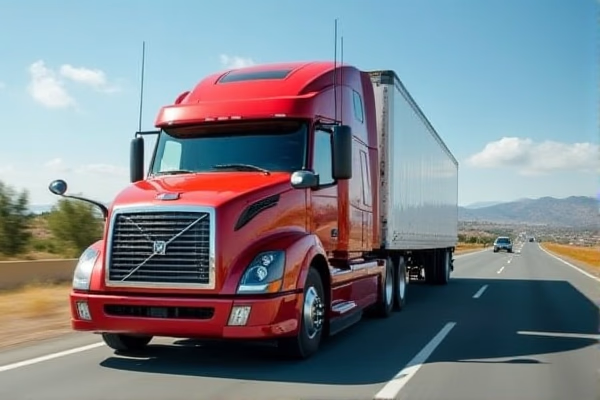
Proving a truck driver was asleep at the wheel can be challenging, but it’s not impossible. The key is gathering sufficient evidence to demonstrate negligence. This often includes obtaining the driver’s Electronic Logging Device (ELD) data, which records their hours of service. Violations of federal regulations, such as exceeding driving hour limits or falsifying logs, are strong indicators of fatigue. Police reports, witness statements, and the driver’s own statements can also be valuable. Furthermore, the truck’s “black box” data recorder can reveal critical information about speed, braking, and other factors leading up to the crash.
We often subpoena the driver’s complete work history, looking for patterns of fatigue or repeated violations. If the driver was under pressure to meet unrealistic deadlines, that can also be evidence of negligence on the part of the trucking company. In some cases, we may even consult with sleep experts to analyze the driver’s schedule and determine if they were likely impaired at the time of the accident.
Can I sue the trucking company if their driver fell asleep at the wheel?
Absolutely. Under the doctrine of **vicarious liability** (respondeat superior), a principal is responsible to third persons for the negligence of their agent in the transaction of business. This means the trucking company can be held legally liable for the wrongful acts of its drivers committed within the scope of their employment. Even if the driver was technically an independent contractor, we’ll investigate whether the company exercised sufficient control over their work to establish a principal-agent relationship. This is a common issue in San Diego delivery truck litigation.
Beyond vicarious liability, the trucking company may also be directly liable for negligent hiring, training, or supervision. If they failed to properly vet the driver’s background, provide adequate training, or monitor their compliance with safety regulations, they could be held responsible for your damages. We’ll thoroughly examine the company’s safety record and internal policies to identify any potential violations.
What types of damages can I recover in a truck accident case involving driver fatigue?
The damages you can recover depend on the severity of your injuries and the extent of your losses. This can include medical expenses, lost wages, pain and suffering, property damage, and future medical care. If your injuries are permanent or debilitating, you may also be entitled to compensation for loss of earning capacity and diminished quality of life. In cases involving wrongful death, family members can recover damages for loss of financial support, funeral expenses, and the loss of their loved one’s companionship.
We work with experienced economists and medical professionals to accurately calculate your total damages. It’s important to remember that insurance companies often try to undervalue claims, so it’s crucial to have an attorney who can effectively advocate for your rights. We’ll fight to ensure you receive the full compensation you deserve for all of your losses.
What is the statute of limitations for filing a truck accident claim in California?
In California, you have a **two-year** window from the date of the truck accident to file a lawsuit. Because trucking companies often begin evidence destruction (like purging ELD data) as soon as the law allows, immediate filing is critical to preserve the integrity of the claim. This is especially important in cases involving driver fatigue, as the ELD data is often crucial evidence. Don’t delay seeking legal counsel, as waiting too long could jeopardize your ability to recover compensation.
We understand that dealing with the aftermath of a truck accident can be overwhelming. That’s why we offer free consultations to discuss your case and explain your legal options. We’ll handle all the complex legal details, allowing you to focus on your recovery.
What should I do if the insurance company asks me to give a recorded statement?
Do not give a recorded statement to the insurance company without first consulting with an attorney. Insurance adjusters are trained to ask leading questions designed to minimize their liability. They may try to trick you into making statements that could harm your claim. A recorded statement can be used against you later in the litigation process. Let me handle all communication with the insurance company on your behalf. I have extensive experience dealing with these tactics and will protect your rights.
It’s crucial to remember that the insurance company is not on your side. Their goal is to pay as little as possible, and they will often use aggressive tactics to achieve that goal. Don’t fall victim to their strategies. Protect yourself by seeking legal counsel and allowing an experienced attorney to handle your claim.
What if the truck accident involved a government-owned vehicle or a dangerous road condition?
If a truck accident involves a government-owned vehicle or a dangerous road condition maintained by a public entity, a formal administrative claim **MUST** be presented within **6 months** (180 days). Failure to meet this strict deadline under the Government Tort Claims Act can result in the permanent loss of your right to recover. These claims are often complex and require specific documentation and procedures. We have extensive experience handling government liability claims and will ensure your claim is properly filed and processed.
The process of filing a government claim can be time-consuming and frustrating. We’ll handle all the necessary paperwork and communication with the government agency, allowing you to focus on your recovery. Don’t risk losing your right to compensation by attempting to navigate this process on your own.
“@context”: “https://schema.org”, “@type”: “FAQPage”, “mainEntity”: [ { “@type”: “Question”, “name”: “What evidence is needed to prove a truck driver was asleep at the wheel?”, “acceptedAnswer”: { “@type”: “Answer”, “text”: “Proving a truck driver was asleep at the wheel can be challenging, but it’s not impossible. The key is gathering sufficient evidence to demonstrate negligence, including ELD data, police reports, witness statements, and the driver’s statements.” } }, { “@type”: “Question”, “name”: “Can I sue the trucking company if their driver fell asleep at the wheel?”, “acceptedAnswer”: { “@type”: “Answer”, “text”: “Absolutely. Under the doctrine of vicarious liability, the trucking company can be held legally liable for the wrongful acts of its drivers. They may also be directly liable for negligent hiring, training, or supervision.” } }, { “@type”: “Question”, “name”: “What types of damages can I recover in a truck accident case involving driver fatigue?”, “acceptedAnswer”: { “@type”: “Answer”, “text”: “You can recover medical expenses, lost wages, pain and suffering, property damage, future medical care, loss of earning capacity, and diminished quality of life. In wrongful death cases, family members can recover additional damages.” } } ] }