
What If I Cant Return To Work After A Truck Accident?

This scenario, unfortunately, is far too common. Truck accidents often result in catastrophic injuries that permanently alter a person’s ability to work. When that happens, the stakes are incredibly high. It’s not just about recovering compensation for medical expenses and pain and suffering; it’s about securing your financial future and ensuring you and your family are cared for. The insurance company will likely try to minimize your claim, arguing you can return to some form of employment, even if it’s less demanding or lower-paying. They’ll scrutinize your medical records, question your doctors, and potentially offer a settlement that falls far short of what you actually need.
That’s where experienced legal counsel is critical. As a personal injury attorney in San Diego with over 13 years of practice, I’ve seen firsthand how insurance companies operate. I was trained by a former insurance defense attorney, giving me intimate knowledge of how they evaluate, devalue, and deny claims. I understand the tactics they use and how to effectively counter them. We’ll build a strong case based on your medical evidence, lost earnings potential, and the long-term impact of your injuries. We’ll fight to ensure you receive the full and fair compensation you deserve.
What types of damages can I recover if I can’t return to work?
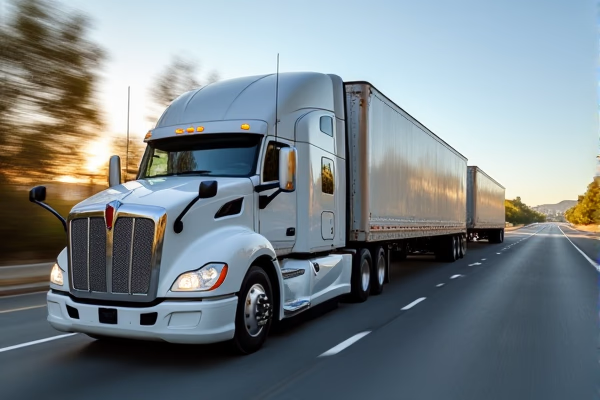
When a truck accident prevents you from returning to work, you’re entitled to recover a range of damages designed to compensate you for your losses. These go far beyond just medical bills. Economic damages are the most straightforward, including past and future lost wages, diminished earning capacity, and the cost of retraining or education if necessary. However, non-economic damages are equally important. These include compensation for pain and suffering, emotional distress, loss of enjoyment of life, and permanent disability. In severe cases, you may also be able to recover punitive damages if the trucking company’s negligence was particularly egregious.
Calculating future lost wages can be complex, requiring expert testimony from vocational rehabilitation specialists and economists. We’ll meticulously document your career trajectory, earning history, and the impact of your injuries on your ability to perform your job duties. We’ll also explore all potential sources of income replacement, including Social Security Disability benefits and long-term disability insurance.
How does the insurance company determine my lost earning capacity?
Insurance companies will employ various methods to assess your lost earning capacity, and they almost always underestimate it. They’ll often request your employment records, tax returns, and medical history. They may also hire their own vocational experts to conduct an independent evaluation of your abilities. These experts often have a bias towards minimizing your losses, and their reports can be heavily scrutinized. It’s crucial to have your own independent vocational expert to counter their findings and provide a more accurate assessment of your future earning potential. We’ll challenge any attempts to undervalue your claim and ensure your long-term financial needs are adequately addressed.
What if I have other sources of income, like disability benefits?
Receiving disability benefits doesn’t necessarily disqualify you from recovering compensation in a truck accident claim. However, it’s important to understand how these benefits may affect your overall recovery. California law allows for a credit for disability benefits received, meaning the insurance company can offset your damages by the amount you’ve already received or are entitled to receive. We’ll carefully analyze your disability benefits and ensure you’re not double-recovering for the same losses. It’s also important to consider the potential impact of a settlement on your eligibility for future benefits. We’ll work to structure your settlement in a way that protects your long-term financial security.
What is the statute of limitations for filing a truck accident claim in California?
In California, you have a limited amount of time to file a lawsuit after a truck accident. According to **CCP § 335.1**, you generally have **two years** from the date of the accident to initiate legal proceedings. Because trucking companies often begin evidence destruction (like purging ELD data) as soon as the law allows, immediate filing is critical to preserve the integrity of the claim. Delaying your claim can jeopardize your ability to recover compensation, so it’s essential to consult with an attorney as soon as possible.
How can I protect my claim if I’m unable to work?
Protecting your claim requires proactive steps. First, meticulously document all medical treatment, expenses, and lost wages. Keep a detailed journal of your pain, symptoms, and limitations. Avoid making any statements to the insurance company without first consulting with an attorney. Preserve all evidence related to the accident, including photos, videos, and witness information. Finally, and most importantly, seek legal counsel immediately. An experienced attorney can guide you through the complex legal process, protect your rights, and ensure you receive the full and fair compensation you deserve.
What if the truck driver was an independent contractor, not an employee?
Determining whether a truck driver is an employee or an independent contractor can significantly impact your claim. California’s ‘ABC test’ determines if a delivery driver (Amazon/FedEx) is an employee or contractor. Even if labeled a ‘contractor,’ a company may be liable if they exercise control over the driver’s work, a key factor in San Diego delivery truck litigation. We’ll investigate the driver’s employment relationship and gather evidence to establish the appropriate level of liability. This often involves examining the driver’s contract, payment structure, and the level of control the company exercised over their work.
What if the government owned the truck or maintained the roadway?
If a truck accident involves a government-owned vehicle or a dangerous road condition maintained by a public entity, a formal administrative claim **MUST** be presented within **6 months** (180 days). Failure to meet this strict deadline under the Government Tort Claims Act can result in the permanent loss of your right to recover. These claims are often complex and require specific procedures and documentation. We have extensive experience handling government liability claims and will ensure your claim is properly filed and prosecuted.
What if the trucking company claims I was partially at fault for the accident?
California’s ‘pure’ comparative fault system applies to trucking claims. Even if a truck driver argues you shared responsibility, you can still recover damages; however, your total compensation will be reduced by your percentage of fault. The insurance company will likely attempt to minimize their liability by alleging you were negligent, such as speeding, distracted driving, or failing to yield. We’ll thoroughly investigate the accident and gather evidence to refute their claims. This may involve obtaining police reports, witness statements, and accident reconstruction analysis.
What if the trucking company refuses to cooperate with my investigation?
Trucking companies have a legal obligation to preserve evidence related to an accident. If they refuse to cooperate with your investigation, such as providing access to maintenance records, driver logs, or safety policies, we can pursue legal remedies to compel them to do so. This may involve filing a motion to compel discovery or seeking a court order. We’ll aggressively pursue all available avenues to gather the information necessary to build a strong case.
What if the truck driver was violating federal Hours of Service regulations?
Federal **Hours of Service (HOS)** regulations dictate exactly how long a driver can be behind the wheel. Violations of these federal safety standards, often proven through Electronic Logging Device (ELD) data, are used to demonstrate driver fatigue. We’ll obtain the driver’s ELD data and analyze it for any violations. This can be a powerful tool for establishing negligence and proving the trucking company’s responsibility for the accident.