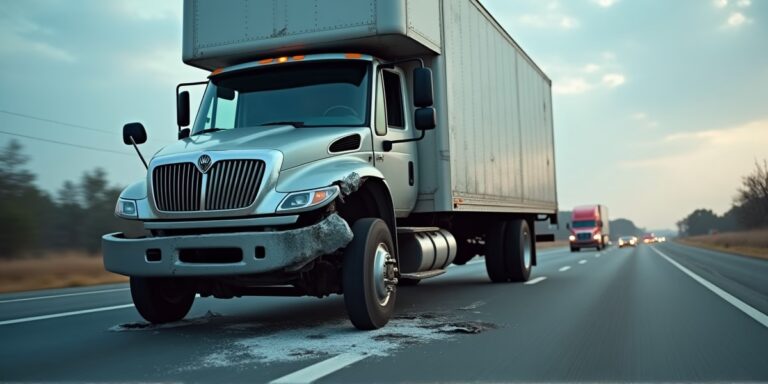
What If The Trucking Companys Insurance Denies My Claim?

It’s a frustratingly common scenario. Trucking companies, backed by their insurance carriers, often employ aggressive tactics to minimize payouts, even when liability is clear. A denial, or a lowball offer, is rarely the final word. Understanding your rights and the steps you can take to fight back is crucial to securing the compensation you deserve. Don’t accept the first offer, and certainly don’t give a recorded statement without legal counsel.
The first thing to remember is that an insurance company’s goal is to protect its bottom line, not to fairly compensate you. They’re trained to identify weaknesses in your case, and they’ll often use tactics like delaying investigations, questioning the severity of your injuries, or attempting to shift blame. This is where having an experienced attorney on your side becomes invaluable.
For over 13 years, I’ve represented clients throughout San Diego in personal injury cases, including numerous truck accident claims. I was trained by a former insurance defense attorney, giving me intimate knowledge of how insurance companies evaluate, devalue, and deny claims. I understand their strategies, and I know how to build a strong case that maximizes your recovery.
What steps should I take if my claim is denied?
A claim denial isn’t the end of the road. Here’s a breakdown of the immediate steps you should take:
- Gather All Documentation: Collect all police reports, medical records, bills, and any communication you’ve had with the insurance company.
- Review Your Insurance Policy: Understand the terms and conditions of your own auto insurance policy, as it may provide coverage for uninsured/underinsured motorist claims.
- Consult with an Attorney: An attorney can review your case, identify potential legal avenues, and guide you through the appeals process.
How can an attorney help me fight a claim denial?
An experienced attorney can significantly increase your chances of a successful outcome. Here’s how:
- Independent Investigation: We’ll conduct a thorough investigation of the accident, gathering evidence to support your claim, including witness statements and accident reconstruction reports.
- Negotiation with the Insurance Company: We’ll handle all communication with the insurance company, protecting you from aggressive tactics and ensuring your rights are protected.
- Litigation: If a fair settlement cannot be reached, we’ll file a lawsuit to pursue your claim in court.
What if the insurance company claims I was at fault?
Insurance companies frequently attempt to shift blame onto the injured party. Here’s how we combat this:
- Evidence Review: We’ll meticulously review all evidence, including police reports, witness statements, and accident photos, to identify inconsistencies and weaknesses in the insurance company’s argument.
- Comparative Fault Analysis: California operates under a ‘pure’ comparative fault system (Civ. Code § 1714). Even if you were partially at fault, you may still be entitled to compensation, although the amount will be reduced proportionally to your degree of fault.
- Expert Testimony: We’ll consult with accident reconstruction experts to provide compelling evidence supporting your version of events.
What is the deadline for filing a lawsuit after a truck accident?
Time is of the essence. California law provides a two-year window from the date of the truck accident to file a lawsuit (CCP § 335.1). Because trucking companies often begin evidence destruction (like purging ELD data) as soon as the law allows, immediate filing is critical to preserve the integrity of the claim.
What if the truck driver was working for a delivery company like Amazon or FedEx?
Determining the correct party to hold liable can be complex when a delivery driver is involved. Here’s what to consider:
- Employee vs. Contractor Status: California’s ‘ABC test’ determines if a delivery driver (Amazon/FedEx) is an employee or contractor (Labor Code § 2775).
- Control Over the Driver: Even if labeled a ‘contractor,’ the company may be liable if they exercise control over the driver’s work.
- Vicarious Liability: The company can be held responsible for the driver’s negligence under the doctrine of vicarious liability (respondeat superior) (Civ. Code § 2338).
What should I know about giving a recorded statement to the insurance company?
Giving a recorded statement is almost always a bad idea. Here’s why:
- Insurance Company Tactics: Insurance adjusters are skilled at asking leading questions designed to minimize your claim.
- Misinterpretation of Statements: Your statements can be taken out of context and used against you later.
- Legal Representation: You should always consult with an attorney before providing any statement to the insurance company.
How do medical liens affect my truck accident settlement?
If you received medical treatment for your injuries, the healthcare provider may file a medical lien against your settlement. Here’s what you need to know:
- Lien Negotiation: We’ll negotiate with the healthcare provider to reduce the amount of the lien.
- ER Billing vs. Medical Liens: It’s important to distinguish between the initial ER bill and any subsequent medical liens filed by the provider.
- Medicare/Medicaid Subrogation: If you have Medicare or Medicaid, they may have a right to recover funds from your settlement.
What if the accident involved a government vehicle or a dangerous road condition?
Accidents involving government entities have strict claim deadlines. Here’s what you need to be aware of:
- Formal Administrative Claim: If a truck accident involves a government-owned vehicle or a dangerous road condition maintained by a public entity, a formal administrative claim MUST be presented within 6 months (180 days) (Gov. Code § 911.2).
- Government Tort Claims Act: Failure to meet this strict deadline under the Government Tort Claims Act can result in the permanent loss of your right to recover.
- Complex Litigation: Claims against government entities often involve complex legal procedures.
What if the insurance company is delaying my claim or not responding to my inquiries?
Insurance companies sometimes employ delay tactics to discourage claimants from pursuing their cases. Here’s how we address this:
- Demand Letters: We’ll send a formal demand letter outlining your claim and the evidence supporting it.
- Bad Faith Litigation: If the insurance company acts in bad faith, we may be able to pursue a separate claim for damages.
- Court Intervention: We can file a lawsuit to compel the insurance company to respond to your claim.
What if the truck driver had a history of FMCSA violations?
A truck driver’s safety record is a critical piece of evidence in any truck accident claim. Here’s how we investigate this:
- FMCSA Database: We’ll access the Federal Motor Carrier Safety Administration (FMCSA) database to review the driver’s safety record.
- Negligent Hiring/Training: A trucking company is directly liable if it was negligent in hiring, supervising, or retaining an unfit driver (CACI No. 426).
- CDL Endorsements: We’ll verify that the driver had the proper CDL endorsements for the type of vehicle they were operating.