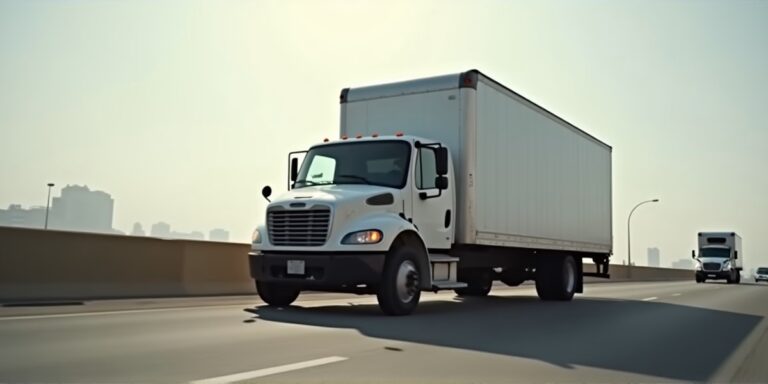
What Is Negligent Training In Commercial Trucking?

Negligent training of commercial truck drivers is a significant source of accidents and injuries on California roadways. While the Federal Motor Carrier Safety Administration (FMCSA) sets minimum standards for driver qualifications, it’s often the *quality* and *scope* of training that’s deficient. A trucking company has a legal duty to ensure its drivers are competent and capable of operating a large commercial vehicle safely. This extends beyond simply possessing a Commercial Driver’s License (CDL).
The failure to adequately train drivers can manifest in several ways. Insufficient behind-the-wheel experience, a lack of instruction on proper cargo securement, or a failure to educate drivers on specific safety regulations are all examples of negligent training. Moreover, companies are obligated to provide ongoing training to address new regulations, vehicle updates, and driver performance issues. A one-time, cursory training program is rarely sufficient to meet this duty of care.
I’ve been practicing personal injury law in San Diego for over 13 years, and I’ve seen firsthand how insurance companies attempt to minimize their exposure in these cases. Trained by a former insurance defense attorney, I have intimate knowledge of how insurance companies evaluate, devalue, and deny claims. They will often focus on the driver’s CDL and years of experience, attempting to deflect attention from the inadequate training protocols in place.
What evidence is needed to prove negligent training?

Establishing negligent training requires gathering compelling evidence. This can include the driver’s training records, company safety manuals, and internal policies regarding driver education. We often subpoena these documents during the discovery phase of litigation. Testimony from former drivers or employees can also be invaluable in demonstrating a pattern of inadequate training practices.
Furthermore, the FMCSA’s Safety Measurement System (SMS) provides a public database of trucking company safety performance data. This data can reveal a history of violations, crashes, and other safety issues that may indicate a systemic problem with driver training. Analyzing this data, along with the police report and accident reconstruction reports, is crucial to building a strong case.
Can a company be held liable even if the driver was properly licensed?
Absolutely. A valid CDL only demonstrates that a driver met the minimum requirements to operate a commercial vehicle. It does not guarantee they were adequately trained by their employer. A trucking company can be held liable for negligent training even if the driver possessed all required licenses and endorsements. The key is proving that the company failed to exercise reasonable care in ensuring the driver was competent and safe to operate the vehicle.
This often involves demonstrating that the training program was insufficient in scope, lacked practical application, or failed to address specific risks associated with the driver’s route or cargo. We often consult with trucking industry experts to establish the industry standard for driver training and compare the company’s practices against that benchmark.
What role do federal regulations play in negligent training claims?
Federal regulations, specifically those outlined in 49 CFR § 395, establish minimum requirements for driver qualifications and training. While compliance with these regulations doesn’t automatically shield a company from liability, a violation of these standards can be strong evidence of negligence.
For example, if a driver was not properly trained on Hours of Service (HOS) regulations, and fatigue was a contributing factor in the accident, the company’s failure to provide adequate training could be a key element of the claim. Similarly, if a driver’s logbooks were falsified, indicating they were compliant with HOS regulations when they were not, this could point to a systemic failure in the company’s training and oversight procedures.
What if the driver was an independent contractor, not a direct employee?
Determining the employment status of a truck driver – whether they are an employee or an independent contractor – is often a complex legal issue. California’s ‘ABC test,’ as defined in Labor Code § 2775, is used to assess this. Even if a driver is labeled as an ‘independent contractor,’ a company may still be liable if they exercise significant control over the driver’s work.
Factors such as the company’s control over routes, schedules, and cargo securement can indicate a driver is effectively an employee, despite being classified as a contractor. In these cases, the company has a duty to provide adequate training, regardless of the driver’s formal employment status. This is a common point of contention in San Diego delivery truck litigation.
What is vicarious liability and how does it apply to trucking accidents?
Under the doctrine of **vicarious liability** (respondeat superior), a principal is responsible to third persons for the negligence of their agent in the transaction of business. This means that a trucking company can be held legally liable for the wrongful acts of its drivers committed within the scope of their employment, as outlined in Civ. Code § 2338. Even if the driver was personally negligent, the company can be held responsible for the resulting damages.
This is particularly relevant in negligent training cases, as the company’s failure to adequately train the driver can be seen as a direct cause of the accident. Establishing vicarious liability requires demonstrating that the driver was acting within the scope of their employment at the time of the accident. This typically involves showing that the driver was performing work-related duties and following the company’s instructions.