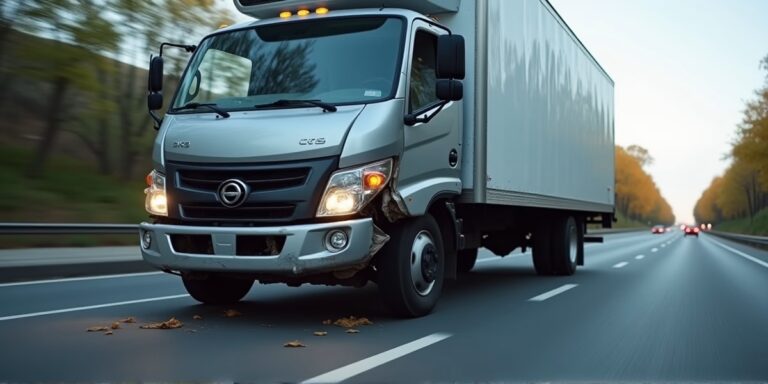
Are Amazon Drivers Required To Follow Commercial Driving Rules?

This scenario is unfortunately common. Amazon’s business model relies heavily on a vast network of delivery drivers, and the classification of these drivers as independent contractors versus employees is a frequent point of contention after accidents. The distinction is critical because employers are generally liable for the negligent acts of their employees, but not for the actions of independent contractors. However, the label Amazon gives a driver doesn’t automatically determine their legal status.
California law has specific rules for determining whether someone is an employee or an independent contractor. Courts will look at several factors, including the level of control Amazon exercises over the driver’s work. Does Amazon dictate the routes, schedules, and methods of delivery? Do they provide training or equipment? The more control Amazon exerts, the more likely the driver will be considered an employee, and the more likely Amazon will be held responsible for the driver’s negligence. It’s a complex issue, and insurance companies will often fight vigorously to avoid liability.
As a personal injury attorney practicing in San Diego for over 13 years, I’ve seen firsthand how insurance companies attempt to devalue and deny claims involving Amazon delivery drivers. I was trained by a former insurance defense attorney, giving me intimate knowledge of how they evaluate these cases. They’ll often focus on the “independent contractor” agreement, downplaying the degree of control Amazon actually has. That’s why it’s crucial to have an attorney who understands these tactics and can build a strong case to prove the driver was, in fact, an employee.
What factors do courts consider when determining if an Amazon driver is an employee?
California courts utilize a multi-factor test to determine employment status. The key is whether Amazon has the right to control not just *what* work is done, but *how* it’s done. This includes examining the following:
- Control over Work Details: Does Amazon dictate the driver’s routes, delivery times, and methods?
- Equipment and Supplies: Who provides the vehicle, insurance, and other necessary equipment?
- Payment Method: Is the driver paid a regular wage or salary, or are they paid per delivery?
- Training and Supervision: Does Amazon provide training or supervise the driver’s work?
- Relationship of the Parties: Is there a written contract defining the relationship, and how is it enforced?
The more control Amazon exercises over these aspects of the driver’s work, the stronger the argument for employee status. Even if a driver is labeled a “contractor” in a contract, that’s not the final word.
Can I still recover damages if the Amazon driver was an independent contractor?
Even if the driver is deemed an independent contractor, you may still have a claim against Amazon under certain circumstances. For example, if Amazon was negligent in its hiring or supervision of the driver, you could pursue a claim based on negligent entrustment. This means Amazon knew, or should have known, that the driver was unfit to operate a vehicle safely.
Additionally, if the accident was caused by a defect in the delivery vehicle, you may have a claim against Amazon based on product liability. It’s important to investigate all potential avenues for recovery, even if the driver’s employment status is unclear.
What evidence is important in a case involving an Amazon delivery driver?
Gathering evidence is crucial in these types of cases. Here are some key pieces of information to collect:
- Police Report: Obtain a copy of the police report, which will contain information about the accident and any citations issued.
- Witness Statements: Collect statements from any witnesses to the accident.
- Photos and Videos: Take photos of the damage to your vehicle and the accident scene. If there are any dashcam videos or surveillance footage, preserve them immediately.
- Amazon Contract: Obtain a copy of the contract between Amazon and the driver.
- Driver’s Logs: If possible, obtain the driver’s logs, which may show their hours of service and work schedule.
Preserving this evidence is critical, as it can be used to prove the driver’s negligence and Amazon’s liability.
What is the statute of limitations for filing a lawsuit after an accident with an Amazon delivery driver in California?
In California, you generally have **two years** from the date of the truck accident to file a lawsuit. Because trucking companies often begin evidence destruction (like purging ELD data) as soon as the law allows, immediate filing is critical to preserve the integrity of the claim. CCP § 335.1 outlines these time constraints. Don’t delay in seeking legal counsel, as missing the deadline could permanently bar your claim.
What should I do if Amazon’s insurance company is denying my claim?
Insurance companies are often skilled at minimizing payouts and denying legitimate claims. If Amazon’s insurance company is denying your claim, don’t give up. It’s important to consult with an experienced attorney who can review your case, gather evidence, and negotiate with the insurance company on your behalf. They can also file a lawsuit if necessary to protect your rights.
What happens if the accident involved a government-owned vehicle or a dangerous road condition?
If a truck accident involves a government-owned vehicle or a dangerous road condition maintained by a public entity, a formal administrative claim **MUST** be presented within **6 months** (180 days). Failure to meet this strict deadline under the Government Tort Claims Act can result in the permanent loss of your right to recover. Gov. Code § 911.2 details these requirements.
What if the driver was misclassified as a contractor and I’m concerned about their workers’ compensation rights?
If a commercial driver is injured on the job in San Diego, they are entitled to workers’ compensation. However, workers’ compensation is generally the **exclusive remedy** against the employer. Separate personal injury claims are typically limited to **negligent third parties** who are not the employer. Labor Code § 3600 addresses these rights and limitations.
What if Amazon argues the driver was an independent contractor but I believe they had significant control over their work?
California’s ‘ABC test’ determines if a delivery driver (Amazon/FedEx) is an employee or contractor. Even if labeled a ‘contractor,’ a company may be liable if they exercise control over the driver’s work, a key factor in San Diego delivery truck litigation. Labor Code § 2775 provides the legal framework for this determination.
What if the trucking company claims the driver was following all safety regulations, but I suspect they were negligent in maintenance or training?
Commercial vehicles are subject to rigorous safety and inspection regulations. Failure to maintain brakes, tires, or lighting systems according to California’s commercial vehicle safety framework can be used to establish direct liability against the carrier for ‘negligent maintenance’. CVC § 34500 outlines these standards.