
Are Trucking Companies Required To Train Drivers Regularly?

Trucking companies have a legal duty to ensure their drivers are properly trained and qualified. This isn’t just a matter of good business; it’s the law. Negligent training—or a complete lack thereof—can form the basis of a strong claim against the carrier, even if the driver is primarily at fault. The Federal Motor Carrier Safety Administration (FMCSA) sets minimum standards, but companies often cut corners to save money, putting public safety at risk.
The core issue is that a trucking company’s responsibility extends beyond simply handing a driver a license. They must provide ongoing training to address evolving safety regulations, vehicle maintenance, and defensive driving techniques. When they fail to do so, and an accident occurs as a result, they can be held liable for the resulting damages. This includes not only the cost of medical care and lost wages but also pain and suffering, and potentially punitive damages if the company’s negligence was particularly egregious.
I’ve been practicing personal injury law in San Diego for over 13 years, and I’ve seen firsthand how insurance companies attempt to downplay the importance of driver training in accident cases. Having been trained by a former insurance defense attorney, I intimately understand how they evaluate, devalue, and deny claims. They’ll often argue the driver was “experienced” or that the accident was unavoidable, regardless of any training deficiencies. That’s why it’s crucial to have an attorney who knows how to uncover these issues and build a compelling case.
What types of training are trucking companies legally required to provide?
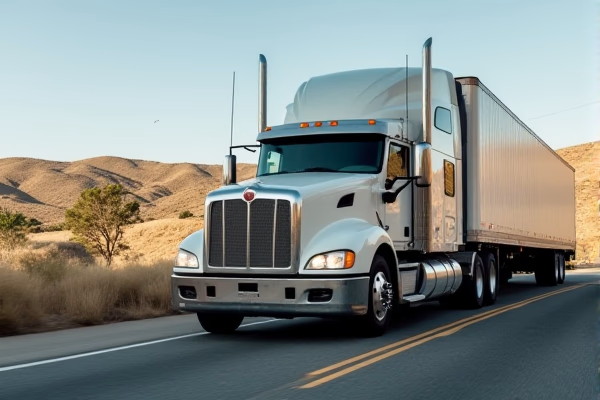
Federal regulations mandate a range of training programs for commercial drivers. These include pre-employment screening, initial safety training, and ongoing refresher courses. Specifically, drivers are required to complete entry-level driver training before obtaining a Commercial Driver’s License (CDL). Beyond that, companies must provide training on cargo securement, hazardous materials handling, and hours-of-service regulations. Regular safety meetings and behind-the-wheel evaluations are also essential components of a comprehensive training program.
The specifics can vary depending on the type of cargo being transported and the driver’s route. For example, drivers hauling hazardous materials require specialized training that goes beyond the basic requirements. Furthermore, companies are obligated to keep detailed records of all training provided to each driver, which can be critical evidence in a lawsuit.
How can I prove a trucking company failed to adequately train its driver?
Establishing negligent training requires gathering evidence. This can include the driver’s training records, company safety policies, and witness testimony. We often subpoena these documents during the discovery phase of a lawsuit. If the company can’t produce adequate records, or if the records reveal gaps in training, it can be a strong indication of negligence. Additionally, we’ll investigate whether the driver had any prior safety violations or disciplinary actions that should have triggered additional training.
Dashcam footage and the driver’s Electronic Logging Device (ELD) data can also provide valuable insights. If the driver was operating outside of hours-of-service regulations, or if they were engaging in unsafe driving practices, it may suggest a lack of proper training and supervision. In San Diego, we frequently work with accident reconstruction experts to analyze these types of data.
What if the trucking company claims the driver was an independent contractor?
Determining whether a driver is an employee or an independent contractor is a complex legal issue. Companies often misclassify drivers to avoid liability for their actions. California’s ‘ABC test’ (Labor Code § 2775) is used to assess the level of control the company exerts over the driver’s work. If the company dictates the driver’s schedule, routes, and methods of operation, they’re likely considered an employee, regardless of what the contract says.
If the driver is deemed an employee, the trucking company is directly responsible for their negligence, including any failures in training. However, even if the driver is classified as an independent contractor, the company may still be liable if they were negligent in hiring or supervising the driver. This is particularly true if the driver had a history of safety violations or a poor driving record.
What damages can I recover if a trucking company’s negligent training caused my accident?
You may be entitled to recover a wide range of damages, including medical expenses, lost wages, pain and suffering, and property damage. In some cases, you may also be able to recover punitive damages if the company’s negligence was particularly egregious. These damages are designed to compensate you for your losses and to deter the company from engaging in similar misconduct in the future.
It’s important to document all of your expenses and losses, including medical bills, therapy costs, and lost income. We can help you gather this documentation and present a compelling claim to the insurance company. We also work with financial experts to calculate your future medical expenses and lost earning potential.
What is the statute of limitations for filing a lawsuit against a trucking company in California?
California law provides a **two-year** window from the date of the truck accident to file a lawsuit (CCP § 335.1). Because trucking companies often begin evidence destruction (like purging ELD data) as soon as the law allows, immediate filing is critical to preserve the integrity of the claim.
Don’t delay in seeking legal counsel. The sooner you contact an attorney, the sooner we can begin investigating your case and gathering evidence. We can also handle all communications with the insurance company, protecting your rights and ensuring you receive the compensation you deserve.