Can A Maintenance Company Be Sued After A Crash?

Determining liability in a truck accident often extends beyond the driver and the trucking company. While the driver is directly responsible for operating the vehicle, and the company is responsible for their hiring and training, a third-party maintenance provider could bear significant responsibility if their negligence contributed to the crash. This is particularly true when a mechanical failure, like brake failure, is the root cause of the accident.
Trucking companies are legally required to adhere to strict maintenance schedules and protocols. They often outsource this work to specialized maintenance companies. These companies have a duty to perform inspections, repairs, and preventative maintenance according to federal and state regulations. Failure to do so – whether through improper repairs, missed inspections, or a lack of qualified technicians – can create a dangerous situation on the road and lead to catastrophic accidents.
I’ve spent over 13 years representing clients injured in truck accidents throughout San Diego. Having been trained by a former insurance defense attorney, I have intimate knowledge of how insurance companies evaluate, devalue, and deny claims. I understand the tactics they use to shift blame and minimize payouts. This experience allows me to build strong cases against all responsible parties, including negligent maintenance providers.
Can I Sue a Truck Maintenance Company Directly?
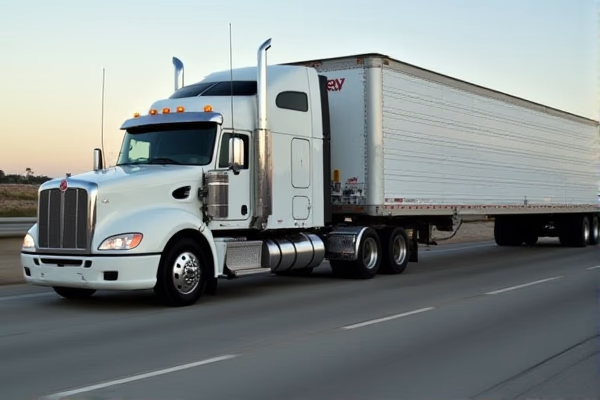
Yes, you can sue a truck maintenance company directly if their negligence caused or contributed to your accident. To succeed in such a claim, you must demonstrate that the company breached its duty of care and that this breach directly resulted in your injuries and damages. This often involves proving that the company failed to properly inspect, repair, or maintain the truck’s critical safety components, such as brakes, tires, steering, or lighting systems. Evidence such as maintenance records, inspection reports, and expert testimony can be crucial in establishing liability.
Establishing a direct link between the maintenance company’s negligence and the accident can be complex. It requires a thorough investigation and a deep understanding of commercial vehicle regulations. For example, if a maintenance company failed to identify a cracked brake line during a routine inspection, and that brake line subsequently failed, causing the accident, you may have a strong case against them. However, simply showing that a brake line failed isn’t enough; you must prove the company’s negligence was the cause of the failure.
What Evidence Do I Need to Sue a Maintenance Company?
Gathering sufficient evidence is paramount when pursuing a claim against a truck maintenance company. Key pieces of evidence include: maintenance logs and repair orders, inspection reports, invoices, and any communications with the maintenance company. Additionally, expert testimony from a qualified mechanic can be invaluable in demonstrating the company’s failure to meet industry standards. Dashcam footage, police reports, and witness statements can also strengthen your case. Preserving this evidence as quickly as possible is critical, as maintenance companies may alter or destroy records after an accident.
What if the Maintenance Company Claims the Trucking Company Was Responsible?
It’s common for maintenance companies to deflect blame and point fingers at the trucking company, claiming they provided inadequate information or failed to follow recommended maintenance schedules. However, this doesn’t automatically absolve the maintenance company of responsibility. Both the trucking company and the maintenance company have independent duties of care. A trucking company’s negligence doesn’t excuse the maintenance company’s own failures. In fact, it’s possible for both parties to be held liable for your damages. A skilled attorney can navigate these complex legal arguments and build a compelling case against all responsible parties.
How Long Do I Have to File a Lawsuit Against a Maintenance Company?
In California, the statute of limitations for personal injury claims is generally **two years** from the date of the truck accident. Because trucking companies often begin evidence destruction (like purging ELD data) as soon as the law allows, immediate filing is critical to preserve the integrity of the claim. This timeframe applies to claims against both the trucking company and the maintenance company. Failing to file within this window can result in the permanent loss of your right to recover compensation. It’s crucial to consult with an attorney as soon as possible to ensure you meet all applicable deadlines.
What Damages Can I Recover in a Lawsuit Against a Maintenance Company?
If you successfully sue a truck maintenance company, you may be entitled to recover a range of damages, including: medical expenses (past and future), lost wages, pain and suffering, property damage, and loss of enjoyment of life. In cases involving severe injuries or fatalities, you may also be able to recover punitive damages, which are intended to punish the company for egregious negligence. The specific amount of damages will depend on the extent of your injuries, the severity of your losses, and the company’s level of culpability.
What Should I Do If I Suspect Negligent Maintenance Contributed to My Truck Accident?
If you believe that negligent maintenance played a role in your truck accident, it’s essential to contact an experienced attorney immediately. Do not attempt to investigate the accident on your own, as this could jeopardize your claim. An attorney can conduct a thorough investigation, gather evidence, and protect your legal rights. They can also handle all communications with the insurance companies and maintenance company, ensuring you receive the compensation you deserve.
Can a Government Entity Be Held Liable for Truck Accidents?
If a truck accident involves a government-owned vehicle or a dangerous road condition maintained by a public entity, a formal administrative claim **MUST** be presented within **6 months** (180 days). Failure to meet this strict deadline under the Government Tort Claims Act can result in the permanent loss of your right to recover. This is a complex area of law, and it’s crucial to consult with an attorney experienced in government liability claims.
What is the ABC Test for Determining Employee Status?
California’s ‘ABC test’ determines if a delivery driver (Amazon/FedEx) is an employee or contractor. Even if labeled a ‘contractor,’ a company may be liable if they exercise control over the driver’s work, a key factor in San Diego delivery truck litigation. Understanding this test is vital when pursuing claims against companies that utilize independent contractors.
How Does Vicarious Liability Apply to Trucking Companies?
Under the doctrine of **vicarious liability** (respondeat superior), a principal is responsible to third persons for the negligence of their agent in the transaction of business. This holds the trucking company legally liable for the wrongful acts of its drivers committed within the scope of their employment. This principle is often used to hold trucking companies accountable for the actions of their drivers.
What are the Speed Limits for Commercial Trucks in California?
In California, commercial trucks (including semi-tractors with three or more axles) are strictly prohibited from exceeding **55 miles per hour** on any highway. In San Diego freeway crashes, proving a violation of this speed limit is a primary tool for establishing statutory negligence. Evidence from the truck’s ECM/EDR can be critical in demonstrating this violation.
What is Negligent Hiring and Training?
A trucking company is directly liable if it was negligent in hiring, supervising, or retaining an unfit driver. This is critical in cases where the driver has a history of FMCSA violations or lacked the proper CDL endorsements. Under CACI No. 426, establishing negligent hiring requires demonstrating the company knew or should have known about the driver’s unfitness.