
Can Construction Companies Be Sued After A Crash?

Construction companies, while often perceived as separate entities, can indeed be held liable for accidents caused by their operations. This isn’t always a straightforward process, however. It requires a deep understanding of California law and a careful examination of the specific circumstances surrounding the crash. The legal theories under which a construction company might be held responsible are varied, ranging from direct negligence to vicarious liability. Determining the best course of action requires a thorough investigation, including reviewing safety records, witness statements, and any available video footage.
One common avenue for recovery is establishing negligence on the part of the construction company itself. This could involve failing to properly maintain their vehicles, inadequately training their drivers, or violating safety regulations. For example, if a company knowingly allows a driver with a suspended license to operate a heavy-duty truck, they could be found directly negligent for the resulting damages. Proving this requires meticulous documentation and expert testimony. It’s not enough to simply show that an accident occurred; you must demonstrate a direct link between the company’s actions (or inactions) and your injuries.
As a personal injury attorney practicing in San Diego for over 13 years, I’ve seen firsthand how insurance companies attempt to minimize payouts in construction accident cases. Trained by a former insurance defense attorney, I have intimate knowledge of how these companies evaluate, devalue, and deny claims. They often focus on shifting blame to the driver, downplaying the severity of injuries, or challenging the validity of medical expenses. That’s why it’s crucial to have an advocate who understands these tactics and can effectively counter them.
Can I Sue the Construction Company Even if the Driver Was at Fault?
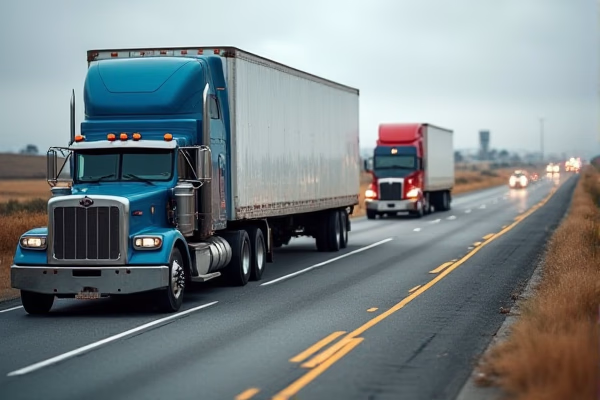
Yes, you absolutely can. The legal principle of “respondeat superior” allows you to pursue a claim against the construction company even if the driver was directly responsible for the accident. This doctrine holds the employer (the construction company) liable for the negligent acts of its employees when those acts occur within the scope of their employment. Civ. Code § 2338 outlines this vicarious liability.
However, it’s important to note that establishing an employer-employee relationship can be complex. Independent contractors, for example, are generally not covered under respondeat superior. Determining whether a worker is an employee or an independent contractor requires a careful analysis of factors such as control, supervision, and the nature of the work performed.
What Evidence Do I Need to Build a Strong Case Against a Construction Company?
Gathering comprehensive evidence is paramount. This includes the police report, witness statements, photographs of the accident scene, and your medical records. Crucially, any dashcam footage or video surveillance from the construction site itself can be invaluable.
Additionally, obtaining the construction company’s safety records and driver logs can reveal potential negligence or violations of federal regulations.
In San Diego, we often utilize the California Public Records Act to access information regarding the company’s history of safety violations. We also work with accident reconstruction experts to analyze the cause of the crash and determine the extent of the company’s liability.
What if the Accident Was Caused by a Dangerous Road Condition on the Construction Site?
If a hazardous road condition on the construction site contributed to the accident, the construction company may still be liable. This could involve inadequate signage, improper barricades, or failure to warn drivers of potential dangers. In some cases, the government entity responsible for the roadway may also share responsibility.
However, it’s crucial to understand that claims against government entities have strict deadlines. Gov. Code § 911.2 requires a formal administrative claim to be filed within **6 months** (180 days) of the accident. Failure to meet this deadline can result in the permanent loss of your right to recover.
How Does Workers’ Compensation Affect My Ability to Sue a Construction Company?
If you were injured by a construction worker, the worker’s compensation system may come into play. Generally, workers’ compensation is the exclusive remedy against the employer. This means you typically cannot sue the construction company directly for the worker’s negligence. However, there are exceptions.
Under Labor Code § 3852, you may still be able to pursue a claim against a negligent third party, such as a truck driver or a company that provided a defective piece of equipment. It’s essential to consult with an attorney to determine the best course of action in your specific situation.
What Should I Do if the Insurance Company Asks Me to Give a Recorded Statement?
Politely decline. Insurance companies routinely request recorded statements after an accident, but these statements are often used to minimize their liability. They are skilled at asking leading questions and twisting your words to undermine your claim. It’s best to let an attorney handle all communication with the insurance company.
We will conduct our own thorough investigation and gather the necessary evidence to build a strong case on your behalf. Do not attempt to negotiate with the insurance company on your own, as you could inadvertently jeopardize your chances of receiving fair compensation.