Can I Get Compensation If I Was A Co Driver Resting In The Sleeper Berth?

The question of whether a co-driver resting in the sleeper berth can recover compensation after an accident is a complex one, often involving multiple layers of liability. While not actively operating the vehicle, co-drivers are still considered part of the commercial operation and are owed a duty of care by other drivers on the road. The trucking company also has a responsibility to ensure the safety of its employees, including those resting in the berth. Successfully navigating these issues requires a deep understanding of both state and federal regulations.
One of the biggest hurdles in these cases is establishing negligence. It’s not enough to simply prove the accident happened; we need to demonstrate that another party – the other driver, the trucking company, or potentially even a maintenance provider – was at fault. This often involves a thorough investigation of the accident scene, review of police reports, and examination of the truck’s maintenance records. Because trucking companies often begin evidence destruction (like purging ELD data) as soon as the law allows, immediate filing is critical to preserve the integrity of the claim.
I’ve been practicing personal injury law in San Diego for over 13 years, and I’ve seen firsthand how insurance companies attempt to minimize payouts in these types of cases. I was trained by a former insurance defense attorney, giving me intimate knowledge of how insurance companies evaluate, devalue, and deny claims. This experience allows me to anticipate their tactics and build a strong case on behalf of my clients.
Can the Trucking Company Be Held Liable?
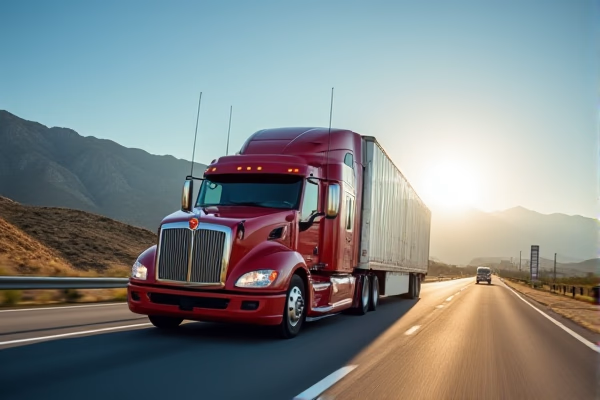
Even if the accident wasn’t directly caused by the driver’s actions, the trucking company may still be liable. This is due to the legal principle of **vicarious liability** (respondeat superior), which holds the principal responsible for the negligence of their agent in the transaction of business. This means the company can be held accountable for the actions of its drivers, even when those actions occur while the driver is technically “off duty,” such as during rest periods.
Furthermore, if the company failed to properly vet the other driver, provide adequate training, or maintain the truck in a safe operating condition, that could constitute negligence. For example, if the other driver had a history of FMCSA violations that the company knew about but ignored, or if the truck’s brakes were faulty, the company could be directly liable for your injuries.
What if the Other Driver Was Negligent?
Establishing the other driver’s negligence is often the most straightforward path to recovery. This could involve proving they were speeding, distracted, or driving under the influence. In California, commercial trucks (including semi-tractors with three or more axles) are strictly prohibited from exceeding **55 miles per hour** on any highway. In San Diego freeway crashes, proving a violation of this speed limit is a primary tool for establishing statutory negligence.
What Evidence is Needed to Support My Claim?
Gathering evidence is crucial to building a successful claim. This includes:
- Police Reports: Obtain a copy of the official accident report.
- Medical Records: Document all injuries and treatment received.
- Witness Statements: Collect statements from anyone who witnessed the accident.
- Trucking Company Records: Request maintenance logs, driver logs, and safety reports.
- ELD Data: Electronic Logging Device data can reveal driver hours of service and potential fatigue.
What is the Deadline to File a Claim?
California law provides a **two-year** window from the date of the truck accident to file a lawsuit. Because trucking companies often begin evidence destruction (like purging ELD data) as soon as the law allows, immediate filing is critical to preserve the integrity of the claim.
What if I Was a Contractor, Not an Employee?
The classification of a driver as an employee or independent contractor can significantly impact a claim. California’s ‘ABC test’ determines if a delivery driver (Amazon/FedEx) is an employee or contractor. Even if labeled a ‘contractor,’ a company may be liable if they exercise control over the driver’s work, a key factor in San Diego delivery truck litigation.
What if the Accident Involved a Government Vehicle?
If a truck accident involves a government-owned vehicle or a dangerous road condition maintained by a public entity, a formal administrative claim **MUST** be presented within **6 months** (180 days). Failure to meet this strict deadline under the Government Tort Claims Act can result in the permanent loss of your right to recover.
What if the Truck Driver Was Intoxicated?
In California, the legal BAC limit for commercial drivers is **0.04 percent**. This stricter standard reflects the higher duty of care required of those operating heavy machinery on San Diego roads.
What if I Was Also Negligent?
California’s ‘pure’ comparative fault system applies to trucking claims. Even if a truck driver argues you shared responsibility, you can still recover damages; however, your total compensation will be reduced by your percentage of fault.
What if I Was Receiving Workers’ Compensation?
California law preserves the right to pursue a separate civil claim against a **negligent third party** whose actions contributed to the truck accident, even when workers’ compensation benefits apply.