Can I Sue After A Penske Truck Crash?

Penske truck accidents present unique challenges for injured victims. While Penske is a large corporation with substantial insurance coverage, they are also highly motivated to minimize payouts. Their claims adjusters are trained to scrutinize every detail of your accident, looking for ways to deny or devalue your claim. This is where experienced legal counsel becomes critical.
One of the first things we do in these cases is determine all potential avenues of recovery. This isn’t just about suing Penske directly; it’s about identifying *every* responsible party. Was the driver negligent? Was the truck properly maintained? Was the driver adequately screened and trained? These are all questions that need to be answered to ensure you receive the full compensation you deserve.
For over 13 years, I’ve represented clients throughout San Diego in personal injury cases, including numerous truck accidents. I was trained by a former insurance defense attorney, giving me intimate knowledge of how insurance companies evaluate, devalue, and deny claims. I understand their tactics, and I know how to build a strong case that protects your rights.
What are the common causes of Penske truck crashes?
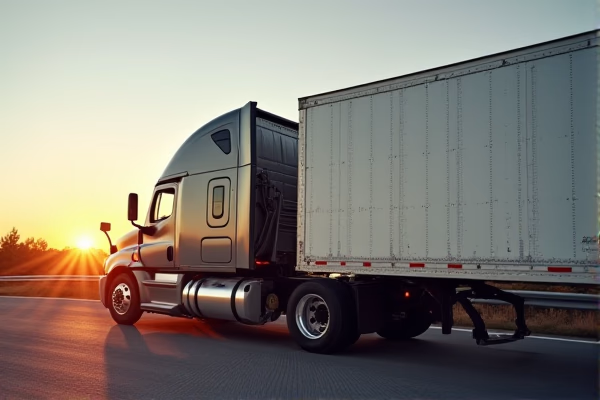
Penske truck crashes often stem from a variety of factors, many of which point to negligence on the part of the driver or the rental company. Driver inexperience is a major contributor; many renters are unfamiliar with the handling characteristics of larger vehicles. Speeding, distracted driving, and fatigue are also common causes. Beyond driver error, inadequate vehicle maintenance can play a significant role. Brakes, tires, and lighting systems must be in proper working order, and Penske has a legal duty to ensure their trucks are safe for operation.
Furthermore, improper loading of the truck can create a dangerous situation, leading to instability and potential rollovers. It’s crucial to investigate whether the truck was overloaded or if the cargo was secured correctly. We often find evidence of these issues through the police report, witness statements, and inspection of the truck itself.
What kind of compensation can I recover after a Penske truck accident?
If you’ve been injured in a Penske truck accident, you may be entitled to compensation for a wide range of damages. This includes medical expenses, both past and future, lost wages, and pain and suffering. You can also recover compensation for property damage, such as the cost of repairing or replacing your vehicle. In some cases, you may even be able to recover compensation for emotional distress and loss of enjoyment of life.
Calculating the full extent of your damages requires a thorough assessment of your injuries, medical treatment, and financial losses. We work with medical experts and economists to ensure we accurately quantify your claim and maximize your recovery. It’s important to remember that insurance companies will often try to lowball your initial settlement offer, so having an experienced attorney on your side is essential.
How does California law apply to suing after a Penske truck accident?
California law provides a **two-year** window from the date of the truck accident to file a lawsuit. Because trucking companies often begin evidence destruction (like purging ELD data) as soon as the law allows, immediate filing is critical to preserve the integrity of the claim. Under the doctrine of **vicarious liability** (respondeat superior), a principal is responsible to third persons for the negligence of their agent in the transaction of business. This holds the trucking company legally liable for the wrongful acts of its drivers committed within the scope of their employment. It’s also important to consider whether the driver was acting as an employee or an independent contractor, as this can impact the liability of Penske.
Furthermore, California’s ‘pure’ comparative fault system applies to trucking claims. Even if a truck driver argues you shared responsibility, you can still recover damages; however, your total compensation will be reduced by your percentage of fault. We meticulously investigate the accident to establish fault and protect your right to a fair recovery.
What should I do if Penske insurance is offering me a settlement?
Before accepting any settlement offer from Penske insurance, it’s crucial to consult with an attorney. Insurance companies are skilled negotiators, and their initial offers are often far below what your claim is actually worth. They may try to pressure you into signing a release of liability without fully understanding your rights or the extent of your damages.
We can review the settlement offer, assess its fairness, and negotiate on your behalf to secure a more favorable outcome. We’ll also ensure that all necessary documentation is properly prepared and submitted to protect your claim. Remember, once you sign a release, you typically waive your right to pursue any further compensation, so it’s essential to make an informed decision.
What if the Penske truck driver was on the job when the accident happened?
If the Penske truck driver was operating the vehicle in the course and scope of their employment at the time of the accident, Penske may be directly liable for their negligence. This is based on the legal principle of *respondeat superior*, which holds employers responsible for the actions of their employees. We investigate the driver’s employment status, work schedule, and the purpose of their trip to establish this connection.
However, determining employment status isn’t always straightforward. Penske may argue that the driver was an independent contractor, not an employee, to avoid liability. We’ll carefully examine the driver’s contract, payment arrangements, and level of control Penske exercised over their work to determine their true status under California law.
What if I was injured by a Penske truck while driving for a delivery service like Amazon or FedEx?
If you were injured by a Penske truck while working as a delivery driver for a company like Amazon or FedEx, the situation can be even more complex. California’s ‘ABC test’ determines if a delivery driver (Amazon/FedEx) is an employee or contractor. Even if labeled a ‘contractor,’ a company may be liable if they exercise control over the driver’s work, a key factor in San Diego delivery truck litigation. You may have claims against multiple parties, including the delivery company, the driver, and potentially Penske itself.
We’ll thoroughly investigate all potential avenues of recovery and advise you on the best course of action. It’s important to understand your rights and options before speaking with any insurance company or signing any documents.
What if the truck had a mechanical failure that caused the accident?
If a truck accident involves a government-owned vehicle or a dangerous road condition maintained by a public entity, a formal administrative claim **MUST** be presented within **6 months** (180 days). Failure to meet this strict deadline under the Government Tort Claims Act can result in the permanent loss of your right to recover. Commercial vehicles are subject to rigorous safety and inspection regulations. Failure to maintain brakes, tires, or lighting systems according to California’s commercial vehicle safety framework can be used to establish direct liability against the carrier for ‘negligent maintenance’.
We’ll work with accident reconstruction experts to identify any mechanical failures that contributed to the accident. This may involve inspecting the truck’s maintenance records, brake systems, and other critical components. We’ll also gather evidence of any prior safety violations or recalls related to the truck.
What if the driver was distracted or speeding at the time of the accident?
In California, commercial trucks (including semi-tractors with three or more axles) are strictly prohibited from exceeding **55 miles per hour** on any highway. In San Diego freeway crashes, proving a violation of this speed limit is a primary tool for establishing statutory negligence. Distracted driving, such as texting or using a cell phone, is also a major cause of truck accidents. We’ll gather evidence of the driver’s actions leading up to the accident, including cell phone records, dashcam footage, and witness statements.
We’ll also investigate whether the driver was properly licensed and qualified to operate a commercial vehicle. This may involve reviewing their driving record, medical history, and training qualifications. A negligent hiring or training can be used to establish direct liability against the carrier.