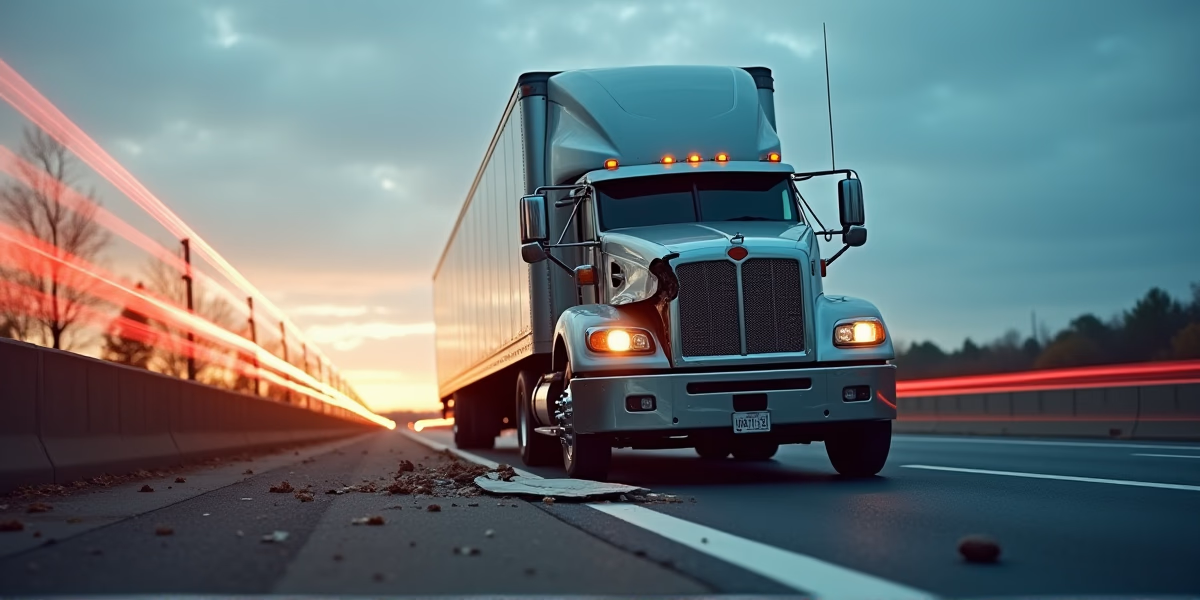
Can Poor Training Increase Settlement Value?

Trucking companies have a legal duty to adequately train their drivers. This isn’t simply about ensuring they can operate the vehicle; it’s about equipping them to handle the complex challenges of commercial driving, including defensive driving techniques, proper cargo securement, and adherence to federal safety regulations. When a company cuts corners on training, they are putting profits ahead of public safety, and they can be held accountable for the resulting damages.
The value of a claim involving a poorly trained truck driver stems from several factors. First, it demonstrates negligence. A company that fails to provide adequate training is, in effect, authorizing an unqualified driver to operate a potentially dangerous vehicle. Second, it opens the door to punitive damages. If the company knowingly disregarded safety protocols or acted with reckless indifference, a jury may award additional compensation to punish their misconduct. Finally, it strengthens the argument for vicarious liability, making the company directly responsible for the driver’s actions.
I’ve spent over 13 years representing clients injured in truck accidents throughout San Diego. Having been trained by a former insurance defense attorney, I have intimate knowledge of how insurance companies evaluate, devalue, and deny claims. They will often focus on the driver’s experience or certifications, attempting to downplay the significance of inadequate training. However, a thorough investigation can reveal systemic failures in the company’s training program, significantly increasing the potential recovery.
How Does Insufficient Truck Driver Training Prove Negligence?
Establishing negligence requires demonstrating that the trucking company breached its duty of care. In the context of driver training, this means showing that the training provided was inadequate to prepare the driver for safe operation. Evidence of insufficient training can include company policies, training manuals, driver logs, and testimony from current or former employees. A lack of documented training, or training that doesn’t cover essential safety topics, is a strong indicator of negligence.
Furthermore, the Federal Motor Carrier Safety Administration (FMCSA) sets minimum standards for driver training. While these standards are often basic, they provide a benchmark for evaluating the adequacy of a company’s program. Any deviation from these standards, or a failure to address specific risks associated with the company’s operations, can be used to support a claim of negligence.
Can I Recover Punitive Damages if the Trucking Company Skimped on Training?
Punitive damages are awarded to punish a defendant for particularly egregious misconduct and to deter similar behavior in the future. In truck accident cases, punitive damages may be available if the company knowingly disregarded safety protocols or acted with reckless indifference to the safety of others. Evidence of intentional cost-cutting measures, such as reducing training hours or hiring unqualified instructors, can support a claim for punitive damages.
What is Vicarious Liability and How Does it Apply to Poor Training?
Under the doctrine of **vicarious liability** (respondeat superior), a principal is responsible to third persons for the negligence of their agent in the transaction of business. This holds the trucking company legally liable for the wrongful acts of its drivers committed within the scope of their employment. If a driver’s negligence is directly linked to inadequate training, the company can be held vicariously liable for the resulting damages. This is particularly relevant in cases where the company failed to properly vet the driver’s qualifications or provide ongoing training to address performance issues.
What Types of Evidence Can Prove a Trucking Company’s Training Program Was Deficient?
Gathering evidence is crucial to proving a deficient training program. This can include:
- Company Training Records: Request all documentation related to the driver’s training, including manuals, lesson plans, and attendance records.Driver Qualification Files: Examine the driver’s file for any red flags, such as prior accidents or violations.FMCSA Compliance Reviews: Obtain the company’s FMCSA compliance reviews, which may reveal safety violations or deficiencies.Employee Testimony: Interview current or former employees to gather information about the company’s training practices.Maintenance Records: Review maintenance records to determine if the company prioritized safety and proper vehicle upkeep.
How Long Do I Have to File a Lawsuit After a Truck Accident in California?
California law provides a **two-year** window from the date of the truck accident to file a lawsuit. Because trucking companies often begin evidence destruction (like purging ELD data) as soon as the law allows, immediate filing is critical to preserve the integrity of the claim. Delaying legal action can jeopardize your ability to recover full compensation for your injuries.
What if the Injured Party Was Also Partially at Fault for the Accident?
California’s ‘pure’ comparative fault system applies to trucking claims. Even if a truck driver argues you shared responsibility, you can still recover damages; however, your total compensation will be reduced by your percentage of fault. For example, if you are found to be 20% at fault, you can still recover 80% of your total damages. It is important to have an experienced attorney assess the facts of your case and develop a strategy to minimize your percentage of fault.
What Should I Do If a Government Vehicle Was Involved in the Truck Accident?
If a truck accident involves a government-owned vehicle or a dangerous road condition maintained by a public entity, a formal administrative claim **MUST** be presented within **6 months** (180 days). Failure to meet this strict deadline under the Government Tort Claims Act can result in the permanent loss of your right to recover.
What Happens if the Truck Driver Was Classified as an Independent Contractor?
California’s ‘ABC test’ determines if a delivery driver (Amazon/FedEx) is an employee or contractor. Even if labeled a ‘contractor,’ a company may be liable if they exercise control over the driver’s work, a key factor in San Diego delivery truck litigation.
What if the Trucking Company Claims the Driver Was Properly Trained?
Even if the trucking company asserts the driver received adequate training, it’s crucial to independently verify their claims. We can investigate the content of the training, the qualifications of the instructors, and whether the training was tailored to the specific risks associated with the driver’s route and cargo. Often, companies will present a superficial training program that doesn’t meet the necessary standards for safe operation.
What if the Trucker Had a Medical Condition That Contributed to the Accident?
Trucking companies are directly liable if it was negligent in hiring, supervising, or retaining an unfit driver. This is critical in cases where the driver has a history of FMCSA violations or lacked the proper CDL endorsements.