What Are Hours Of Service Violations?

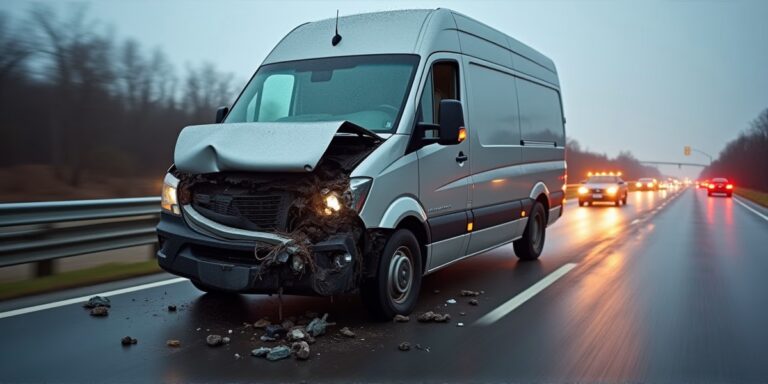
Hours-of-service (HOS) violations are a frequent cause of truck accidents in California, and often a key factor in determining liability. These regulations, established by the Federal Motor Carrier Safety Administration (FMCSA), are designed to prevent driver fatigue, which is a leading cause of commercial truck crashes. When trucking companies and drivers disregard these rules, the consequences can be devastating, as Javier’s case illustrates.
Essentially, HOS regulations limit the amount of time a truck driver can operate a vehicle consecutively, and require mandatory rest periods. These rules aren’t simply suggestions; they are federal law, and violations can lead to significant penalties for both the driver and the trucking company. Understanding these regulations is crucial for anyone injured in an accident involving a commercial truck, as they often provide a strong basis for a negligence claim.
I’ve spent over 13 years representing clients injured in truck accidents throughout San Diego. Having been trained by a former insurance defense attorney, I have intimate knowledge of how insurance companies evaluate, devalue, and deny claims. I understand the tactics they use to minimize payouts, and I’m dedicated to fighting for the maximum compensation my clients deserve.
What are the specific rules governing hours-of-service for truck drivers?

The FMCSA’s HOS rules are complex, but some key provisions include limitations on driving time, mandatory break periods, and restrictions on restarting the 60/70-hour work week. Specifically, a driver cannot drive after 14 consecutive hours on duty, and is limited to 11 hours of driving time within a 14-hour period. They also must take a 30-minute break after eight hours of driving. These rules are designed to ensure drivers get adequate rest, reducing the risk of fatigue-related accidents.
There are exceptions to these rules, such as for short-haul operations. However, these exceptions are narrowly defined, and often misunderstood. Trucking companies are legally obligated to accurately track and document driver hours, typically using Electronic Logging Devices (ELDs). Failure to comply with these regulations can result in severe penalties, including fines, suspension of driving privileges, and even criminal charges.
How can hours-of-service violations be proven in a truck accident case?
Proving an HOS violation often requires obtaining and analyzing the driver’s logbook or ELD data. This data provides a detailed record of the driver’s activity, including driving time, rest periods, and location. We often subpoena this information directly from the trucking company. Discrepancies between the logbook and other evidence, such as toll records or GPS data, can be strong indicators of falsification.
In addition to logbook data, we also investigate the driver’s history for previous HOS violations. A pattern of non-compliance can demonstrate a systemic problem within the trucking company, increasing the likelihood of negligence. Expert testimony from a forensic trucking expert can be invaluable in interpreting this data and presenting a compelling case to a jury.
What happens if a driver falsifies their logbook or ELD data?
Falsifying logbook or ELD data is a serious offense, and can be considered evidence of negligence per se. This means that the driver’s violation of the HOS regulations automatically establishes a breach of duty of care. The trucking company can also be held liable for knowingly allowing or encouraging the driver to falsify records. In San Diego, we’ve seen cases where companies actively pressured drivers to violate HOS rules to meet unrealistic delivery schedules.
The penalties for falsifying logbook data can include significant fines, suspension of driving privileges, and even criminal charges. More importantly, it demonstrates a reckless disregard for public safety, which can significantly increase the value of a personal injury claim. We often use this evidence to negotiate a higher settlement with the insurance company.
Can I still recover damages if the truck driver was not actively driving at the time of the accident?
Yes, even if the driver wasn’t actively driving at the moment of the accident, an HOS violation can still be a contributing factor to the crash. For example, if the driver was fatigued due to a previous violation, and that fatigue contributed to their inability to react properly, you may still be able to recover damages. The key is to establish a causal link between the HOS violation and the accident.
This often requires expert testimony from a medical professional who can explain how fatigue impaired the driver’s cognitive and physical abilities. We also investigate the driver’s work schedule leading up to the accident, looking for evidence of chronic fatigue or sleep deprivation. Even if the driver was technically “off duty” at the time of the crash, the trucking company may still be liable for their negligence.
What role do Electronic Logging Devices (ELDs) play in proving hours-of-service violations?
Electronic Logging Devices (ELDs) have significantly changed the landscape of HOS enforcement. These devices automatically record a driver’s driving time and rest periods, making it much more difficult to falsify records. However, ELDs are not foolproof. Drivers can still manipulate the system, for example, by using unauthorized devices or altering the data. We have experience identifying and exposing these types of manipulations.
We routinely download and analyze ELD data in our truck accident cases. This data provides a wealth of information, including the driver’s location, speed, and driving patterns. We also look for inconsistencies between the ELD data and other evidence, such as toll records or GPS data. In San Diego, we’ve successfully used ELD data to prove numerous HOS violations, resulting in favorable settlements for our clients.
What should I do if I suspect an hours-of-service violation contributed to my truck accident?
If you suspect an HOS violation contributed to your truck accident, it’s crucial to contact an experienced attorney as soon as possible. We can immediately investigate the accident, gather evidence, and preserve critical data, such as the driver’s logbook and ELD records. The sooner we begin our investigation, the better our chances of uncovering evidence of negligence.
We also advise you to avoid speaking with the insurance company without first consulting with an attorney. Insurance adjusters are trained to minimize payouts, and they may try to trick you into making statements that could harm your claim. Let us handle all communication with the insurance company, and focus on your recovery.
How long do I have to file a lawsuit after a truck accident in California?
In California, you generally have **two-year** window from the date of the truck accident to file a lawsuit. Because trucking companies often begin evidence destruction (like purging ELD data) as soon as the law allows, immediate filing is critical to preserve the integrity of the claim. This statute of limitations can be complex, especially in cases involving government entities or multiple parties. It’s important to consult with an attorney to ensure you meet all applicable deadlines.
What if the truck accident involved a government-owned vehicle or a dangerous road condition?
If a truck accident involves a government-owned vehicle or a dangerous road condition maintained by a public entity, a formal administrative claim **MUST** be presented within **6 months** (180 days). Failure to meet this strict deadline under the Government Tort Claims Act can result in the permanent loss of your right to recover. These claims have specific requirements and procedures, and it’s crucial to work with an attorney who is familiar with government liability laws.
What if the driver was classified as an independent contractor rather than an employee?
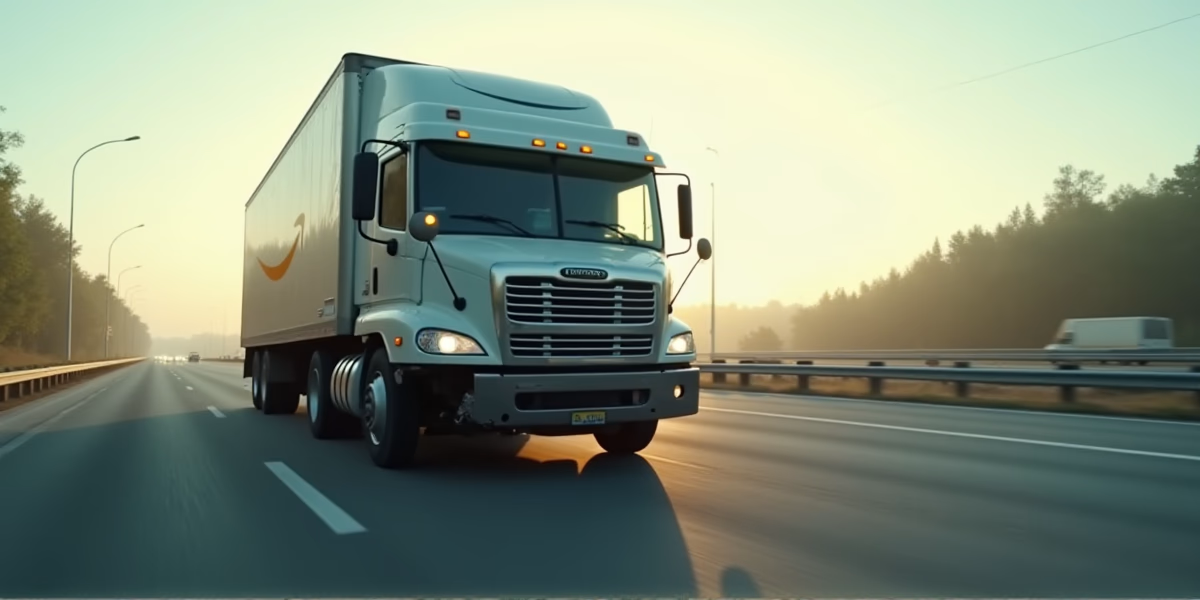
California’s ‘ABC test’ determines if a delivery driver (Amazon/FedEx) is an employee or contractor. Even if labeled a ‘contractor,’ a company may be liable if they exercise control over the driver’s work, a key factor in San Diego delivery truck litigation. We investigate the driver’s relationship with the trucking company to determine if they were properly classified as an independent contractor. Misclassification can expose the company to significant liability.
What if the trucking company claims the driver was acting outside the scope of their employment?
Under the doctrine of **vicarious liability** (respondeat superior), a principal is responsible to third persons for the negligence of their agent in the transaction of business. This holds the trucking company legally liable for the wrongful acts of its drivers committed within the scope of their employment. We investigate the driver’s activities leading up to the accident to determine if they were acting within the scope of their employment. Even if the driver was deviating from their assigned route, the company may still be liable.
What if the truck was speeding at the time of the accident?
In California, commercial trucks (including semi-tractors with three or more axles) are strictly prohibited from exceeding **55 miles per hour** on any highway. In San Diego freeway crashes, proving a violation of this speed limit is a primary tool for establishing statutory negligence. We often use ELD data, dashcam footage, and accident reconstruction experts to establish the truck’s speed at the time of the crash.