What Damages Are Available After A Dui Truck Accident?

When a DUI truck accident causes injury, the potential for damages is significant. Unlike a typical car crash, the sheer size and weight of a commercial truck amplify the harm. We’re not just talking about vehicle repair or minor medical expenses. We’re dealing with life-altering injuries, permanent disabilities, and the profound impact on a victim’s earning capacity. As a personal injury attorney in San Diego with over 13 years of experience, I’ve seen firsthand how these accidents devastate families. And, having been trained by a former insurance defense attorney, I intimately understand how insurance companies evaluate, devalue, and deny claims.
The legal avenues for recovery are complex, often involving multiple parties and insurance policies. It’s crucial to understand the full scope of damages you may be entitled to, and to act quickly to preserve your rights. This isn’t a situation where you can afford to negotiate with the insurance company on your own. They are experts at minimizing payouts, and without experienced legal counsel, you risk leaving substantial money on the table.
What types of economic damages can I recover in a DUI truck accident case?
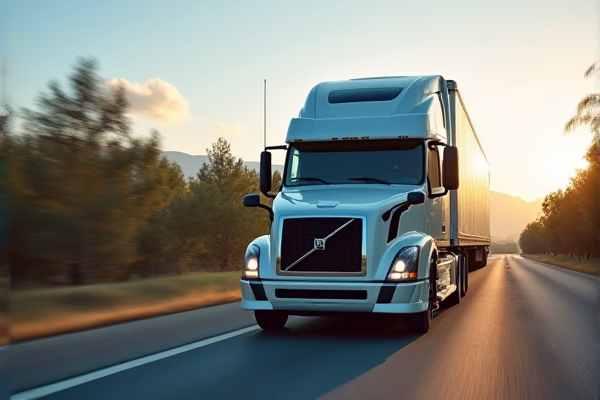
Economic damages are those that have a quantifiable monetary value. These are relatively straightforward to calculate, though proving them can still require extensive documentation. The most common economic damages in a DUI truck accident include medical expenses – both past and future. This encompasses hospital bills, surgery costs, rehabilitation, medication, and ongoing care. Lost wages are another significant component, covering income lost from the time of the accident until you can return to work, as well as any diminished future earning capacity due to your injuries. Additionally, you can recover property damage costs, including the repair or replacement of your vehicle.
Beyond these basics, consider other economic losses like transportation costs to medical appointments, home modifications needed to accommodate your injuries, and even the cost of hiring help for tasks you can no longer perform. It’s vital to keep meticulous records of all expenses related to the accident, as these will form the foundation of your claim. In San Diego, we often work with forensic accountants to project long-term economic losses accurately.
Finally, don’t overlook the potential for loss of consortium claims, which can be filed by the injured person’s spouse for the loss of companionship, support, and intimacy. These claims recognize the emotional and practical impact of the injury on the entire family.
Can I recover non-economic damages after a DUI truck accident?
Non-economic damages are more subjective, as they don’t have a fixed monetary value. These compensate you for the intangible losses you’ve suffered as a result of the accident. Pain and suffering is a major component, accounting for the physical discomfort, emotional distress, and mental anguish you’ve endured. Emotional distress can include anxiety, depression, PTSD, and other psychological conditions stemming from the trauma of the accident.
Loss of enjoyment of life is another important consideration. If your injuries prevent you from participating in activities you once enjoyed, you may be entitled to compensation for this loss. Disfigurement and scarring can also warrant non-economic damages, particularly if they are visible and cause emotional distress. Determining the appropriate amount for non-economic damages is often complex, relying on factors like the severity of your injuries, the impact on your daily life, and the opinions of medical professionals.
In California, there are limits on the amount of non-economic damages you can recover in certain cases, but these limits often don’t apply in cases involving severe injuries or intentional wrongdoing, such as a DUI. We will work to maximize your recovery by presenting a compelling case that demonstrates the full extent of your suffering.
What if the truck driver was working at the time of the accident?
Under the doctrine of **vicarious liability** (respondeat superior), a principal is responsible to third persons for the negligence of their agent in the transaction of business. This holds the trucking company legally liable for the wrongful acts of its drivers committed within the scope of their employment. This is a critical point, as the trucking company typically has much deeper pockets than the individual driver. Even if the driver was technically an independent contractor, we will investigate whether the company exercised sufficient control over their work to establish an employer-employee relationship.
Furthermore, the trucking company may be directly liable for negligent hiring, training, or supervision. If the driver had a history of safety violations or lacked the proper qualifications, the company could be held responsible for failing to adequately vet and monitor their employees. We will thoroughly investigate the driver’s background and the company’s safety practices to identify any potential claims against the trucking company itself.
It’s important to note that the insurance coverage available through the trucking company’s policy is often significantly higher than the driver’s personal policy, making it essential to pursue all available avenues of recovery.
How does California’s comparative fault rule affect my DUI truck accident claim?
California’s ‘pure’ comparative fault system applies to trucking claims. Even if a truck driver argues you shared responsibility, you can still recover damages; however, your total compensation will be reduced by your percentage of fault. For example, if you are found to be 20% at fault for the accident, your recovery will be reduced by 20%. Insurance companies often attempt to shift blame onto the victim, so it’s crucial to have an experienced attorney who can effectively counter their arguments.
Common arguments used by insurance companies include allegations of speeding, distracted driving, or failure to wear a seatbelt. We will thoroughly investigate the accident and gather evidence to refute these claims, protecting your right to a full and fair recovery. This may involve obtaining police reports, witness statements, and expert testimony.
It’s important to remember that the burden of proof lies with the insurance company to demonstrate your comparative fault. We will aggressively challenge any attempts to unfairly reduce your compensation.
What is the statute of limitations for filing a DUI truck accident lawsuit in California?
…California law provides a **two-year** window from the date of the truck accident to file a lawsuit. Because trucking companies often begin evidence destruction (like purging ELD data) as soon as the law allows, immediate filing is critical to preserve the integrity of the claim. Waiting too long can result in the permanent loss of your right to recover. This two-year deadline applies to most truck accident cases, but there may be exceptions in certain circumstances, such as cases involving minors or government entities.
It’s important to act quickly to gather evidence, identify all potential defendants, and initiate the legal process. We will handle all aspects of the filing process, ensuring that your claim is properly documented and submitted within the statutory deadline. Don’t delay – the sooner you contact an attorney, the better your chances of a successful outcome.
I have been practicing personal injury law in San Diego for over 13 years, and I’m dedicated to helping victims of truck accidents recover the compensation they deserve. I was trained by a former insurance defense attorney, giving me intimate knowledge of how insurance companies evaluate, devalue, and deny claims. If you’ve been injured in a DUI truck accident, contact my office today for a free consultation.
What should I do if the insurance company asks me to give a recorded statement?
Insurance companies often request recorded statements shortly after an accident. While you are not legally obligated to provide one, they are hoping to gather information that can be used to minimize their payout. It’s generally best to politely decline and refer them to your attorney. A recorded statement can be easily manipulated or taken out of context, potentially harming your claim.
Insurance adjusters are trained to ask leading questions and elicit information that favors their side. They may attempt to downplay your injuries or suggest that you were at fault. An experienced attorney can protect your rights by handling all communication with the insurance company on your behalf.
If you do inadvertently give a recorded statement, it’s crucial to have an attorney review it immediately to identify any potential issues. We can advise you on the best course of action, which may include submitting a clarifying statement or challenging the accuracy of the original recording.
How do medical liens affect my truck accident settlement?
Medical liens arise when you receive medical treatment from a healthcare provider who is not covered by your health insurance. The provider may file a lien against your settlement to ensure they are reimbursed for their services. These liens can significantly reduce the amount of money you ultimately receive, so it’s important to understand your options for resolving them. In San Diego, we frequently negotiate with medical providers to reduce the amount of the lien.
We can also explore the possibility of using Medicare or Medi-Cal to satisfy the lien, which may result in a lower overall cost. It’s important to gather all medical bills and lien information as soon as possible so we can develop a comprehensive strategy for addressing them. We will work to protect your settlement from being unfairly reduced by excessive medical liens.
Furthermore, we can investigate whether the medical bills are reasonable and necessary, challenging any charges that are inflated or unrelated to your injuries.
What is the process for filing a claim against a government entity in a DUI truck accident case?
…if a truck accident involves a government-owned vehicle or a dangerous road condition maintained by a public entity, a formal administrative claim **MUST** be presented within **6 months** (180 days). Failure to meet this strict deadline under the Government Tort Claims Act can result in the permanent loss of your right to recover. This claim must be detailed and include all relevant information about the accident, your injuries, and your damages. The government entity will then investigate the claim and may either accept or deny it.
If the claim is denied, you will have a limited time to file a lawsuit in court. The process for filing a claim against a government entity is complex and requires strict adherence to specific procedures. It’s crucial to have an experienced attorney who is familiar with the Government Tort Claims Act to guide you through the process.
We will handle all aspects of the claim filing process, ensuring that your claim is properly documented and submitted within the statutory deadline. We will also aggressively pursue your claim through litigation if necessary.
What happens if the insurance company makes a policy limits tender?
A policy limits tender is an offer from the insurance company to settle your claim for the maximum amount of their policy coverage. While it may seem like a generous offer, it’s important to carefully consider whether it adequately compensates you for all of your damages. Accepting a policy limits tender releases the insurance company from any further liability, so it’s crucial to make an informed decision.
We will thoroughly evaluate your claim and advise you on whether the policy limits tender is fair and reasonable. If we believe the offer is insufficient, we will continue to negotiate with the insurance company or pursue litigation to maximize your recovery. We will also explore the possibility of pursuing additional coverage from other sources, such as an umbrella policy or other insurance policies.
It’s important to remember that the insurance company is not on your side. They are looking out for their own interests, and they may attempt to pressure you into accepting a settlement that is less than you deserve.
How can dashcam footage and other digital evidence help my truck accident claim?
Dashcam footage, ECM/EDR (Event Data Recorder) data, ELD (Electronic Logging Device) logs, and GPS data can be invaluable in proving liability in a truck accident case. Dashcam footage can provide a visual record of the accident, showing the driver’s actions leading up to the crash. ECM/EDR data can reveal information about the truck’s speed, braking patterns, and other critical factors. ELD logs can confirm whether the driver was in compliance with federal Hours of Service regulations.
We will work to obtain all available digital evidence as soon as possible, as this information can be easily lost or destroyed. We will also work with experts to analyze the data and present it in a clear and compelling manner to the insurance company or the court. In San Diego, we often subpoena this data directly from the trucking company.
Preserving this evidence is critical, as it can be essential to proving your claim. We will take all necessary steps to ensure that the evidence is protected and admissible in court.