What Delays Truck Accident Settlements The Most?

One of the biggest reasons truck accident settlements take so long is the sheer complexity of these cases. Unlike a typical car accident, trucking accidents often involve multiple parties – the driver, the trucking company, the owner of the truck (which may be different from the company), and potentially even the manufacturer of a defective part. Determining liability can be a lengthy process, requiring a thorough investigation of the driver’s logs, the truck’s maintenance records, and the company’s safety protocols.
Furthermore, trucking companies have significant resources at their disposal and are often represented by aggressive legal teams specializing in defending these types of claims. They’re not looking to settle quickly; their goal is to minimize their payout, and they’ll employ various tactics to delay the process and, ultimately, devalue your claim. That’s why having an attorney on your side who understands these tactics is crucial.
As a personal injury attorney with over 13 years of experience in San Diego, I’ve seen firsthand how insurance companies operate. I was trained by a former insurance defense attorney, giving me intimate knowledge of how they evaluate, devalue, and deny claims. This inside perspective allows me to anticipate their strategies and build a strong case on your behalf.
What are common tactics insurance companies use to delay truck accident settlements?
Insurance companies employ a range of strategies to slow down the settlement process. One common tactic is requesting extensive documentation – medical records, police reports, employment history, and more. While providing this information is necessary, they may repeatedly ask for the same documents or request them in a way that’s deliberately burdensome. They might also schedule numerous independent medical examinations (IMEs) with doctors of their choosing, often delaying treatment and prolonging the investigation.
Another frequent delay tactic is disputing the extent of your injuries. They may argue that your injuries are pre-existing or unrelated to the accident, or they may question the reasonableness of your medical expenses. They’ll often try to obtain your complete medical history, searching for anything they can use to undermine your claim. It’s essential to have an attorney who can challenge these arguments and present a compelling case for your damages.
Finally, insurance companies often engage in lengthy negotiations, making lowball offers and refusing to budge. They may also try to pressure you into accepting a quick settlement before you fully understand the extent of your injuries and potential future medical needs. This is why it’s critical to avoid signing any documents or agreements without first consulting with an experienced attorney.
How does the statute of limitations affect truck accident settlements?
In California, there’s a strict deadline for filing a lawsuit after a truck accident: two years from the date of the incident. Because trucking companies often begin evidence destruction (like purging ELD data) as soon as the law allows, immediate filing is critical to preserve the integrity of the claim. CCP § 335.1. Waiting too long can result in the complete loss of your right to recover compensation, even if the truck driver was clearly at fault.
Filing a lawsuit doesn’t necessarily mean going to trial immediately. It simply preserves your legal rights and allows you to continue negotiating with the insurance company. However, it’s a crucial step that should be taken as soon as possible to protect your claim.
What role do government claims play in truck accident settlements?
If a truck accident involves a government-owned vehicle or a dangerous road condition maintained by a public entity, a formal administrative claim **MUST** be presented within **6 months** (180 days). Failure to meet this strict deadline under the Government Tort Claims Act can result in the permanent loss of your right to recover. Gov. Code § 911.2. This claim process is often complex and requires specific documentation and procedures.
Successfully navigating a government claim can be challenging, and it’s highly recommended to seek legal assistance from an attorney experienced in handling these types of cases. They can ensure that your claim is properly filed and documented, maximizing your chances of a favorable outcome.
What if the driver was an independent contractor, not an employee?
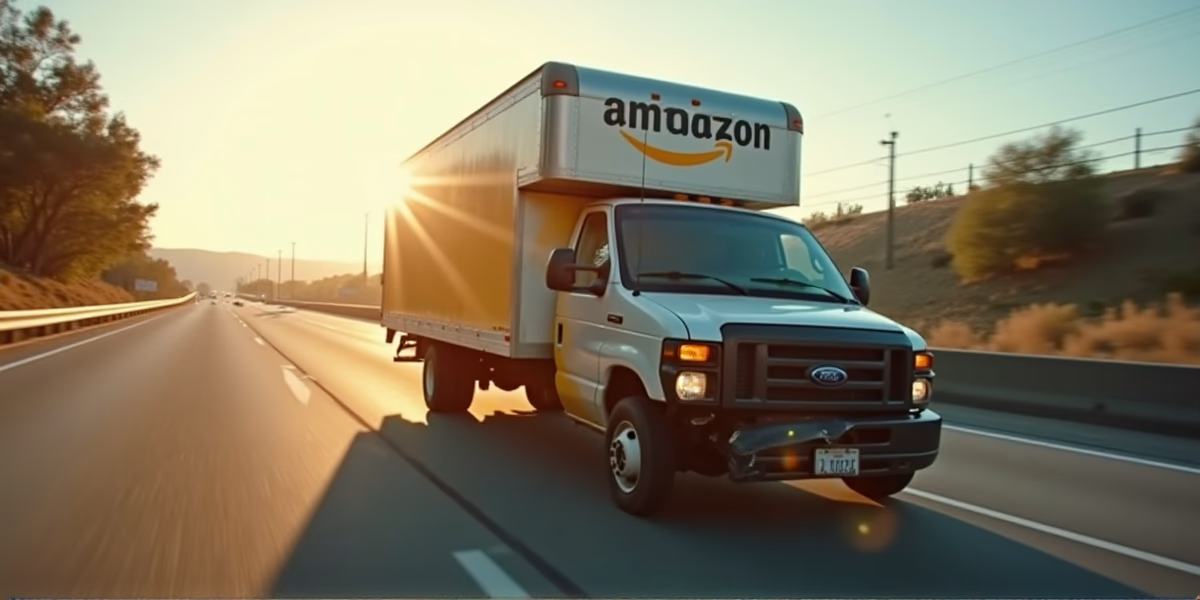
Determining whether a driver is an employee or an independent contractor can significantly impact the settlement process. California’s ‘ABC test’ determines if a delivery driver (Amazon/FedEx) is an employee or contractor. Even if labeled a ‘contractor,’ a company may be liable if they exercise control over the driver’s work, a key factor in San Diego delivery truck litigation. Labor Code § 2775.
If the driver was misclassified as an independent contractor, the company may still be held liable for their negligence under the doctrine of vicarious liability. This is a complex legal issue that requires careful analysis of the driver’s employment relationship and the company’s level of control.
How does comparative fault affect my truck accident settlement?
California’s ‘pure’ comparative fault system applies to trucking claims. Even if a truck driver argues you shared responsibility, you can still recover damages; however, your total compensation will be reduced by your percentage of fault. Civ. Code § 1714. For example, if you’re found to be 20% at fault, your settlement will be reduced by 20%.
Insurance companies often try to assign a percentage of fault to the injured party to minimize their payout. It’s essential to have an attorney who can challenge these arguments and present evidence demonstrating your lack of negligence.