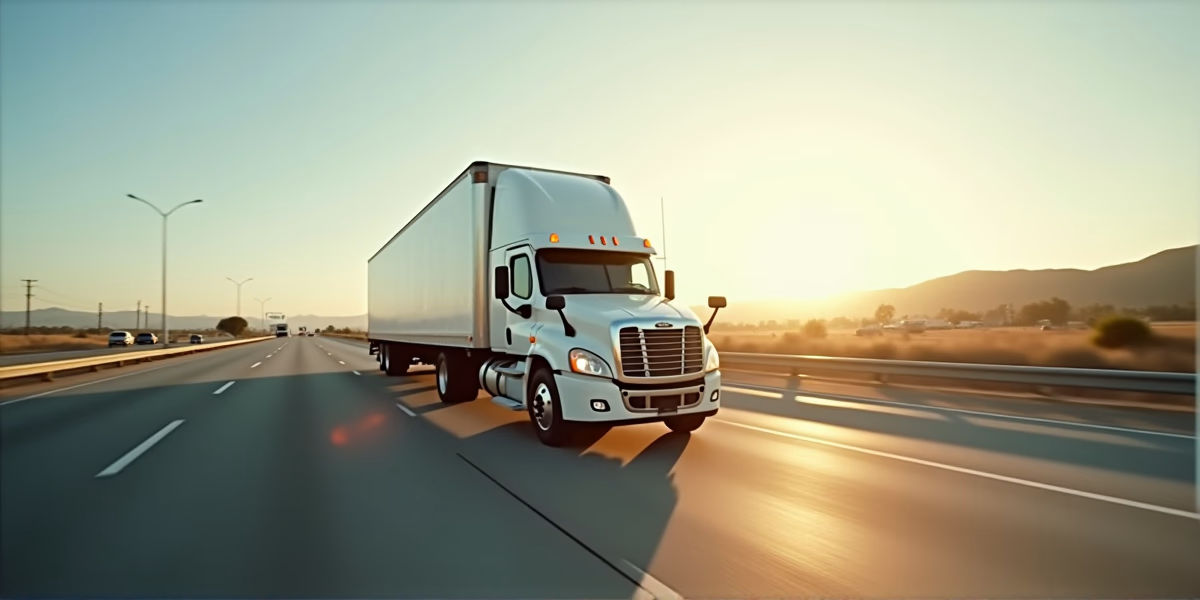
What If A Garbage Truck Driver Was Negligent?

Garbage trucks, by their very nature, present a heightened risk to other drivers. Their size and weight, combined with frequent stops and starts, create numerous opportunities for collisions. While many accidents are unavoidable, a significant number are caused by driver negligence, improper maintenance, or inadequate training. Understanding your rights and the potential avenues for recovery is crucial if you’ve been injured in an accident involving a garbage truck.
One of the first things we assess in these cases is whether the driver was operating the truck safely. This includes verifying their commercial driver’s license (CDL) status, reviewing their driving record for prior violations, and investigating whether they were adhering to all applicable traffic laws and regulations. Often, these investigations reveal a pattern of unsafe behavior or a failure to follow established safety protocols. It’s important to remember that the trucking company, not just the driver, can be held liable for these actions.
I’ve been practicing personal injury law in San Diego for over 13 years, and I was previously trained by a former insurance defense attorney. This experience gives me intimate knowledge of how insurance companies evaluate, devalue, and deny claims. They will often attempt to minimize their liability, and it’s essential to have an attorney who understands their tactics and can effectively advocate for your rights.
What types of negligence are common in garbage truck accidents?

There are several ways a garbage truck driver or their employer can be negligent, leading to a collision. Driver fatigue is a major factor, as these drivers often work long hours with tight schedules. Violations of federal **Hours of Service (HOS)** regulations dictate exactly how long a driver can be behind the wheel. Violations of these federal safety standards, often proven through Electronic Logging Device (ELD) data, are used to demonstrate driver fatigue. Another common issue is distracted driving, whether it’s due to cell phone use or other in-cab distractions. Improper turns, failing to yield the right-of-way, and speeding – in California, commercial trucks (including semi-tractors with three or more axles) are strictly prohibited from exceeding **55 miles per hour** on any highway – also contribute to a significant number of accidents.
Beyond driver negligence, the garbage truck itself may be poorly maintained. Negligent maintenance can lead to brake failures, tire blowouts, or other mechanical issues that cause an accident. Commercial vehicles are subject to rigorous safety and inspection regulations. Failure to maintain brakes, tires, or lighting systems according to California’s commercial vehicle safety framework can be used to establish direct liability against the carrier for ‘negligent maintenance’.
Finally, the garbage company may be liable for negligent hiring or training practices. This is critical in cases where the driver has a history of FMCSA violations or lacked the proper CDL endorsements. A trucking company is directly liable if it was negligent in hiring, supervising, or retaining an unfit driver.
What if the garbage truck driver was a contractor, not a direct employee?
Determining the employment status of the driver is often a critical step in these cases. If the driver is classified as an independent contractor, it doesn’t automatically shield the garbage company from liability. California’s ‘ABC test’ determines if a delivery driver (Amazon/FedEx) is an employee or contractor. Even if labeled a ‘contractor,’ a company may be liable if they exercise control over the driver’s work, a key factor in San Diego delivery truck litigation. We investigate the level of control the company exerted over the driver’s schedule, routes, and methods of operation. If they were essentially treated as an employee, the company could still be held responsible for their negligence.
It’s also important to note that even if the driver *is* a legitimate independent contractor, they are still required to maintain their own insurance coverage. However, the limits of that coverage may be insufficient to fully compensate you for your injuries and damages.
Under the doctrine of **vicarious liability** (respondeat superior), a principal is responsible to third persons for the negligence of their agent in the transaction of business. This holds the trucking company legally liable for the wrongful acts of its drivers committed within the scope of their employment.
What kind of compensation can I recover after a garbage truck accident?
If you’ve been injured in an accident involving a garbage truck, you may be entitled to compensation for a wide range of damages. This includes medical expenses, both past and future, lost wages, pain and suffering, and property damage. In some cases, you may also be able to recover compensation for emotional distress and loss of enjoyment of life. The amount of compensation you’re entitled to will depend on the severity of your injuries, the extent of your losses, and the degree of negligence involved.
It’s crucial to document all of your expenses and losses related to the accident, including medical bills, pay stubs, and repair estimates. We also work with accident reconstruction experts to gather evidence and build a strong case on your behalf. In cases involving catastrophic injuries, we may also pursue compensation for future medical care, rehabilitation, and lost earning capacity.
California law provides a **two-year** window from the date of the truck accident to file a lawsuit. Because trucking companies often begin evidence destruction (like purging ELD data) as soon as the law allows, immediate filing is critical to preserve the integrity of the claim.
What if the accident involved a government-owned garbage truck or a dangerous road condition?
Accidents involving government-owned vehicles or dangerous road conditions maintained by a public entity present unique challenges. In these cases, you’re typically required to file a formal administrative claim with the government agency before you can file a lawsuit. if a truck accident involves a government-owned vehicle or a dangerous road condition maintained by a public entity, a formal administrative claim **MUST** be presented within **6 months** (180 days). Failure to meet this strict deadline under the Government Tort Claims Act can result in the permanent loss of your right to recover.
The claim process can be complex and time-consuming, and it’s essential to follow all applicable procedures carefully. We have extensive experience handling claims against government entities and can ensure that your claim is properly filed and documented. It’s also important to note that the government agency may have sovereign immunity, which limits the amount of compensation you can recover.
We have successfully litigated numerous cases against the City of San Diego and other public entities, and we understand the intricacies of the Government Tort Claims Act.
What should I do if the insurance company asks me to give a recorded statement?
Insurance companies often request recorded statements from accident victims shortly after an accident. While you may feel obligated to cooperate, it’s generally not advisable to give a recorded statement without first consulting with an attorney. Insurance adjusters are trained to ask leading questions and elicit information that can be used to devalue your claim. They are looking for any statement that could be used to minimize their liability.
We advise our clients to politely decline any requests for recorded statements and to refer all communications to our office. We will handle all negotiations with the insurance company on your behalf and ensure that your rights are protected. It’s also important to avoid discussing the accident with anyone other than your attorney and the police.
Recorded statements to insurers can be used against you, even if you believe you are simply providing factual information.