What Is A Jackknife Truck Accident?

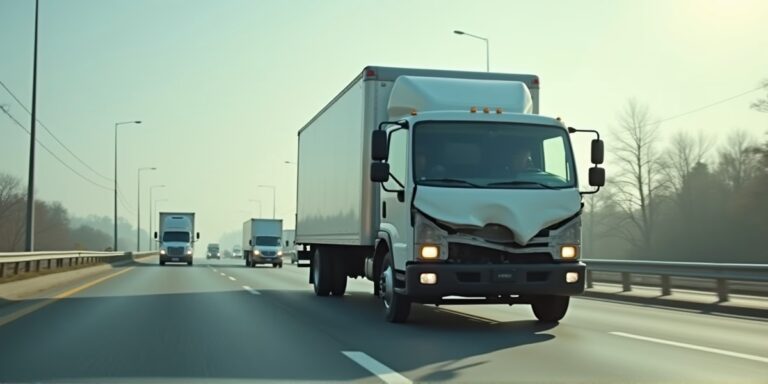
A jackknife accident occurs when the trailer of a tractor-trailer swings out of control, forming a “V” shape with the tractor. This happens when the trailer’s momentum overcomes the tractor’s braking force, causing it to skid sideways. The resulting collision can be catastrophic, especially for drivers in smaller vehicles. Unlike a typical rear-end collision, a jackknife often involves a sweeping motion, impacting multiple lanes of traffic and creating a far more dangerous scenario.
Several factors can contribute to a jackknife accident, including excessive speed, improper braking, uneven weight distribution, inadequate maintenance, and driver error. It’s crucial to understand that even if the driver wasn’t directly at fault for the initial braking, the trucking company may still be liable if they failed to properly maintain the vehicle or adequately train their drivers. Determining the root cause requires a thorough investigation, often involving accident reconstruction experts and a review of the truck’s maintenance records and the driver’s logs.
As a personal injury attorney with over 13 years of experience practicing in San Diego, I’ve handled numerous truck accident cases, including many involving jackknifes. I was trained by a former insurance defense attorney, giving me intimate knowledge of how insurance companies evaluate, devalue, and deny claims. This insight allows me to anticipate their tactics and build a strong case on behalf of my clients, ensuring they receive the full compensation they deserve.
What evidence is needed to prove a jackknife truck accident claim?
Gathering sufficient evidence is paramount in a jackknife truck accident claim. This includes the police report, witness statements, photos and videos of the accident scene, and medical records documenting your injuries. Crucially, obtaining the truck’s Event Data Recorder (EDR) data, often referred to as the “black box,” is essential. This data can reveal critical information about the truck’s speed, braking force, and driver behavior leading up to the crash.
Additionally, securing the truck’s maintenance records can reveal any pre-existing mechanical issues that contributed to the accident. If the driver was operating outside of federal Hours of Service regulations, their logbooks and Electronic Logging Device (ELD) data will be vital. Finally, expert testimony from accident reconstruction specialists can help establish the cause of the accident and demonstrate the trucking company’s negligence.
How does the statute of limitations affect my jackknife truck accident case?
In California, you have a limited time to file a lawsuit after a truck accident. According to CCP § 335.1, you generally have **two years** from the date of the accident to initiate legal proceedings. Because trucking companies often begin evidence destruction (like purging ELD data) as soon as the law allows, immediate filing is critical to preserve the integrity of the claim.
Waiting too long can jeopardize your ability to recover compensation, even if the trucking company was clearly at fault. It’s essential to consult with an attorney as soon as possible to understand your rights and ensure your claim is filed within the statutory deadline. Delays can also complicate the investigation process, making it more difficult to gather evidence and identify responsible parties.
What if the truck driver claims I was partially at fault for the accident?
Trucking companies and their insurance carriers often attempt to minimize their liability by alleging comparative negligence on the part of the other driver. They may argue that you were speeding, distracted, or failed to yield the right-of-way. California’s ‘pure’ comparative fault system applies to trucking claims. Even if a truck driver argues you shared responsibility, you can still recover damages; however, your total compensation will be reduced by your percentage of fault.
It’s crucial to have an experienced attorney investigate the accident thoroughly and gather evidence to refute these claims. This may involve obtaining dashcam footage, interviewing witnesses, and analyzing the accident scene. Remember, the burden of proof lies with the trucking company to demonstrate your negligence, and a skilled attorney can effectively challenge their arguments and protect your rights.
Can I sue the trucking company directly, or only the driver?
In most cases, you’ll want to pursue a claim against the trucking company directly, not just the driver. Under the doctrine of **vicarious liability** (respondeat superior), a principal is responsible to third persons for the negligence of their agent in the transaction of business. This holds the trucking company legally liable for the wrongful acts of its drivers committed within the scope of their employment.
Trucking companies typically have significantly more financial resources than individual drivers, making them better equipped to cover the full extent of your damages. Furthermore, pursuing a claim against the company allows you to investigate their hiring practices, training procedures, and maintenance records, potentially uncovering additional evidence of negligence.
What role do federal regulations play in a jackknife truck accident claim?
Federal **Hours of Service (HOS)** regulations dictate exactly how long a driver can be behind the wheel. Violations of these federal safety standards, often proven through Electronic Logging Device (ELD) data, are used to demonstrate driver fatigue. A fatigued driver is far more likely to make errors, increasing the risk of a jackknife accident.
Additionally, federal regulations govern the proper maintenance and inspection of commercial vehicles. Failure to comply with these regulations can be a strong indicator of negligence and a basis for a successful claim. A thorough investigation will often involve reviewing the trucking company’s compliance records and identifying any violations that contributed to the accident.