
Can A Bus Company Be Sued After A Commercial Vehicle Crash?

The short answer is often yes, but it’s rarely straightforward. Suing a bus company after a commercial vehicle crash is significantly more complex than pursuing a claim against a private individual. Bus companies, like all commercial entities, are held to a higher standard of care due to the inherent risks associated with transporting passengers. They have a legal duty to ensure the safety of everyone on the road, and a failure to uphold that duty can lead to substantial liability.
Establishing liability requires a thorough investigation into all contributing factors. This includes examining the driver’s qualifications, training records, maintenance logs, and adherence to federal and state regulations. We’ll delve into these aspects, and more, to build a compelling case against the responsible parties. It’s important to understand that the bus company isn’t just liable for the driver’s actions; they can also be directly responsible for issues like inadequate vehicle maintenance or negligent hiring practices.
As a personal injury attorney with over 13 years of experience practicing in San Diego, I’ve successfully litigated numerous cases against trucking companies and bus lines. I was trained by a former insurance defense attorney, giving me intimate knowledge of how insurance companies evaluate, devalue, and deny claims. This insight allows me to anticipate their strategies and build a stronger case on behalf of my clients.
What types of negligence can lead to a successful lawsuit against a bus company?
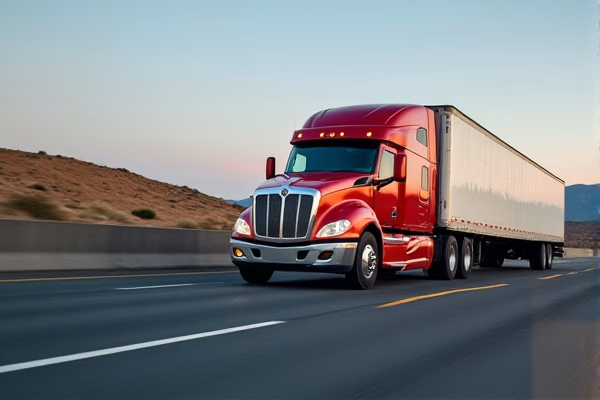
There are several avenues through which a bus company can be found negligent following a crash. The most common include driver negligence – such as distracted driving, speeding, or violating traffic laws – but liability extends far beyond the driver’s actions. A bus company can be held responsible for failing to properly maintain its vehicles, leading to mechanical failures that cause accidents. This includes issues with brakes, tires, steering, and lighting systems. Furthermore, negligent hiring, training, and supervision of drivers are significant factors. If a company knowingly hires a driver with a poor driving record or fails to provide adequate training, they can be held liable for the resulting damages.
Another critical area of investigation is the company’s safety protocols. Were they following all federal and state regulations regarding driver hours of service? Were they conducting regular safety inspections? A lack of adherence to these standards can be strong evidence of negligence. Finally, the company’s response *after* the accident is also relevant. Did they properly investigate the incident? Did they attempt to conceal evidence or downplay the severity of the crash?
How does the doctrine of *respondeat superior* apply to bus company lawsuits?
The legal principle of *respondeat superior* – or vicarious liability – is central to many bus company lawsuits. Under the doctrine of **vicarious liability** (respondeat superior), a principal is responsible to third persons for the negligence of their agent in the transaction of business. This means that the bus company can be held liable for the negligent actions of its drivers, even if the company itself didn’t directly cause the accident. However, the driver’s actions must have been within the scope of their employment for *respondeat superior* to apply. This typically includes driving the bus during scheduled routes or company-sanctioned trips.
Establishing that the driver was acting within the scope of employment is often a key point of contention. The insurance company will likely argue that the driver was off-duty or engaged in unauthorized activities. That’s why it’s crucial to gather evidence such as the driver’s schedule, dispatch records, and any communication related to the trip.
What kind of compensation can I recover in a lawsuit against a bus company?
If you’ve been injured in a bus accident, you may be entitled to a wide range of damages. This includes compensation for medical expenses, both past and future. Lost wages, both current and projected, are also recoverable. Beyond these economic damages, you can also seek compensation for pain and suffering, emotional distress, and loss of enjoyment of life. In cases involving permanent injuries or disabilities, you may also be entitled to compensation for future care costs and diminished earning capacity.
Furthermore, if the bus company acted with gross negligence – meaning they intentionally disregarded the safety of others – you may be able to recover punitive damages, which are designed to punish the company for their reckless behavior. The amount of compensation you can recover will depend on the severity of your injuries, the extent of your losses, and the specific facts of your case.
What if the bus company claims the driver wasn’t at fault?
It’s common for bus companies to deny liability and attempt to shift blame onto the victim. They may argue that you were partially at fault for the accident, or that the driver was not negligent. They may also claim that the accident was unavoidable due to unforeseen circumstances. It’s crucial to have an experienced attorney who can thoroughly investigate the accident and gather evidence to refute these claims. This includes obtaining police reports, witness statements, and expert testimony.
We’ll also examine the bus company’s own internal records, such as maintenance logs and driver training materials, to identify any evidence of negligence. Often, these records contain critical information that can support your claim. Don’t accept a quick settlement offer from the insurance company without first consulting with an attorney.
How long do I have to file a lawsuit after a bus accident in California?
In California, you have a limited amount of time to file a lawsuit after a bus accident. California law provides a **two-year** window from the date of the truck accident to file a lawsuit. Because trucking companies often begin evidence destruction (like purging ELD data) as soon as the law allows, immediate filing is critical to preserve the integrity of the claim. This statute of limitations applies to most personal injury claims, but it’s important to note that there may be exceptions in certain cases. For example, if you are filing a claim against a government entity, the deadline may be much shorter.
It’s essential to consult with an attorney as soon as possible after the accident to ensure that you don’t miss the filing deadline. Failing to file within the statute of limitations will result in the permanent loss of your right to recover compensation.
What should I do if a bus company asks me to give a recorded statement?
Bus company representatives or their insurance adjusters will often request a recorded statement shortly after the accident. While it may seem harmless, giving a recorded statement can be detrimental to your case. The adjuster’s goal is to gather information that can be used to minimize their liability. They will likely ask leading questions designed to elicit admissions that can weaken your claim.
It’s best to politely decline the request and inform them that you will be consulting with an attorney. Your attorney can advise you on whether or not to give a statement, and if so, how to prepare for it. Remember, you are not obligated to cooperate with the insurance company, and you have the right to remain silent.
What if I have medical liens from treatment related to the bus accident?
Medical liens are claims filed by healthcare providers for payment of services rendered in connection with your bus accident injuries. These liens can complicate your settlement process, as they must be resolved before you can receive your full compensation. It’s important to understand your rights and options regarding medical liens.
We can negotiate with the healthcare providers to reduce the amount of the lien, or we can explore other options for resolving the claim. In some cases, it may be possible to use Medicare or other insurance benefits to satisfy the lien.
What if the accident involved a government-owned bus?
If a truck accident involves a government-owned vehicle or a dangerous road condition maintained by a public entity, a formal administrative claim **MUST** be presented within **6 months** (180 days). Failure to meet this strict deadline under the Government Tort Claims Act can result in the permanent loss of your right to recover. Filing a claim against a government entity is significantly more complex than filing a claim against a private company. There are specific procedures and requirements that must be followed, and the government may have certain immunities that limit your ability to recover compensation.
It’s crucial to consult with an attorney who has experience handling claims against government entities to ensure that your claim is properly filed and prosecuted.
What if the bus company tenders their policy limits in an attempt to settle my case?
Often, after an accident, the bus company’s insurance carrier will offer a settlement equal to their policy limits. This is known as a “policy limits tender.” While it may seem like a generous offer, it’s important to carefully consider whether it adequately compensates you for your injuries and losses.
Accepting a policy limits tender will release the bus company from any further liability, even if your damages exceed the policy amount. We’ll thoroughly evaluate your case and advise you on whether or not to accept the tender. If the policy limits are insufficient, we may be able to pursue additional recovery from other sources, such as the driver’s personal insurance or other responsible parties.
How can dashcam footage or other digital evidence help my case?
Dashcam footage, ECM/EDR data, ELD logs, and GPS information can be invaluable evidence in a bus accident case. This evidence can provide a clear picture of what happened leading up to the crash, and can help establish the driver’s negligence.
We’ll work to obtain any available digital evidence, and we’ll analyze it to identify any factors that contributed to the accident. It’s important to act quickly to preserve this evidence, as it may be overwritten or destroyed over time.
I have dedicated over 13 years to representing injured victims in San Diego, and I understand the complexities of bus accident litigation. My experience, combined with my training from a former insurance defense attorney, allows me to effectively advocate for my clients and secure the compensation they deserve.