Can Dashcam Footage Help My San Diego Truck Accident Case?

As a personal injury attorney practicing in San Diego for over 13 years, I’ve seen firsthand how crucial dashcam footage can be in truck accident cases. Often, these accidents aren’t clear-cut, and insurance companies will seize on any ambiguity to minimize their payout. Having a video recording of the events leading up to, during, and immediately after the crash can dramatically shift the balance of power in your favor. I was trained by a former insurance defense attorney, giving me intimate knowledge of how insurance companies evaluate, devalue, and deny claims.
The value of dashcam footage lies in its objectivity. It provides a neutral record of what actually happened, free from the biases of witness testimony or the conflicting accounts of the drivers involved. This is particularly important in truck accident cases, where the driver of the 18-wheeler often has a vested interest in downplaying their role in the collision. Dashcam footage can reveal critical details like speeding, distracted driving, improper lane changes, and violations of federal Hours of Service regulations.
How Does Dashcam Footage Prove Negligence in a Truck Accident?
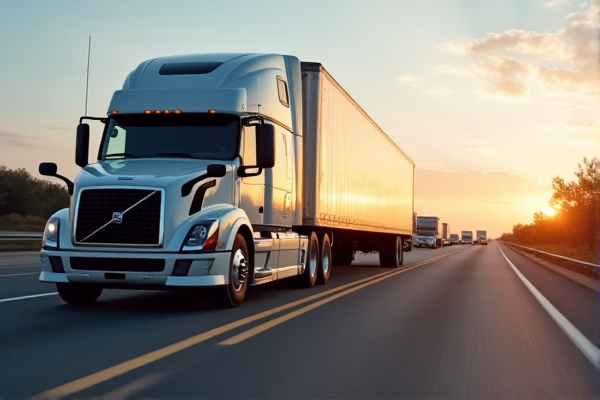
Dashcam footage can establish negligence in several ways. For example, it can clearly show the truck driver was speeding, especially in California where commercial trucks are strictly prohibited from exceeding 55 miles per hour on any highway (CVC § 22406). It can also reveal the driver was engaging in distracted activities, such as texting or talking on the phone. More subtly, footage can show a pattern of aggressive driving or a failure to maintain a safe following distance.
Beyond the driver’s actions, dashcam footage can also highlight issues with the trucking company. If the video shows the driver was clearly fatigued or in violation of federal Hours of Service regulations, it can point to a systemic problem with the company’s safety protocols. This can open the door to a claim against the trucking company itself, based on negligent hiring, training, or supervision.
What if the Truck Didn’t Have a Dashcam?
While increasingly common, not all trucks are equipped with dashcams. If the truck didn’t have one, don’t despair. Other sources of video evidence may be available. This includes surveillance cameras from nearby businesses, traffic cameras, or even the dashcams of other vehicles that were present at the scene. We routinely investigate all potential sources of video evidence to build the strongest possible case. Furthermore, the absence of dashcam footage doesn’t automatically preclude a successful claim; we can still rely on witness testimony, police reports, and accident reconstruction experts.
Can the Trucking Company Legally Prevent Me From Accessing the Dashcam Footage?
The trucking company has a legal obligation to preserve any evidence related to the accident, including dashcam footage. They cannot intentionally destroy or alter the footage. However, they may initially resist providing it to you directly. In this situation, we can obtain the footage through the discovery process, which involves formal requests for information and depositions. If the trucking company refuses to cooperate, we can file a motion with the court to compel them to produce the evidence. It’s important to act quickly, as evidence can be lost or destroyed over time.
What About My Own Dashcam Footage?
If you have a dashcam in your own vehicle, that footage can be incredibly valuable. Even if your vehicle wasn’t directly involved in the collision, your dashcam may have captured critical information about the truck’s actions leading up to the crash. It’s essential to preserve this footage immediately and avoid making any modifications to it. We can help you properly secure and analyze your dashcam recording.
What if the Accident Involved a Government Vehicle or Road Hazard?
If the truck accident involved a government-owned vehicle or a dangerous road condition maintained by a public entity, a formal administrative claim **MUST** be presented within **6 months** (180 days). Failure to meet this strict deadline under the Government Tort Claims Act can result in the permanent loss of your right to recover (Gov. Code § 911.2). Dashcam footage, if available from the government vehicle, is crucial evidence in these cases.
What if the Truck Driver Was Classified as an Independent Contractor?
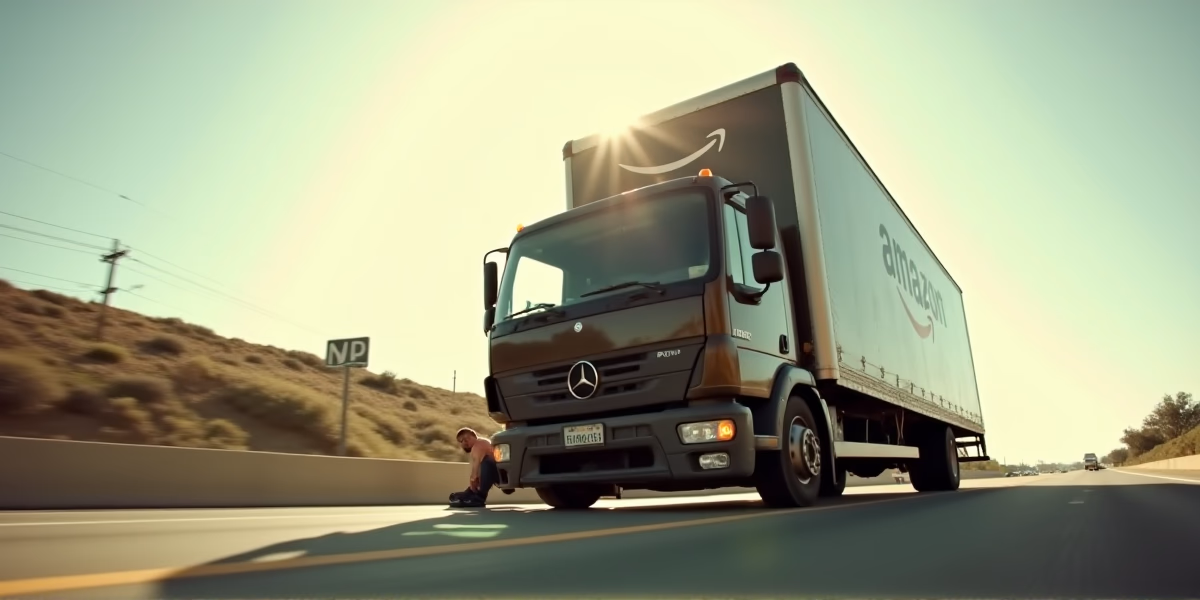
California’s ‘ABC test’ determines if a delivery driver (Amazon/FedEx) is an employee or contractor. Even if labeled a ‘contractor,’ a company may be liable if they exercise control over the driver’s work, a key factor in San Diego delivery truck litigation (Labor Code § 2775). Dashcam footage can help establish the level of control the company exerted over the driver, potentially leading to a claim against the company even if the driver was technically an independent contractor.
What if the Trucking Company Claims the Driver Was Not Negligent?
Trucking companies often employ various tactics to minimize their liability, including claiming the driver was not negligent. They may argue the accident was unavoidable, or that you were partially at fault. Dashcam footage can directly contradict these claims by providing a clear and objective record of the events leading up to the crash. We can also use accident reconstruction experts to analyze the footage and provide independent verification of the driver’s actions.
How Does Comparative Fault Affect My Claim if the Trucking Company Claims I Was Partially Responsible?
California’s ‘pure’ comparative fault system applies to trucking claims. Even if a truck driver argues you shared responsibility, you can still recover damages; however, your total compensation will be reduced by your percentage of fault (Civ. Code § 1714). Dashcam footage can help establish your level of responsibility, or lack thereof, in the accident.
What if the Accident Resulted in a Fatality?
When a truck accident results in a fatality, specific family members have the right to file a wrongful death claim. This allows for the recovery of financial support, funeral expenses, and the loss of the decedent’s love, companionship, and guidance (CCP § 377.60). Dashcam footage can be critical in establishing the truck driver’s negligence and securing the maximum possible compensation for the grieving family.